

INTERVIEW: Dubai-based CEO Badr Jafar moves the needle at Davos

Illustration by Luis Grañena
Short Url
Updated 02 February 2020
Follow

INTERVIEW: Dubai-based CEO Badr Jafar moves the needle at Davos

  • Crescent boss explains how philanthropy can help to solve even the biggest challenges such as climate change

The annual meeting of the World Economic Forum at Davos always gets you thinking on big ideas, and there is no one better equipped to discuss them with than Badr Jafar.

Jafar is chief executive of Crescent Enterprises, the Sharjah-based industrial and financial conglomerate, as well as president of the related energy group Crescent Petroleum and chairman of ports management company Gulftainer.

But he is much more than an executive bean-counter. A conversation with Jafar leaves you feeling that you have had access to unique insight about many of the essential issues of the day.

The big thing on his mind as we sat in the Central Lounge of the Congress Hall in Davos 10 days ago was climate change. The far-reaching effects of rapidly changing weather patterns was the dominant theme at the meeting. Some delegates had predicted a climate apocalypse if nothing was done to reduce human-manufactured environmental damage.

Jafar was not quite so pessimistic. “There is no doubt in my mind that we, collectively, have what it takes to pivot to a sustainable future, without curbing human progress. However, we first need to transcend short-term politics, and move quickly to embrace conducive policies that will achieve actual results, and not just rhetoric,” he said.

Two measures are essential to meet the goals of the Paris Accord on climate, which seeks to reduce global temperatures by 2 percent by 2030, he believes: A rapid increase in production and consumption of natural gas, without gas flaring and methane leakage; and far greater use of renewables such as wind and solar power in, for example, Saudi Arabia and the UK’s North Sea.

“That would radically move the needle,” he said.


BIO

Born: UAE, 1979

Education

  • Eton College, UK
  • University of Cambridge, UK
  • Harvard University, US
  • Cambridge Judge Business School, UK
  • Young Global Leader, World Economic Forum

Executive positions:

  • CEO, Crescent Enterprises
  • President, Crescent Petroleum
  • Chairman, Gulftainer


Crescent is a major player in Middle East energy markets, and Jafar has firm views about the state of global fossil fuel markets. There are big concerns currently because of the coronavirus outbreak in China, which could affect demand, as well as longer-term fears that the era of petro-dominance is in decline. He does not necessarily see it that way.

“Compared to today, the middle class in 2030 will have 1.7 billion more people, mainly from Asia, and these middle-class consumption appetites will mean that primary energy demand will shoot up to 350 million barrels of oil equivalent in 2040, from around 290 million today — that’s the equivalent of six new Saudi Arabias.

“So thinking long-term — which again is not always the most popular choice for the politicians of today — our challenge is how can we invest today in the right solutions to ensure that we are able to supply these requirements in ways that do not do more harm to our natural environment, and instead promote a much healthier balance between human prosperity and the health of the symbiotic natural systems upon which we are dependent to survive as a race,” Jafar said.

One of the main reason that he was in Davos was to launch a new initiative, the Center for Strategic Philanthropy, a partnership with the University of Cambridge, of which old-Etonian Jafar is an alumnus. The center aims to research, quantify and structure global charitable donations, and direct them to where they are most needed.
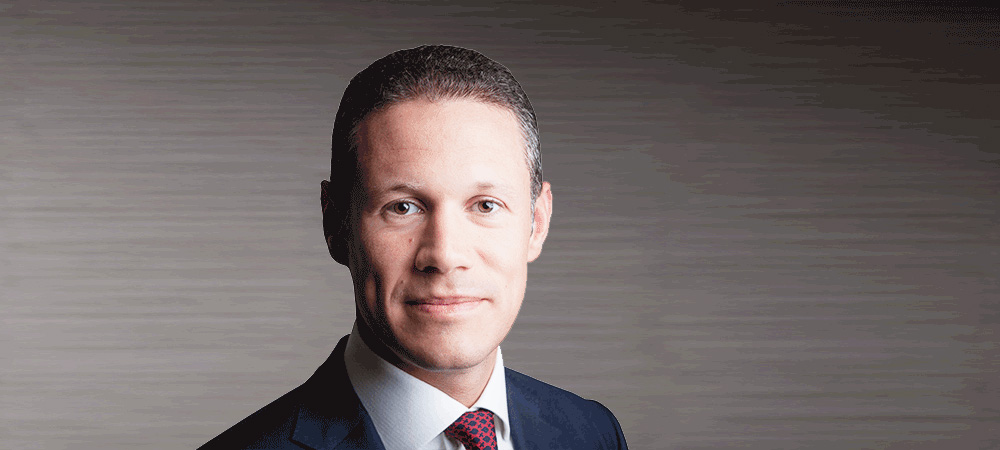


Badr Jafar. (Crescent Enterprises photo)

In the Muslim world, zakat taxes and sadaqah charitable donations generate up to $1 trillion, but Jafar and his partners at the center worry that this is not being used properly.

“One in three Muslims live below the poverty line, and 90 percent of global humanitarian crises of today are in Muslim-majority countries. And with increasingly evident risks involved with the opaque flow of capital, we also have a huge responsibility to urgently institute transparent and accountable systems to ensure these monies are going to where they need to get to,” he said.

There is an enormous amount of potential. Studies used by the center show that over the next decade about $4 trillion of global wealth is due to pass from one generation to the next, with half of that in Asia. Emerging markets are growing four times faster in terms of per capita GDP than the developed world, which will throw up vast amounts of disposable income, some of which will find its way into philanthropic causes. 

Philanthropy could also be used, he argued, to bridge the funding gap of about $2.5 trillion needed to meet the UN’s Sustainable Development Goals, intended to be in place by 2030. Currently, only about 5 percent of philanthropic donations go toward environmental causes, Jafar said, coming back to the dominant theme of Davos.

“Why should a business care about this? For many reasons. But essentially because philanthropy is private capital for the public good. Government and business capital we know about to some extent, and both those have their own challenges in dealing with climate change. But the neglected aspect is philanthropy,” he said.

The biggest potential donor in the Middle East is Saudi Arabia. The Crescent business — started by Badr’s father Hamid when he immigrated from Iraq and now co-managed with his brother Majid — is big in the Kingdom, via the ports activities of Gulftainer’s terminals in Jeddah and Jubail. It has invested SR4 billion ($1.06 billion) over the past seven years, and employs more than 2,000 Saudi citizens.

Saudi Arabia and the UAE have a global role in demonstrating what strong leadership and smart economic policies can do.

So his views on the transformation under way in Saudi Arabia are germane. “It’s clear to everyone in the region, and increasingly the world, that Saudi Arabia is going through its own economic and social renaissance, which will have important and exciting implications for the whole region and beyond. Whilst the process of economic diversification is never easy, the steps that are being taken across the Kingdom’s key sectors to lay the foundations for this diversification drive are both visible and rapid,” he said.

As a cultural connoisseur himself, he is especially impressed by the emphasis on Saudi art and history as part of the Vision 2030 transformation. “History, including our own region’s so-called Golden Age in the 8th and 9th centuries, clearly demonstrates that periods of rapid innovation always happened at the intersection of sciences and the humanities. As we strive to embrace innovation and thrive in the Fourth Industrial Revolution that is upon us, the role of our artists and creatives will not be ornamental, but fundamental,” he said.

Jafar’s other preoccupation in recent years has been the Pearl Initiative, a nonprofit private-sector organization based in the Arabian Gulf that partnered with the UN to to promote the business case behind good corporate governance.

The initiative has had some success in addressing governance in the region, as measures to promote accountability and transparency have become more mainstream in Gulf business. But that has not stopped some big examples of corporate scandal, notably in the case of Abraaj, the private equity fund that collapsed and in which the Jafar family had a significant financial interest.

Speaking generally, Jafar agreed there was still more to do in the governance field. “The process of instituting better governance is a journey for any business and market, and I believe the next 10 years will mark the decade that our regional business community reaps the rewards of what good governance can bring, and, vice-versa, eradicates those businesses that fail to adopt best practice,” he said.

The main role of government in business should be to regulate corporate culture, rather than interfere directly, especially in the field of private investment. “It is crucial that business is not made to feel it is being made to compete with government in its investments or operations,” he said.

“I of course understand and respect the need for government to control certain strategic sectors. However, with the majority of sectors government needs to focus on the business of regulation, and allow business to be in the business of business,” he said.

The rule of law, and adherence to contractual obligations, is also vital, he said. “The critical aspect is respect for contract. Many of our investments, and all infrastructure investments, are long term in nature — 30-plus years. Without robust contract governance mechanisms, as well as robust dispute resolution and legal enforcement frameworks, investor confidence will be greatly diminished, and the cost of capital for any country will skyrocket.”

The two biggest economies of the Gulf should be the standard-bearer for Middle East business, he believes.

“Saudi Arabia and the UAE have an increasingly important global role in setting standards, and really demonstrating what strong leadership and smart economic policies can do to transform a region and its societies into thriving innovation hubs that embrace diversity, inclusion and the art of the possible, as cornerstones for success,” he said, with a Davosian flourish.


What MENA’s wild 2025 funding cycle really revealed  

Updated 26 December 2025
Follow

What MENA’s wild 2025 funding cycle really revealed  

RIYADH: The Middle East and North Africa startup funding story in 2025 was less a smooth arc than a sequence of sharp gears: debt-led surges, equity-led recoveries, and periodic quiet spells that revealed what investors were really underwriting.   

By November, the region had logged repeated bursts of activity — culminating in September’s $3.5 billion spike across 74 deals — yet the year’s defining feature was not just the size of the peaks, but the way capital repeatedly clustered around a handful of markets, instruments, and business models.  

Across the year’s first eleven months, funding totals swung dramatically: January opened at $863 million across 63 rounds but was overwhelmingly debt-driven; June fell to just $52 million across 37 deals; and September reset expectations entirely with a record month powered by Saudi fintech mega facilities.   

The net result was a market that looked expansive in headline value while behaving conservatively in underlying risk posture — often choosing structured financing, revenue-linked models, and geographic familiarity over broad-based, late-stage equity appetite.  

Debt becomes the ecosystem’s shock absorber  

If 2024 was about proving demand, 2025 was about choosing capital structure. Debt financing repeatedly dictated monthly outcomes and, in practice, became the mechanism that let large platforms keep scaling while equity investors stayed selective.  

Founded in 2019 by Osama Alraee and Mohamed Jawabri, Lendo is a crowdlending marketplace that connects qualified businesses seeking financing with investors looking for short-term returns. Supplied

January’s apparent boom was the clearest example: $863 million raised, but $768 million came through debt financing, making the equity picture almost similar to January 2024.   

The same pattern returned at larger scale in September, when $3.5 billion was recorded, but $2.6 billion of that total was debt financing — dominated by Tamara’s $2.4 billion debt facility alongside Lendo’s $50 million debt and Erad’s $33 million debt financing.    

October then reinforced the playbook: four debt deals accounted for 72 percent of the month’s $784.9 million, led by Property Finder’s $525 million debt round.    

By November, more than half the month’s $227.8 million total again hinged on a single debt-backed transaction from Erad.   

Tamara was founded in 2020 by Abdulmajeed Alsukhan, Turki Bin Zarah, and Abdulmohsen Albabtain, and offers buy-now-pay-later services. Supplied

This isn’t simply ‘debt replacing equity.’ It is debt acting as a stabilizer in a valuation-reset environment: late-stage businesses with predictable cash flows or asset-heavy models can keep expanding without reopening price discovery through equity rounds.  

A two-speed geography consolidates around the Gulf  

The regional map of venture capital in 2025 narrowed, widened, then narrowed again — but the center of gravity stayed stubbornly Gulf-led.    

Saudi Arabia and the UAE alternated at the top depending on where mega deals landed, while Egypt’s position fluctuated between brief rebounds and extended softness.  

In the first half alone, total investment reached $2.1 billion across 334 deals, with Saudi Arabia accounting for roughly 64 percent of capital deployed.   

Saudi Arabia’s rise was described as ‘policy-driven,’ supported by sovereign wealth fund-backed VC activity and government incentives, with domestic firms such as STV, Wa’ed Ventures, and Raed Ventures repeatedly cited as drivers.   

Erad co-founders (left to right): Faris Yaghmour, Youssef Said, Salem Abu Hammour, and Abdulmalik Almeheini. Supplied

The UAE still posted steady growth in the first half — $541 million across 114 startups, up 18 percent year-on-year — but it increasingly competed in a market where the largest single cheques were landing elsewhere unless the Emirates hosted the region’s next debt mega round.  

The concentration became stark in late-year snapshots. In November, funding was ‘tightly concentrated in just five countries,’ with Saudi Arabia taking $176.3 million across 14 deals and the UAE $49 million across 14 deals, while Egypt and Morocco each sat near $1 million and Oman had one undisclosed deal.    

Even in September’s record month, the top two markets — Saudi with $2.7 billion across 25 startups and the UAE with $704.3 million across 26 startups — absorbed the overwhelming majority of capital.  

A smaller but notable subplot was the emergence of ‘surprise’ markets when a single deal was large enough to change rank order.   

Iraq briefly climbed to third place in July on InstaBank’s $15 million deal, while Tunisia entered the top three in June entirely via Kumulus’ $3.5 million seed round.   

These moments mattered less for the totals than for what they suggested: capital can travel, but it still needs an anchor deal to justify attention.  

Events, narrative cycles, and the ‘conference effect’  

2025 also showed how regional deal flow can bunch around events that create permission structures for announcements.   

February’s surge — $494 million across 58 deals — was explicitly linked to LEAP 2025, where ‘many startups announced their closed deals,’ helping push Saudi Arabia to $250.3 million across 25 deals.  

September’s leap similarly leaned on Money20/20, where 15 deals were announced and Saudi fintechs dominated the headlines.  

This ‘conference effect’ does not mean deals are created at conferences, but it does change the timing and visibility of closes.   

Sector leadership rotates, but utility wins  

Fintech retained structural dominance even when it temporarily lost the top spot by value.   

It led January on the back of Saudi debt deals; dominated February with $274 million across 15 deals; remained first in March with $82.5 million across 10 deals; topped the second quarter by capital raised; and reclaimed leadership in November with $142.9 million across nine deals — again driven by a debt-heavy transaction.   

Even when fintech fell to ninth place by value in October with $12.5 million across seven rounds, it still remained ‘the most active sector by deal count,’ a sign of persistent baseline demand.  

Proptech was the year’s other headline sector, but its peaks were deal-specific. Nawy’s $75 million round in May helped propel Egypt to the top that month and pushed proptech up the rankings.   

Property Finder’s debt round in October made proptech the month’s top-funded sector at $526 million. In August, proptech led with $96 million across four deals, suggesting sustained investor appetite for real-estate innovation even beyond the megadeal.   

Outside fintech and proptech, the year offered signals rather than dominance. July saw deeptech top the sector charts with $250.3 million across four deals, reflecting a moment of investor appetite for IP-heavy ventures.   

AI repeatedly appeared as a strategic narrative — especially after a high-profile visit by US President Donald Trump alongside Silicon Valley investors and subsequent GCC AI initiatives — yet funding didn’t fully match the rhetoric in May, when AI secured just $25 million across two deals.   

By late year, however, expectations were already shifting toward mega rounds in AI and the industries built around it, positioning 2025 as a runway-building year rather than a breakout year for AI funding in the region.  

Stage discipline returns as valuations reset  

In 2025, MENA’s funding landscape tried to balance two priorities: sustaining early-stage momentum while selectively backing proven scale. Early-stage rounds dominated deal flow. October saw 32 early-stage deals worth $95.2 million, with just one series B at $50 million. November recorded no later-stage rounds at all, while even September’s record month relied on 55 early-stage startups raising $129.4 million.  

When investors did commit to later stages, the cheques were decisive. February featured Tabby’s $160 million series E alongside two $28 million series B rounds, while August leaned toward scale with $112 million across three series B deals. Late-stage equity was not absent — it was episodic, appearing only when scale economics were defensible. 

Hosam Arab, CEO of Tabby. File

B2B models remained the default. In the first half, B2B startups raised $1.5 billion, or 70 percent of total funding, driven by clearer monetisation and revenue visibility.  

The gender gap remained structural. Despite isolated spikes, capital allocation continued to overwhelmingly favour male-led startups.  

What 2025 actually said about 2026  

Taken together, 2025 looked like a year of capital market pragmatism. The region demonstrated capacity for outsized rounds, but much of that capacity ran through debt, a handful of megadeals, and a narrow set of markets — primarily Saudi Arabia and the UAE.   

Early-stage deal flow stayed active enough to keep the pipeline moving, even as growth-stage equity became intermittent and increasingly selective.   

By year-end, the slowdown seen in November read less like a breakdown than a deliberate pause: a market in consolidation mode preserving firepower, waiting for clearer valuation anchors and the next wave of platform-scale opportunities.   

If 2025 was about proving the region can absorb large cheques, 2026 is shaping up to test where those cheques will go — especially as expectations build around AI-led mega rounds and the industries that will form around them.
