KARACHI: The China-Pakistan Economic Corridor (CPEC) still remains functional despite the recent outbreak of coronavirus in the region that has claimed about 170 lives, officials said on Friday.
“Pakistan has taken steps, including screening of the incoming passengers from China, to prevent the spread of virus in the country,” Senator Kauda Babar, member of Senate’s Standing Committee on CPEC, told Arab News on Friday.
The senator hails from Pakistan’s southwestern Balochistan province that is highly significant for the multibillion dollar corridor project due to the deep-sea port in Gwadar.
“As far as CPEC is concerned, those who are working on the project are in Pakistan and those who are arriving from China will be properly screened,” he added.
“Only 10 to 15 percent people working on the project may be traveling, and they are not necessarily from Wuhan. The situation has not impacted the corridor project,” Babar said.
Experts believe, however, that the coronavirus outbreak in China may impact Pakistan’s economy, slowing down the Chinese-funded projects.
“The Chinese economy itself is likely to suffer from the outbreak and that is likely to create a similar impact on the projects being done in Pakistan. At least, the contagion can cause delays for a brief period,” Mazhar Ali Nasir, patron-in-chief of the Pakistan-China Business Council, told Arab News. “People will remain cautious while traveling to china for business and tourism purposes for at least three to six months.”
The aviation authority in the country on Wednesday stalled direct flights between Pakistan and China. “All direct flights between Pakistan and China are to be stalled on immediate basis, initially till February 2, 2020, subject to subsequent review,” a Civil Aviation Authority (CAA) notification read.
In another move, the country’s Port Health Establishment department directed customs authorities to abstain from clearing cargo without fumigation.
“The second hand clothing/used shoes and other worn articles should not be cleared without fumigation under the supervision of Port Health Establishment Karachi till further orders,” a notification issued on Friday read.
Chinese health authorities confirmed 7,711 cases of coronavirus in the country on January 29 while the death toll from the outbreak went above 170. Chinese authorities trying to contain the virus are optimistic about providing the vaccine within the next three months.
Experts say, however, that the impact of the deadly coronavirus on the Chinese economy could also slow down the global economy.
“The real scenario will emerge after the end of the extended nationwide holidays in China next week. The economic impact would be higher if China further extends the break,” Vice President of the Federation of Pakistan Chambers of Commerce and Industry (FPCCI) Khurram Ijaz commented.
Pakistan has imported goods worth $4.88 billion from China during the first six months of the current fiscal year (FY20), the State Bank of Pakistan reveals.


![]()

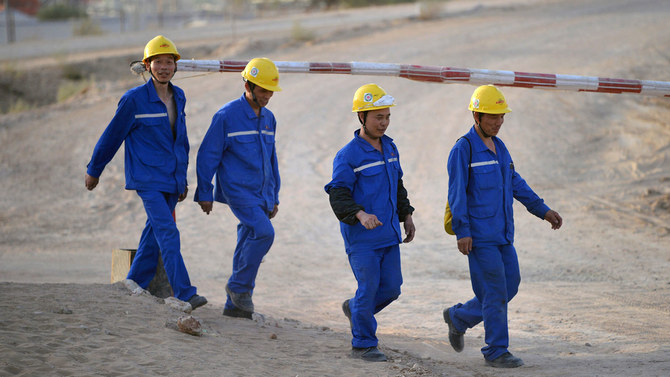
Chinese workers on CPEC projects 'properly screened' — officials
Short Url
https://arab.news/4txnu
Chinese workers on CPEC projects 'properly screened' — officials
- Government stalls direct flights between Pakistan and China, makes fumigation of cargo mandatory
- Experts say the Chinese economy is likely to suffer due to the pandemic
Latest updates


© 2026 SAUDI RESEARCH & PUBLISHING COMPANY, All Rights Reserved And subject to Terms of Use Agreement.