

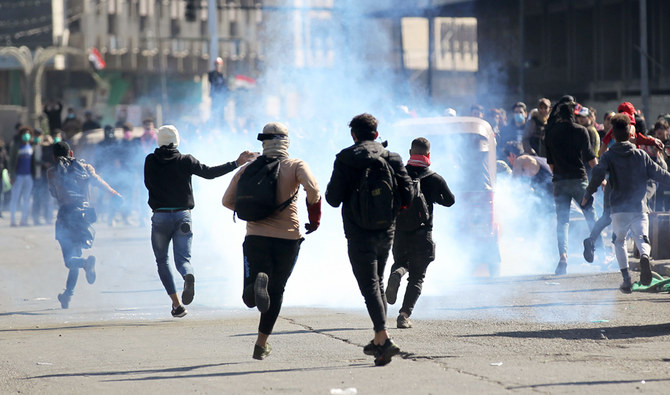

BAGHDAD: Unidentified gunmen shot dead two protesters in the southern Iraqi city of Nassiriya after security forces began a crackdown on months-long demonstrations against the country's largely Iran-backed ruling elite.
At least 75 protesters were wounded, mainly by live bullets, in clashes in Nassiriya overnight when security forces attempted to move them away from bridges in the city, police and health source said.
On Monday morning, clashes resumed in central Baghdad as police fired tear gas at demonstrators, Reuters reporters said.
HIGHLIGHT
The mass protests started in October over widespread government corruption and a lack of public services and jobs.
Hours later, determined protesters had rallied again and shut down two main bridges in the city, some 350 kilometers south of the capital Baghdad.
The main protest camp in the holy city of Najaf was also burned down overnight by unidentified gunmen, AFP’s correspondent there said on Monday.
Mass protests erupted on October 1 in Baghdad and across Iraq’s Shiite-majority south in outrage over lack of jobs, poor services and corruption.
They spiraled into calls for a total government overhaul and are now specifically demanding snap polls, an independent prime minister and the prosecution of anyone implicated in corruption or recent bloodshed.
Protesters tried to ramp up pressure on the government starting a week ago by sealing streets with burning tires and metal barricades, but riot police responded with force.
They fired live rounds and tear gas to disperse clusters of young demonstrators, and 21 protesters have been killed and hundreds wounded in the last week.
That brought the toll from the last four months of rallies close to 480 dead, according to an AFP rally.
On Friday, security forces began moving in on the main protest camps across the country after influential Shiite cleric Moqtada Sadr said he would drop support for the youth-dominated reform campaign.
Sadr supporters swiftly began dismantling their own tents, prompting fears by the remaining activists that they had lost their political cover and would face a crackdown.
But thousands of students turned out Sunday across Iraqi cities to insist on their movement’s resilience and political independence.
Demonstrators have feared that their movement may be eclipsed by tensions between neighboring Iran and the US, which spiraled after the killing early this month of a senior Iranian commander in a US drone strike in Baghdad.
On Sunday evening, three Katyusha rockets slammed into the US embassy in the Iraqi capital, a security source said.
A senior Iraqi official and US diplomatic sources said one person was wounded, but no details were immediately available on whether it was a US national or an Iraqi member of staff at the mission.


