Aramco chief sees demand for oil staying above 100m barrels

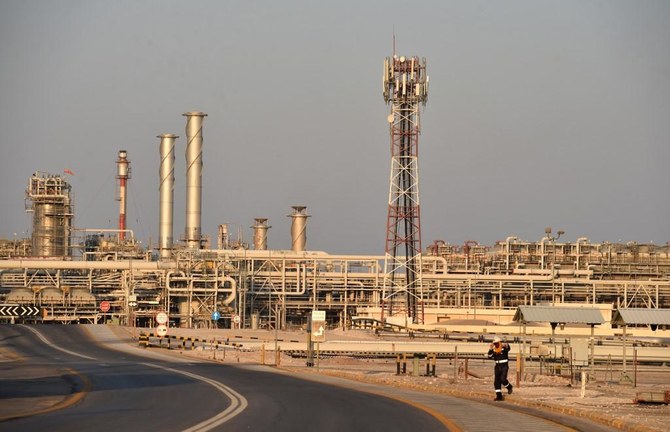
Aramco CEO Amin Nasser said he expected global oil demand to stay above the 100 million barrels threshold as the rise of the global middle class spurred demand for energy. (File/AFP)
Short Url
Updated 23 January 2020
Follow

Aramco chief sees demand for oil staying above 100m barrels

  • A panel on the global energy outlook at the WEF in Davos heard that renewable energy alone would not be able to meet rising demand for power as more people moved into the middle class
  • The panel also heard that coal, not oil, remained the biggest source of carbon emissions

DAVOS: Aramco CEO Amin Nasser said he expected global oil demand to stay above the 100 million barrels threshold as the rise of the global middle class spurred demand for energy.
A panel on the global energy outlook at the World Economic Forum in Davos heard that renewable energy alone would not be able to meet rising demand for power as more people moved into the middle class.
“There will be additional demand and the only way to meet it is if you continue to provide affordable, reliable and viable energy to the rest of the world,” said the Aramco CEO.
“There is good penetration from renewables and electric cars are picking up however you need to consider what is happening in the world. There are still an additional 2 billion people coming. There are currently 3 billion people using biomass, animal dung, kerosene for cooking and there are 1 billion people today without electricity and almost 50 percent of people have never flown in an aeroplane.”
The panel heard that coal, not oil, remained the biggest source of carbon emissions but that the location of many coal-fired power plants in developing Asian economies meant that reducing its impact was a major challenge.
“The number one source of emissions by far is the coal fire power plants – they alone are responsible for one third of emissions,” said International Energy Agency Executive Director Fatih Birol. “But they are in many cases the number one source of electricity generation in low income countries - so this is not a black and white issue.”


Saudi POS spending jumps 28% in final week of Jan: SAMA

Updated 06 February 2026
Follow

Saudi POS spending jumps 28% in final week of Jan: SAMA

RIYADH: Saudi Arabia’s point-of-sale spending climbed sharply in the final week of January, rising nearly 28 percent from the previous week as consumer outlays increased across almost all sectors. 

POS transactions reached SR16 billion ($4.27 billion) in the week ending Jan. 31, up 27.8 percent week on week, according to the Saudi Central Bank. Transaction volumes rose 16.5 percent to 248.8 million, reflecting stronger retail and service activity. 

Spending on jewelry saw the biggest uptick at 55.5 percent to SR613.69 million, followed by laundry services which saw a 44.4 percent increase to SR62.83 million. 

Expenditure on personal care rose 29.1 percent, while outlays on books and stationery increased 5.1 percent. Hotel spending climbed 7.4 percent to SR377.1 million. 

Further gains were recorded across other categories. Spending in pharmacies and medical supplies rose 33.4 percent to SR259.19 million, while medical services increased 13.7 percent to SR515.44 million. 

Food and beverage spending surged 38.6 percent to SR2.6 billion, accounting for the largest share of total POS value. Restaurants and cafes followed with a 20.4 percent increase to SR1.81 billion. Apparel and clothing spending rose 35.4 percent to SR1.33 billion, representing the third-largest share during the week. 

The Kingdom’s key urban centers mirrored the national surge. Riyadh, which accounted for the largest share of total POS spending, saw a 22 percent rise to SR5.44 billion from SR4.46 billion the previous week. The number of transactions in the capital reached 78.6 million, up 13.8 percent week on week. 

In Jeddah, transaction values increased 23.7 percent to SR2.16 billion, while Dammam reported a 22.2 percent rise to SR783.06 million. 

POS data, tracked weekly by SAMA, provides an indicator of consumer spending trends and the ongoing growth of digital payments in Saudi Arabia.  

The data also highlights the expanding reach of POS infrastructure, extending beyond major retail hubs to smaller cities and service sectors, supporting broader digital inclusion initiatives.  

The growth of digital payment technologies aligns with Saudi Arabia’s Vision 2030 objectives, promoting electronic transactions and contributing to the Kingdom’s broader digital economy.