- The sooner there is peace in Afghanistan, the better it would be for the region – PM Khan
- Pakistan ‘would not become part of any other conflict,’ he said
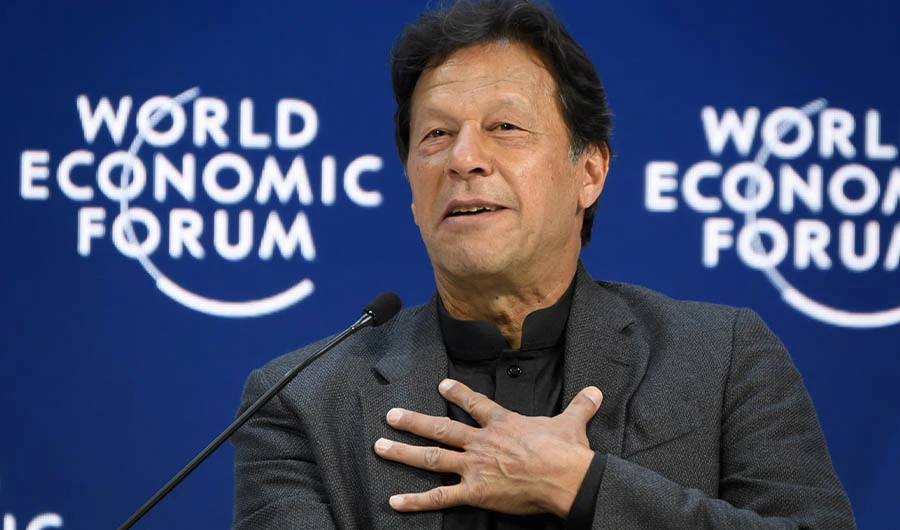
ISLAMABAD: Pakistani Prime Minister Imran Khan in his speech on Wednesday told delegates at the World Economic Forum (WEF) in Davos how maintaining peace was in Pakistan’s best interests in terms of its economy and geopolitics.
Khan chronicled the scourge of militancy and terrorism which became his country’s biggest impediment to growth when it partnered with the US during the Soviet-Afghan war and again in the war against terror post 9/11.
“That was a watershed for Pakistan. For economic growth, you need peace and stability and order. Militancy became an impediment. Once I came into power, I decided Pakistan will only partner with peace. We will not become part of any other conflict.”
He pointed out that Pakistan now favored dialogue. “We have tried to ease tensions between the US and Iran and to facilitate the peace process in Afghanistan.”
Following the keynote speech, WEF president Børge Brende held a brief question and answer session with Khan, during which the premier said that “2019 was the safest year in Pakistan.”
He praised Pakistani security forces for halting the spread and rise of militancy. “I have to pay tribute to our security forces for crushing terrorism. The terrorism is coming from Afghanistan and the sooner there is peace in Afghanistan, it would benefit the region ... that can only happen if the Taliban and Afghan government sit together.”
He further highlighted Pakistan’s stance that Afghan peace must be achieved through dialogue, not military efforts. “I do not understand why countries go to resolve differences through military conflicts. When you start a conflict, you don’t know when it will finish ... US and Afghan war has cost trillions,” he said.
With regard to ongoing tensions between Iran and the US, Khan said that a war between them “would be a disaster for the world. Suddenly, everything will be offset, and God knows how long it will go on. We have spoken to Saudi Arabia and (the) United States. I spoke to (Donald) Trump that this conflict would be disastrous.”
When asked what the US president’s response was, Khan smiled and said that Trump “didn’t say anything.”
In the keynote speech, the premier also pointed to improving state institutions and making the issue of addressing climate change one of his top priorities through reforestation.
“As a child, I fell in love with the wilderness, nature, and mountains of Pakistan. If I ever got the opportunity, I would preserve the nature of this country and start a reforestation campaign,” said Khan, who achieved his goal of planting 1 billion trees before coming to power.
Noting that Pakistan was vulnerable to climate change and that pollution had become a “silent killer,” he added that his next objective was to plant 10 billion trees over the next four years.
Concluding his speech, Khan added that Pakistan had great “mineral wealth” and its gold and copper reserves alone could pay off the country’s inflated foreign debt. China was also helping Pakistan to develop its “very fertile agriculture land.”
Khan also held bilateral meetings with several world leaders on the sidelines of the forum, including the US president.
This year marks the 50th anniversary of the WEF and the Pakistani premier is visiting Davos on the invitation of Prof. Klaus Schwab, the forum’s founder and executive chairman.