

Startup of the Week: A Saudi Eco-friendly food waste startup brings value-added benefits

1 / 13
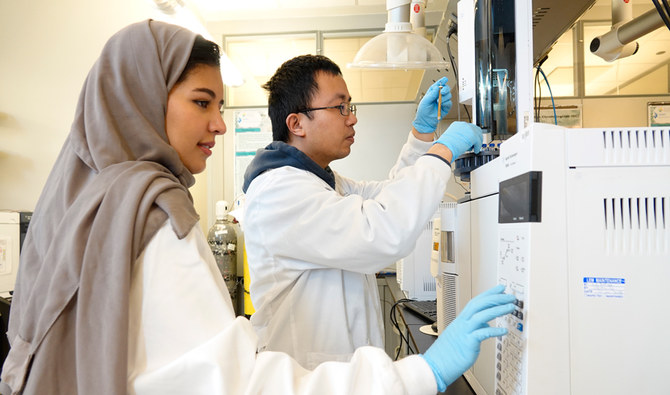
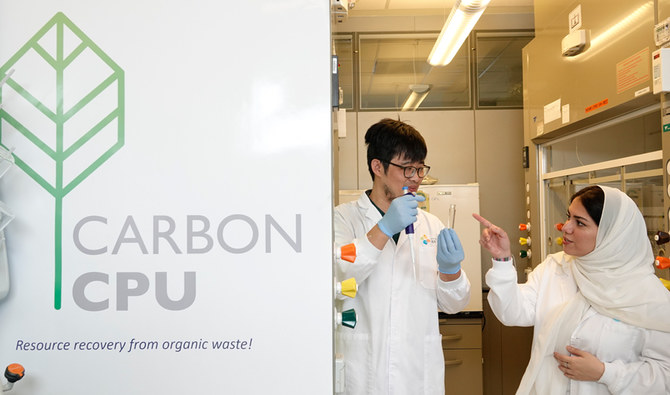
KAUST has been highly supportive of Carbon CPU, both technically and financially. (AN photos by Huda Bashatah)
2 / 13
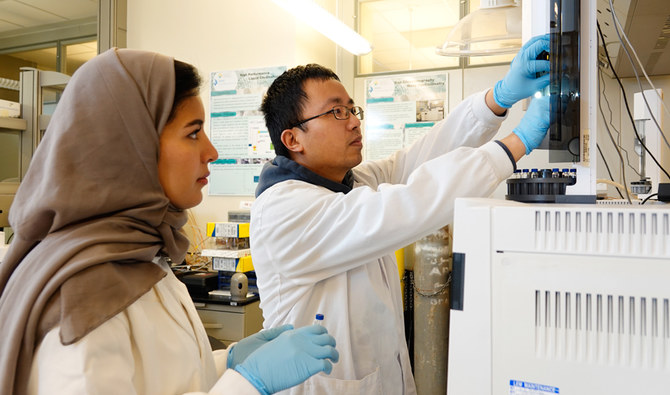
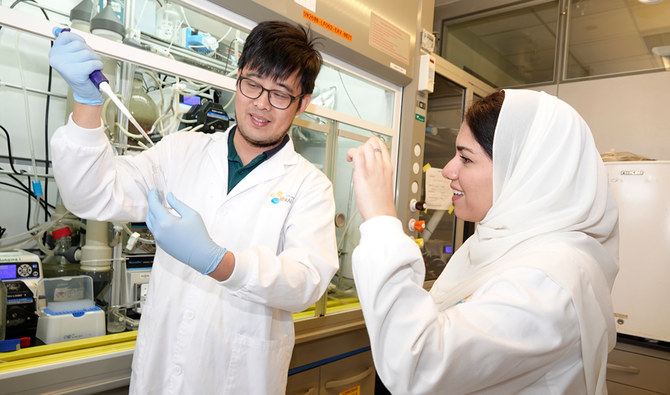
KAUST has been highly supportive of Carbon CPU, both technically and financially. (AN photos by Huda Bashatah)
3 / 13
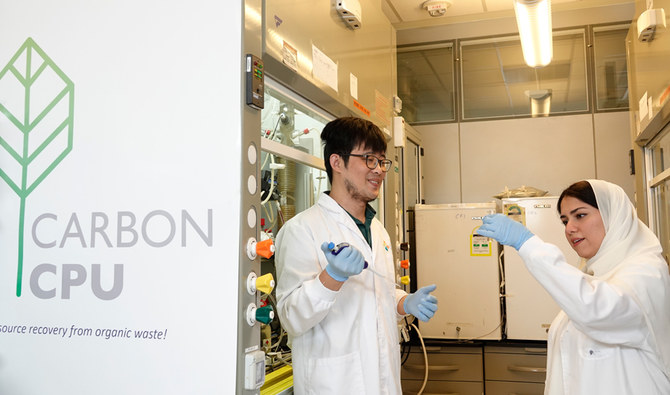
KAUST has been highly supportive of Carbon CPU, both technically and financially. (AN photos by Huda Bashatah)
4 / 13
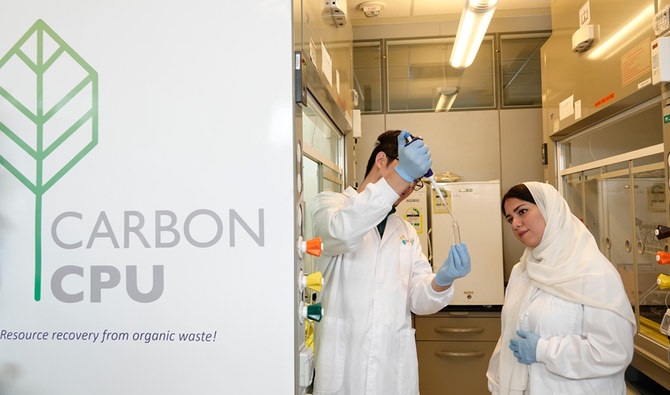
KAUST has been highly supportive of Carbon CPU, both technically and financially. (AN photos by Huda Bashatah)
5 / 13
KAUST has been highly supportive of Carbon CPU, both technically and financially. (AN photos by Huda Bashatah)
6 / 13
KAUST has been highly supportive of Carbon CPU, both technically and financially. (AN photos by Huda Bashatah)
7 / 13
KAUST has been highly supportive of Carbon CPU, both technically and financially. (AN photos by Huda Bashatah)
8 / 13
KAUST has been highly supportive of Carbon CPU, both technically and financially. (AN photos by Huda Bashatah)
9 / 13
KAUST has been highly supportive of Carbon CPU, both technically and financially. (AN photos by Huda Bashatah)
10 / 13
KAUST has been highly supportive of Carbon CPU, both technically and financially. (AN photos by Huda Bashatah)
11 / 13
KAUST has been highly supportive of Carbon CPU, both technically and financially. (AN photos by Huda Bashatah)
12 / 13
KAUST has been highly supportive of Carbon CPU, both technically and financially. (AN photos by Huda Bashatah)
13 / 13
KAUST has been highly supportive of Carbon CPU, both technically and financially. (AN photos by Huda Bashatah)
Short Url
Updated 21 January 2020
Follow

Startup of the Week: A Saudi Eco-friendly food waste startup brings value-added benefits

  • Aldrees: “Over 90 percent of food waste in Saudi Arabia is dumped into landfills”
  • Carbon CPU’s technology uses a specially developed, eco-friendly reactor to help convert food waste into fatty acids

Carbon CPU is a biotechnology startup specializing in turning food waste into fatty acids for use as livestock nutrients.

Launched through the post-graduate startup accelerator program (TAQADAM) of King Abdullah University of Science and Technology (KAUST), the venture was co-founded by Bin Bian, Jiajie Xu, Yara Aldrees, Sara Al-Eid and Prof. Pascal Saikaly.

The idea behind the enterprise began to take shape in 2018. Al-Eid said: “Our aim was to recycle food waste into value-added products in a manner that matched the Saudi Vision 2030 strategy.”

Similar to most countries, Saudi Arabia has a food waste problem, but Carbon CPU thought of utilizing it in a way that caused less harm to the environment and also benefitted the animal feed industry.

“Over 90 percent of food waste in Saudi Arabia is dumped into landfills,” said Aldrees. “This produces a lot of gas, including methane, carbon dioxide, hydrogen sulfide and cycloaromatics, and contributes to global warming and air pollution.”

Water and soil were also being contaminated through leachate production, she added. “We’re trying to solve those issues, too.”


The team found that animal farms often struggled to provide enough feed nutrients for livestock such as cows and sheep. Al-Eid said there was a huge shortage of fatty acids, which are used as livestock nutrients and were in high demand from farmers.

“We’re trying to help animals live longer and be more nutritious,” she added.

Carbon CPU’s technology uses a specially developed, eco-friendly reactor to help convert food waste into fatty acids.

“We produce fatty acids from the food waste, extracting them through a liquid-liquid extraction system. The fatty acid oils are then used to help animal feed, as well as the feed and chemical industries,” said Xu.

KAUST has been highly supportive of Carbon CPU, both technically and financially, added Bian. “KAUST, especially the Environmental Biotechnology Lab led by Prof Pascal Saikaly, provided us with the facilities to set up our reactors. The KAUST Innovation and Economic Development department and the Entrepreneurship Center also gave us a lot of guidance on how to push our technology into the market.”

The startup initially faced many challenges that KAUST helped to resolve. As individuals coming from backgrounds mainly in engineering and science, the team lacked the know-how in business that its project needed.

“KAUST made up for our lack of business thinking through training on how to solve business issues and create business modules and find the right customers for our product,” said Bian.


Iranian ambassador thanks Saudi for not allowing territory to be used during war

Updated 43 min 55 sec ago
Follow

Iranian ambassador thanks Saudi for not allowing territory to be used during war

  • Alireza Enayati tells AFP Iran appreciates Kingdom's pledge not to allow its 'airspace, waters, or territory' to be used in US attacks
  • Envoy also denies that his country hit the US embassy in Riyadh this week with drones

RIYADH: Iran’s ambassador to Saudi Arabia Alireza Enayati said on Thursday his country remained appreciative of Saudi Arabia’s pledge to not allow its airspace or territory to be used during the ongoing war with the US and Israel.
“We appreciate what we have repeatedly heard from Saudi Arabia — that it does not allow its airspace, waters, or territory to be used against the Islamic Republic of Iran,” he told AFP.
Before the outbreak of war, Riyadh had thrown its support behind diplomatic efforts to diffuse tensions between Tehran and Washington and vowed that its airspace would not be allowed to be used for attacks against Iran.
Enayati also categorically denied that his country hit the US embassy in Riyadh this week, after Saudi officials said Iran targeted the compound with drones.
Saudi Arabia has repeatedly accused Tehran of launching missile salvos and drone attacks at its territory and warned that the kingdom reserved the right to defend itself, including by retaliating.
Iran had earlier denied attacking the sprawling Ras Tanura refinery — one of the largest in the Middle East — which Riyadh had also accused Tehran of targeting twice with drones.
Enayati added to the denial, saying Iran also had no hand in the targeting of the US embassy that triggered a fire at the compound.
“We confirmed that Iran has no role in the attack on the US embassy in Riyadh,” the ambassador told AFP.
“If the operations command in Tehran attacks somewhere, it takes responsibility for it.”
The war in the Middle East has engulfed the otherwise stable Gulf region as Iran retaliates over US and Israeli strikes that killed its supreme leader, launching strikes at Israel, the wider region and beyond.
At least 13 people have been killed in the Gulf, including seven civilians, since Iran began its attacks on Saturday.
Enayati, however, denied that Iran was waging a regional war as retaliation for the attacks on his country by the US and Israel.
“This is not a regional war and it is not our war. It was imposed on the region,” he told AFP.