

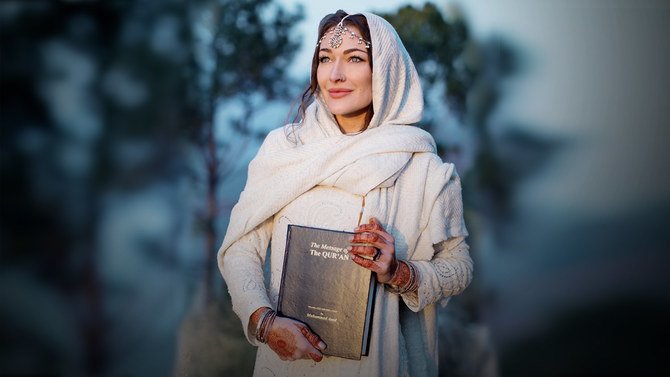

ISLAMABAD: Travel vlogger and influencer Rosie Gabrielle has converted to Islam after her visit to Pakistan.
“The universe brought me to Pakistan, not only to challenge myself to let go of the last remaining traces of pain and ego but also to show me the way,” wrote Gabrielle in her announcement about her conversion.
Gabrielle, is a popular solo female traveler and influencer from Canada, documenting her adventures on YouTube and social media to an audience of over 300,000. Her Instagram post, highlighting her devotion to Islam, has garnered over 85,000 likes since going live last night.
Gabrielle traveled through Pakistan in December last year, a trip she credited as bringing her to Islam while she was undergoing a spiritual renaissance.
Captioning the photo of her holding the Holy Qur’an, she said she was on an “Exploration of self, and the great Divine,” adding that she “never let go the sight of the Creator, in fact, [her] curiosity and connection only grew stronger [with time]. Now no longer dictated by fear, [she] was able to fully explore this righteous path.”
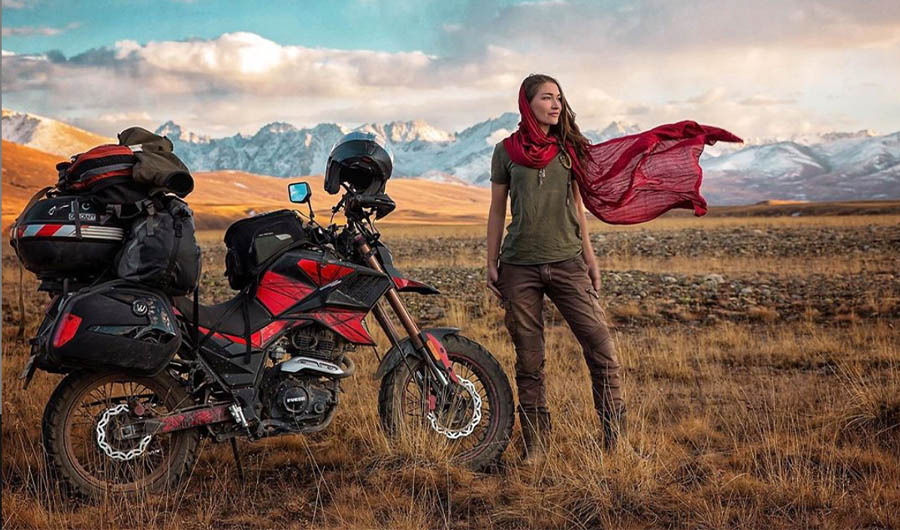
Gabrielle poses with her motorbike on Dec. 9, 2019. (Photo courtesy: Rosie Gabrielle)
Gabrielle, who explores the world on her motorcycle, has spent significant time in Muslim countries, such as Saudi Arabia, the United Arab Emirates, Oman and Yemen.
In her announcement about her conversion, Gabrielle included thoughts on the negative perception Islam has fallen under in recent times.
“Unfortunately Islam is one of the most misinterpreted and criticized religions worldwide. And like all religions, there are many interpretations. But, the core of it, the true meaning of Islam, is PEACE, LOVE & ONENESS. It’s not a religion, but a way of life. The life of humanity, humility, and Love.”
“For me, I was already technically a ‘Muslim’. My Shahada was basically a re-dedication of my life to the path of Oneness, connection and Peace through the devotion of God.”
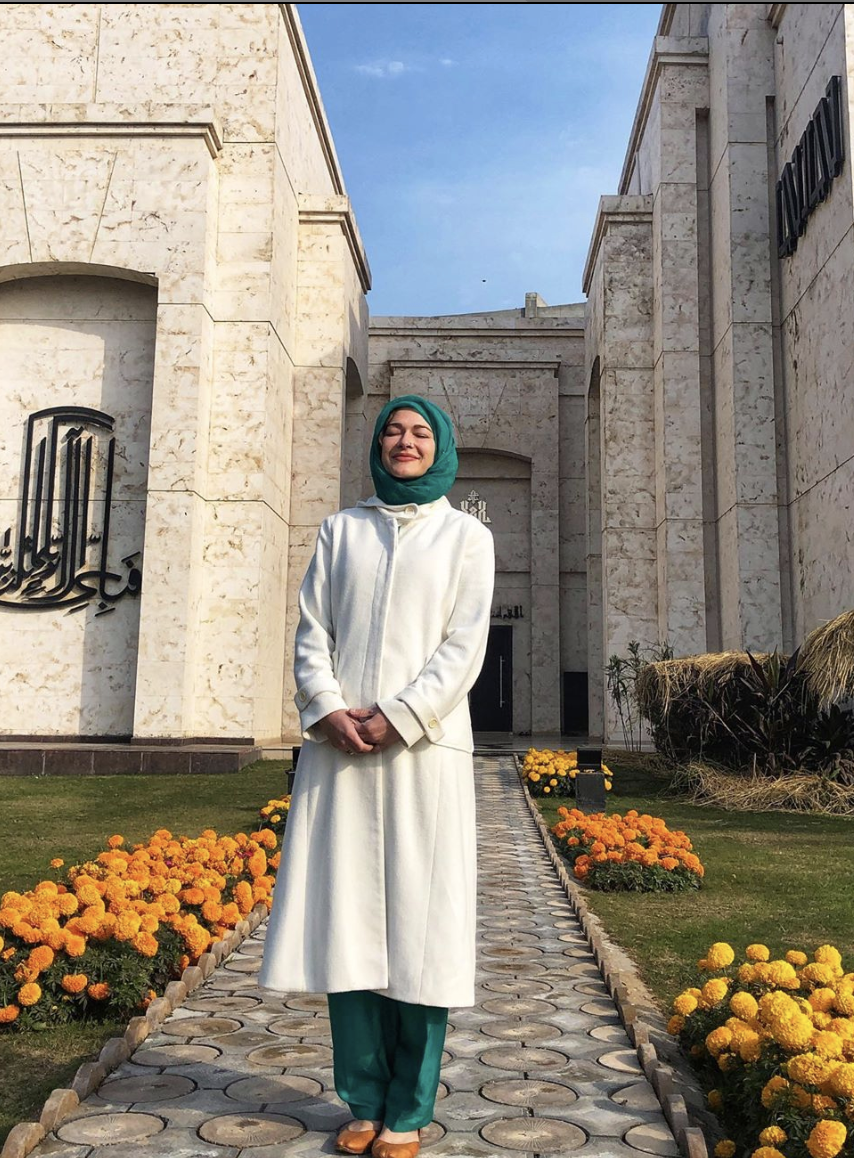
In this undated photo, Rosie Gabrielle poses in Muslim attire. Her conversion announcement garnered over 100,000 likes across her social media channels. (Photo courtesy: Rosie Gabrielle)
Since posting last night, Gabrielle has been actively responding to queries and congratulations on social media.
“Am I changing my name? No. Some people who accept Islam choose to change their name to a more noble meaning, one might desire a name of the honorable people/Prophet in the Holy teachings,” tweeted Gabrielle.
Am I changing my name ? No. Some people who accept Islam choose to change their name to a more noble meaning, one might desire a name of the honourable people/Prophet in the Holy teachings.
— Rosie Gabrielle (@RosieGabrielle3) January 10, 2020
And thank people for their support, “Overwhelmed by this response! Like seriously overwhelmed. Thank you for this outpouring of love and support.”
Oh my !
Overwhelmed by this response! Like seriously overwhelmed. Thank you for this outpouring of loveove and support. There's no way I can answer all of the comments and questions, but let me help you with a few of the common ones.— Rosie Gabrielle (@RosieGabrielle3) January 9, 2020


