

Saudi Arabia launches bidding for four new solar projects

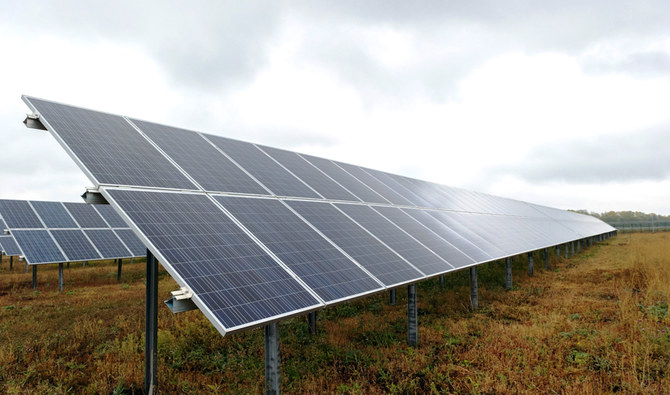
Saudi Arabia aims to produce 9.5 gigawatts of renewable energy under its Vision 2030 plan. (Shutterstock)
Short Url
Updated 10 January 2020
Follow

Saudi Arabia launches bidding for four new solar projects

  • The first batch of projects will target smaller firms

LONDON: Saudi Arabia has kicked off the bidding process for four major solar projects capable of generating 1,200MW as the Kingdom seeks to reduce its reliance on fossil fuels.

The Renewable Energy Project Development Office of Saudi Arabia’s Ministry of Energy said it had issued the requests for qualification (RFQ) for the third round of the Kingdom’s National Renewable Energy Program (NREP).

The first batch of projects will target smaller firms and will include the Layla 80 MW solar PV and the Wadi Al Dawaser 120 MW solar PV projects.

The second batch will include the larger Saad 300 MW solar PV and Ar Rass 700 MW solar PV projects. 

Renewable Energy Projects Development Office head Faisal Alyemni said the work will carry a minimum requirement of 17 percent local content as calculated by the Local Content and Government Procurement Authority.

Launched in 2017, REPDO tendered the first round of renewable energy projects which included Sakaka 300 MW solar PV project, now connected to the national electricity grid, and Dumat Al Jandal 400 MW wind project, which is currently under construction. 

The second round launched last July comprised of six solar PV projects amounting to 1,470 MW. 

Interested bidders have until Jan.20 and Feb. 3 to submit proposals for categories B and A respectively. 

Developing a thriving renewable energy industry is a central plank of the Saudi Vision 2030 economic and social blueprint with an initial target of generating 9.5 gigawatts of renewable energy. The plan also envisages the use of public private partnerships and the gradual liberalization of the fuels market.


King Abdulaziz Airport among world’s busiest after record-breaking 2025

Updated 02 January 2026
Follow

King Abdulaziz Airport among world’s busiest after record-breaking 2025

RIYADH: King Abdulaziz International Airport has achieved a new historical milestone, reaching 53.4 million passengers in a single year.

This is the highest number ever recorded at a Saudi airport since the beginning of air travel in the Kingdom, placing it among the world’s mega airports in terms of passenger traffic, according to the Saudi Press Agency.

The airport handled a total of 310,000 flights and 60.4 million bags, representing a 12 percent increase compared to 2024. It also handled 9.57 million Zamzam water containers and 2,968 cargo flights. 

This achievement reflects the airport’s qualitative transformation and its position as a regional hub and national gateway connecting the Kingdom to the world. It also highlights its role in facilitating the movement of visitors and pilgrims, promoting tourism in line with the goals of Vision 2030, diversifying the economy, and providing a distinguished travel experience. 

For his part, CEO of Jeddah Airports Co. Mazen Johar, affirmed that reaching 53.4 million passengers confirms the airport’s high operational readiness and represents a pivotal milestone for moving to the next phase, in preparation for doubling this number, God willing, in the coming years. 

He pointed out that this national achievement would not have been possible without the grace of God Almighty, followed by the directives of the wise leadership and the continuous follow-up from the minister of transport and logistics, the president of the General Authority of Civil Aviation, and the CEO of Airports Holding Co. 

He explained that King Abdulaziz International Airport is strengthening its position as a major aviation hub in the region through expansions, increased capacity, and improved services, supporting the objectives of the aviation program and aligning with the goals of the Kingdom’s Vision 2030. 

The CEO of Jeddah Airports Co. expressed his gratitude to the partners in success from various government and private sectors for their fruitful cooperation through a collaborative work system that contributed to providing the best services.