

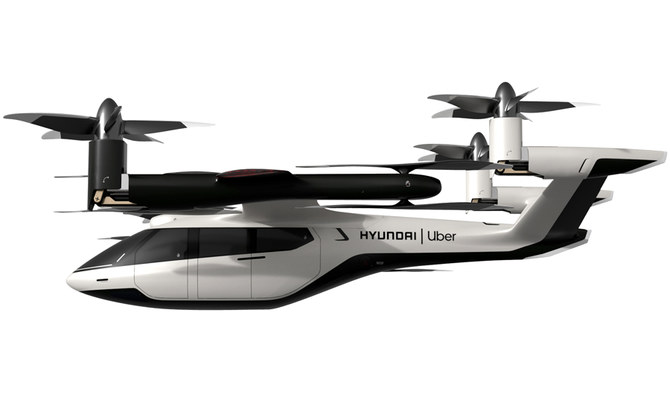

Hyundai Motor Company has unveiled at CES 2020 its innovative vision for urban mobility to help vitalize human-centered future cities.
To realize the vision, Hyundai Motor showcased three mobility solutions, comprising Urban Air Mobility (UAM), Purpose Built Vehicle (PBV) and Hub, a place for mobility transfer and community activities.
Based on these mobility solutions, Hyundai aims to free future cities and people from constraints of time and space and allow them to create more value in their lives. The company will also accelerate the implementation of its brand vision “Progress for Humanity” and transform itself into a “Smart Mobility Solution Provider.”
Working closely together, UAM, PBV and Hub play key roles in vitalizing human-centered future cities and enriching people’s lives.
UAM connects the sky and the ground, while PBV links people to people on the road. These two smart mobility solutions connect at the Hub, which will be installed across future cities to form a mobility ecosystem.
“For our smart mobility solutions, we considered what truly matters in cities and in people’s lives. UAM, PBV, and Hub will revitalize cities by removing urban boundaries, giving people time to pursue their goals, and creating a diverse community. Our goal is to help build dynamic human-centered future cities and continue our legacy of progress for humanity. CES 2020 is just the start and we will continue to realize this vision,” said Euisun Chung, executive vice chairman of Hyundai Motor Group.
The company established the Human-Centered City Advisory Group with top global experts from fields such as psychology, architecture, urban design, transportation, and political science, and conducted research on how future cities should be designed to foster new human-centered values.
The advisory group derived three key values for future cities: Vitalize, enable, and care. Considering Hyundai’s strength in mobility and connecting people, the advisory group decided to place priority on the “vitalization” of cities.
“All three values are important, but Hyundai is exceptionally well-positioned to vitalize communities with new forms of mobility,” said Art Markman, a member of Hyundai’s Human-Centered City Advisory Group and professor of cognitive psychology at the University of Texas in Austin.
In addition to the advisory group, Hyundai also envisioned different city archetypes and developed future city scenarios to predict the infrastructure and development direction that will be required for future cities. The company focused on human-centered mobility solutions to address traffic congestion challenges in major cities.
“Based on advice from the advisory group, we tried to find mobility solutions that will vitalize communities in a meaningful and imaginative way. UAM, PBV, and Hub are solutions that will help alleviate pain-points in big cities like San Francisco,” said Youngcho Chi, president and chief innovation officer at Hyundai Motor Company.


