Ghosn ‘fled by bullet train’, Japan vows to bolster borders

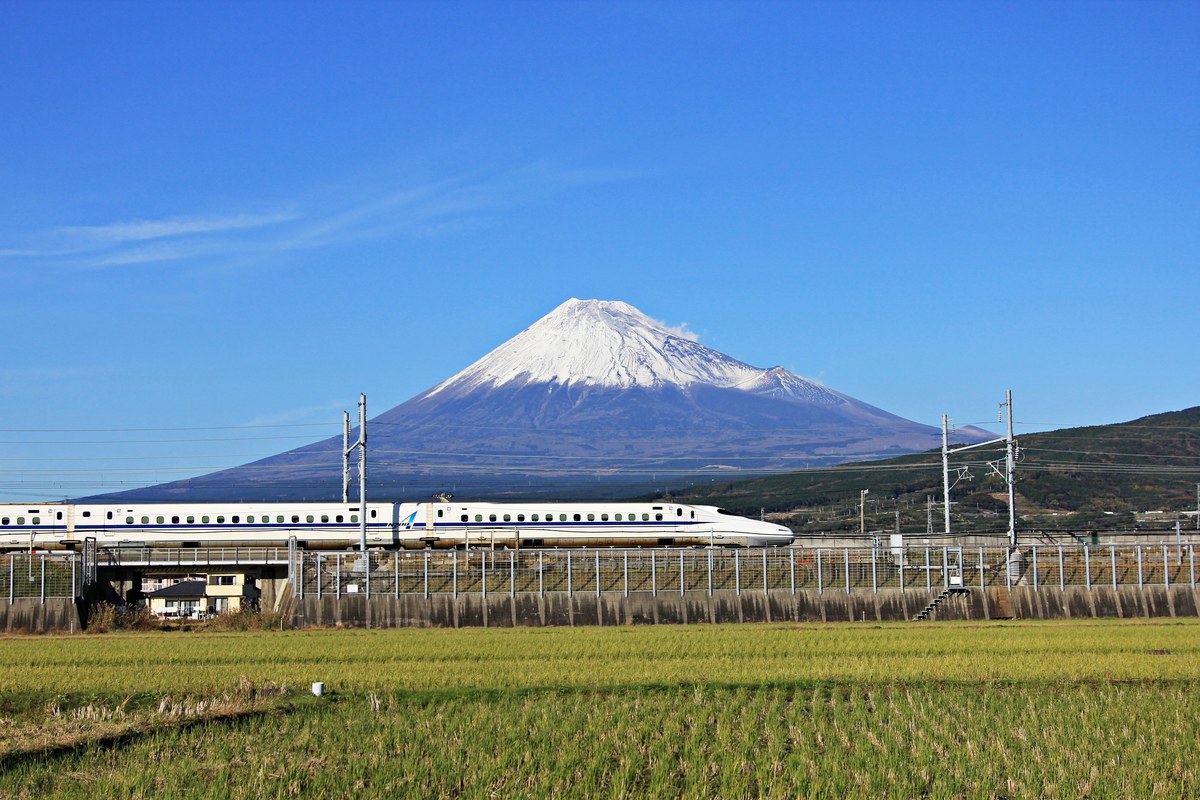
Fugitive former Nissan Motor Co. President and CEO Carlos Ghosn left on a bullet train. (AP/Eugene Hoshiko, File)
Short Url
Updated 06 January 2020
Follow

Ghosn ‘fled by bullet train’, Japan vows to bolster borders

  • The 65-year-old executive skipped bail nearly a week ago
  • Japan is still investigating how the fugitive managed to jump bail and flee to Lebanon

TOKYO: New reports emerged Monday on how fugitive former Nissan boss Carlos Ghosn jumped bail in Japan, as the country’s justice minister said border controls would be bolstered after the escape.
The 65-year-old executive skipped bail nearly a week ago, fleeing Japan where he was awaiting trial on multiple counts of financial misconduct that he denies.
The details of his escape remain spotty, with Japan saying it is still investigating how he slipped past strict security measures imposed as part of his bail conditions.
Citing people involved in the investigation, Nippon Television Network (NTV) said Monday that Ghosn boarded a “shinkansen” bullet train from Tokyo’s Shinagawa station on December 29.
He got off at a station in western Osaka, arriving around 7:30pm and taking a taxi to a hotel near Kansai Airport, NTV said.
He is thought to have taken a private jet the same day from the airport, bound for Istanbul, where he switched planes and continued to Beirut.
Last week, local media reported Ghosn was caught on security camera leaving his Tokyo home by himself around noon on December 29.
But the exact circumstances of his departure from Japan are still shrouded in mystery.
The justice ministry said it did not have records of Ghosn departing Japan.
“It is believed that he used some wrongful methods to illegally leave the country,” Justice Minister Masako Mori said at a press conference on Monday.
“I have instructed the immigration agency to further tighten the departure process,” she added.


Mystery still surrounds Ghon's escape. (File/Shutterstock) 


The Wall Street Journal has reported that Ghosn was loaded onto the flight from Osaka in a large case for audio equipment, which was later found at the back of the cabin.
The newspaper cited unnamed sources close to the investigation in Turkey as saying that holes had been drilled into the bottom of the container to ensure the businessman could breathe.
Japan’s transport ministry told AFP that luggage checks are not mandatory for private jets.
“Operators of private jets decide if luggage checks are necessary or not while airline operators are obliged to conduct security checks under Japan’s aviation law,” a ministry official told AFP.
“The security checks are carried out to prevent danger such as bombs, and to prevent hijacks,” he said, adding such risks are considered less likely for private jets.
Ghosn, who has French, Brazilian and Lebanese nationalities, was able to enter Lebanon on a French passport, according to airport documents seen by AFP.
A court in Tokyo had allowed Ghosn to keep a second French passport as he needed one to travel inside Japan, a source close to the matter has told AFP.
Japan has launched a probe into the humiliating security lapse and prosecutors said they would “coordinate with the relevant agencies to swiftly and appropriately investigate the matter.”
Ghosn has vowed to give his own account at a hotly awaited press conference in Beirut this week.


Sudan paramilitary used mass graves to conceal war crimes: ICC deputy prosecutor

Updated 2 sec ago
Follow

Sudan paramilitary used mass graves to conceal war crimes: ICC deputy prosecutor

UNITED NATIONS: Sudan’s paramilitary Rapid Support Forces carried out mass killings in Darfur and attempted to conceal them with mass graves, the International Criminal Court’s deputy prosecutor said on Monday.
In a briefing to the UN Security Council, Nazhat Shameem Khan said it was the “assessment of the office of the prosecutor that war crimes and crimes against humanity” had been committed in the RSF’s takeover of the city of El-Fasher in October.
“Our work has been indicative of mass killing events and attempts to conceal crimes through the establishment of mass graves,” Khan said in a video address, citing audio and video evidence as well as satellite imagery.
Since April 2023, a civil war between the Sudanese army and the RSF has killed tens of thousands, displaced 11 million and created the world’s largest displacement and hunger crisis.
Reports of mass killings, sexual violence, abductions and looting emerged in the wake of the RSF’s sweep of El-Fasher, which was the army’s last holdout position in the Darfur region.
Both warring sides have been accused of atrocities throughout the war.
Footage reviewed by the ICC, Khan said, showed RSF fighters detaining, abusing and executing civilians in El-Fasher, then celebrating the killings and “desecrating corpses.”
According to Khan, the material matched testimony gathered from affected communities, while submissions from civil society groups and other partners had further corroborated the evidence.
The atrocities in El-Fasher, she added, mirror those documented in the West Darfur capital of El-Geneina in 2023, where UN experts determined the RSF killed between 10,000 and 15,000 people, mostly from the Massalit tribe.
She said a picture was emerging of “appalling organized, widespread mass criminality.”
“It will continue until this conflict and the sense of impunity that fuels it are stopped,” she added.
Khan also issued a renewed call for Sudanese authorities to “work with us seriously” to ensure the surrender of all individuals subject to outstanding warrants, including former longtime president Omar Al-Bashir, former ruling party chairman Ahmed Haroun and ex-defense minister Abdul Raheem Mohammed Hussein.
She said Haroun’s arrest in particular should be “given priority.”
Haroun faces 20 counts of crimes against humanity and 22 war-crimes charges for his role in recruiting the Janjaweed militia, which carried out ethnic massacres in Darfur in the 2000s and later became the RSF.
He escaped prison in 2023 and has since reappeared rallying support for the Sudanese army.
Khan spoke to the UN Security Council via video link after being denied a visa to attend in New York due to sanctions in place against her by the United States.