

Quarter-of-a-million Syrian refugees headed to Turkey, Erdogan wants to stop them

Turkey fears a new wave from Idlib, where up to 3 million Syrians live in the last rebel-held swathe of territory. (File/AFP)
Short Url
Updated 02 January 2020
Follow

Quarter-of-a-million Syrian refugees headed to Turkey, Erdogan wants to stop them

  • Turkey hosts some 3.7 million Syrian refugees, the largest in the world
  • Erdogan said Turkey is trying to prevent refugees from entering its borders but it is not easy

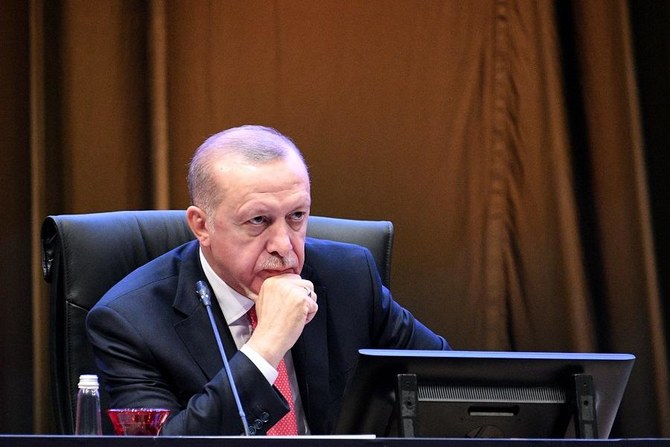
ANKARA: President Tayyip Erdogan said on Thursday that up to 250,000 migrants were fleeing from the northwestern Syrian region of Idlib toward Turkey, adding that Ankara was trying to prevent them from crossing its border.

Turkey hosts some 3.7 million Syrian refugees, the largest refugee population in the world. It fears a new wave from Idlib, where up to 3 million Syrians live in the last rebel-held swathe of territory, after Russian and Syrian government forces last month intensified their bombardment of targets in the region.

“Right now, 200,000 to 250,000 migrants are moving toward our borders. We are trying to prevent them with some measures, but it’s not easy. It’s difficult, they are humans too,” Erdogan told a conference in Ankara.



Qatar joins US-led Pax Silica Alliance to secure semiconductor and critical mineral supply chains

Updated 13 January 2026
Follow

Qatar joins US-led Pax Silica Alliance to secure semiconductor and critical mineral supply chains

  • Doha says participation in alliance will enhance its international partnerships in fields of semiconductors, computing, cybersecurity and digital technologies.
  • Qatar is the second Middle Eastern country to join the US-led economic-security coalition, after Israel

LONDON: Qatar joined the US-led Pax Silica Alliance on Monday in a move described as a strategic step to enhance cooperation in advanced technologies and supply-chain security.

The alliance was launched last month in Washington with the aim of securing global supply chains for semiconductors, artificial intelligence technology, critical minerals and digital infrastructure.

Doha said participation in the alliance will enhance its international partnerships in the fields of semiconductors, computing, cybersecurity and digital technologies, helping to boost the country’s technological capabilities and economic diversification efforts, the Qatar News Agency reported.

Ahmed Al-Sayed, Qatar’s minister of state for foreign trade affairs, and Jacob Helberg, the US under secretary of state for economic affairs, signed the Pax Silica declaration during a ceremony in Doha.

Al-Sayed said the world was undergoing a significant transformation driven by AI, rising energy and mineral demands, and rapid technological advancements.

He described the declaration as “a new milestone in the Qatar-US partnership, founded on trust, shared interests, and a unified vision for advancing stability and prosperity.”

He added: “Qatar recognizes that the currency of geopolitical power has changed. Sovereignty is no longer just about protecting borders, it is about securing the supply chains of the artificial intelligence era.”

Qatar is the second Middle Eastern country to join the alliance; Israel signed up in December. Japan, South Korea, Singapore, the UK and Australia have also joined the bloc.

“In a region often defined by its fractures, Pax Silica marks a historic opportunity for the region to shift from political rivalry to economic interoperability,” Helberg said.