Pakistani Taliban commander confirmed dead in Afghanistan

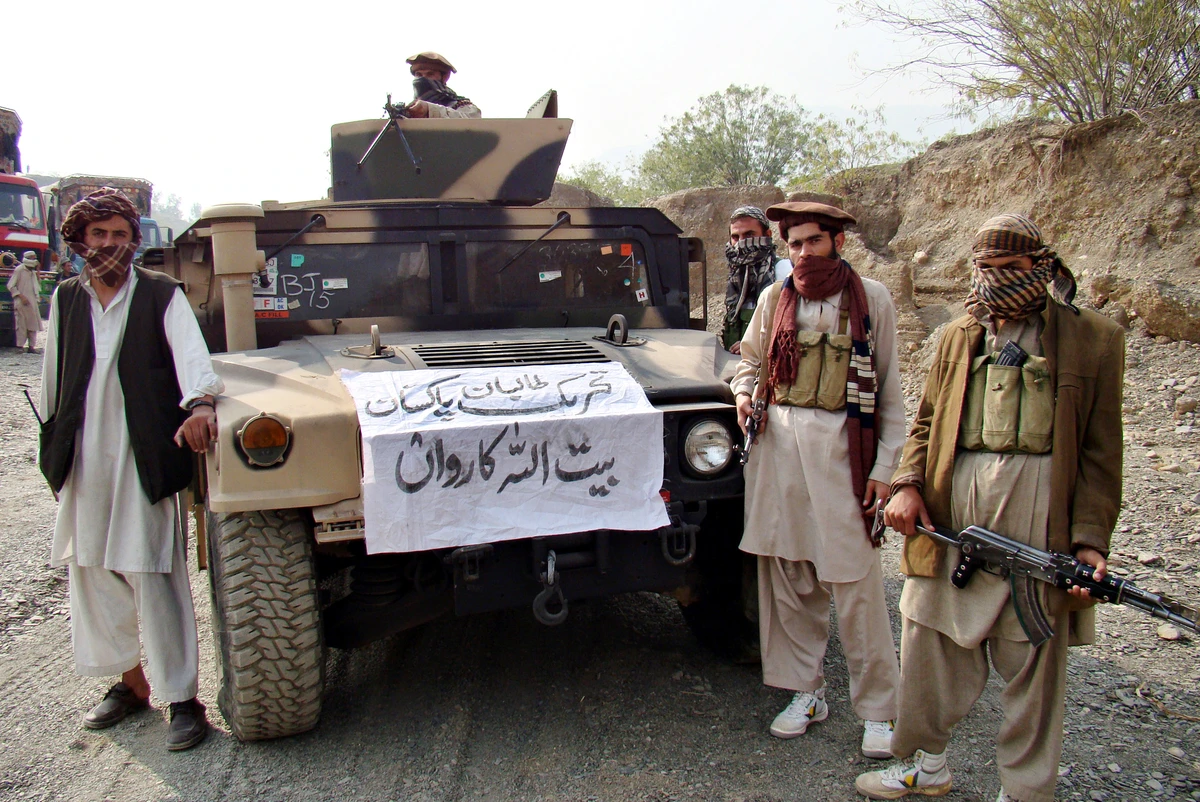
Armed militants of Tehrik-e-Taliban Pakistan (TTP) pose next to a captured armored vehicle in the Pakistan-Afghanistan border town of Landikotal on Nov. 10, 2008, after they hijacked supply trucks bound for Afghanistan. (AFP)
Short Url
Updated 01 January 2020
Follow

Pakistani Taliban commander confirmed dead in Afghanistan

  • Mehsud was killed by unidentified gunmen in Khost, southern Afghanistan, on Sunday
  • He was among the most wanted fugitive Taliban leaders

PESHAWAR: Shrouded in uncertainty for days, the killing of Qari Saifullah Mehsud, a dreaded militant and former leader of the proscribed Tehrik-e-Taliban Pakistan (TTP), was confirmed on Tuesday.

Mehsud was killed by unidentified gunmen in Khost, southern Afghanistan, in the wee hours of Sunday.

A close aide of the slain militant, who requested anonymity, said that soon after hearing about the killing, he headed straight to Khost to attend Mehsud’s funeral ceremony.
 
“He was killed early Sunday morning at the Gulan refugee camp in the Gurbaz district of Khost province. I am told that Mehsud was killed inside his home by unidentified gunmen over a personal rivalry,” a resident of Khost city, who also declined to be named, told Arab News on Tuesday.
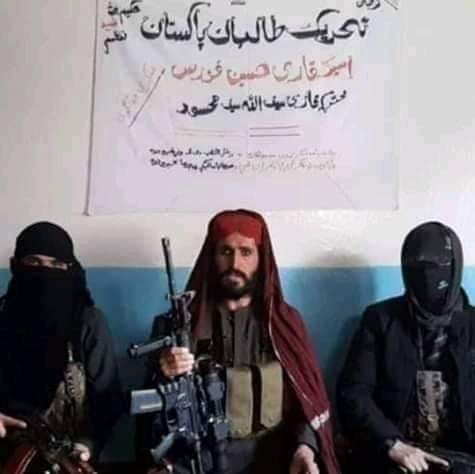


Slain TTP leader Qari Saifullah Mehsud is seen holding a machine gun in this undated photograph. (Photo courtesy: Social media)


 The militant, also known as Gilaman Mehsud, had long ago parted ways with the TTP and formed his own splinter group.

Established in 2007, by late Baitullah Mehsud, the banned TTP is now divided into several factions, which operate on both sides of the porous Pakistan-Afghan border. 

Adnan Bhittani, a senior analyst in Khyber Pakhtunkhwa province, told Arab News that Mehsud’s original name was Khanzallah Mehsud, but he was widely known as Qari Saifullah Mehsud and derived from the northern part of South Waziristan tribal district.

“Mehsud had basically not been that active within TTP circles, the media had projected him out of proportion because he used to claim credit for any attack in an apparent attempt to get a sway among splinter groups,” he added.

For example, he claimed responsibility for the killing of Turkistan Bhittani, former head of a peace committee in southern Tank district, who died in an armed clash with his cousin, Nasrullah Bhittani, following a property dispute.

Adnan said Mehsud was among the most wanted fugitive Taliban leaders who fled to Afghanistan to dodge Pakistan’s military offensive in North and South Waziristan tribal districts.

He recalled that in 2016, the Taliban commander was captured by joint US and Afghan security forces, but was released after 14 months.
 
Afghan media sources also reported Mehsud’s death at the Gulan camp but stated that the slain militant was a tribal elder known as Hafizullah.
 
Citing Khost police spokesman Adel Shah Haidar, the media confirmed the incident, saying the killing was triggered by personal enmity.
Pakistan to sell excess gas in international markets from Jan.1— petroleum minister

Updated 4 sec ago
Follow

Pakistan to sell excess gas in international markets from Jan.1— petroleum minister

  • Pakistan was reportedly exploring ways to reduce $378 million in annual losses from supply glut caused by excess fuel imports 
  • Move to sell excess LNG in international markets will limit $3.56 billion losses caused since 2018-19, says petroleum minister

ISLAMABAD: Pakistan will sell its excess liquefied natural gas (LNG) in international markets from Jan. 1, Petroleum Minister Ali Pervaiz Malik said, revealing the move would limit losses caused from a years-long supply gut. 

Local and international media outlets had reported in July that Pakistan was exploring ways to sell excess LNG cargoes amid a gas supply glut that government officials said was costing domestic producers $378 million in annual losses. News reports had said Pakistan had at least three LNG cargoes in excess that it imported from Qatar and has no immediate use for.

Speaking to reporters during a press conference on Sunday, Malik said there was an excess of imported gas in Pakistan as the use of this fuel for power generation had reduced in the country during the past few months. He said Islamabad had been forced to sell the gas to local consumers, due to which the circular debt in the gas sector from 2018 till now had ballooned to around Rs1,000 billion [$3.56 billion]. 

“From Jan. 1 we will sell this excess fuel in international markets to reduce our burden and limit our losses of this Rs1,000 billion [$3.56 billion],” Malik said. 

He said this move would also allow Pakistan’s state-owned enterprises in the sector to operate on their full capacity and generate profits and employment. 

Malik also spoke of foreign oil companies that were ready to invest millions in the country in the near future. 

The minister cited the recent visit of Turkish energy minister to Pakistan which had resulted in the state-owned Turkish Petroleum signing deals to carry out onshore and offshore drilling activities in Pakistan. 

“Turkish Petroleum will also open its office in Islamabad, where 10 to 15 Turkish nationals will be working,” Malik said. 

He also said that a delegation of the State Oil Company of Azerbaijan Republic (SOCAR) visit Pakistan this week, adding that it was also expected to collaborate with local companies for oil and gas exploration.

The minister said SOCAR was also opening its office in Pakistan. 

“It will also invest millions of dollars in the construction of an oil pipeline from Machike to Thalian in collaboration with the PSO (Pakistan State Oil) and FWO (Frontier Works Organization),” Malik said.