



LAHORE — The city of Lahore was established on the banks of the Ravi River centuries ago.
Due to continuous invasions, pillage, and attacks, the city had a high brick wall built around it with 12 gates and one narrow passageway, bringing the total to 13.
But half of Lahore’s grand gates were destroyed. Six continue to stand, and carry some traces of their past, with each boasting its own unique history.
“The real gates of Lahore were demolished in the British era. A few gates were reconstructed again but not in their original structure. Now, seven out of the 13 have vanished,” Najum Saqib, Director Conservation, Walled City Lahore Authority (WCLA), told Arab News.
Inside the old city, life seems to exist largely untouched by time. Many streets are too narrow for cars and every crooked alleyway has its own story to tell about the unique culture of its locals.
Taxali Gate-
In the past, invaders entered Lahore from the West, and the first gate they would see was the Taxali, home of Lahore’s infamous old Red Light District. This is also the site of Lahore’s Gawalmandi, or food street, a bustling tourist destination packed full of delectable local treats, their recipes passed down through the generations.
Taxali was historically an upper-class area of the city. The subcontinent’s renowned musicians and singers belonged to neighborhoods inside the gate.
The British demolished Taxali Gate for military reasons and it was never built again.
Bhatti gate-
This is the second gate on the western side. The old structure was demolished and rebuilt by the British. It remains a bustling center of commerce but locals say increasing urbanization has marred the traditional values of life inside the old gate.
“The life inside Bhatti gate is not the same. There was a time when everyone knew everyone. Now people are more secretive about their work, their life and not open with each other the way they once were,” Mian Ismaeel, 93, a resident of Bhatti gate, told Arab News.
Mori Gate-
Mori gate, to the south, was never considered a gate by historians.
“Mori gate has not been considered a gate in any historical writing but the people of Lahore always counted it as the 13th gate. The gate has been destroyed and not even a single sign remains,” Adil Lahori, head of Lahore Heritage Foundation, told Arab News.
Presently, the area has been turned into Lahore’s biggest fish market.
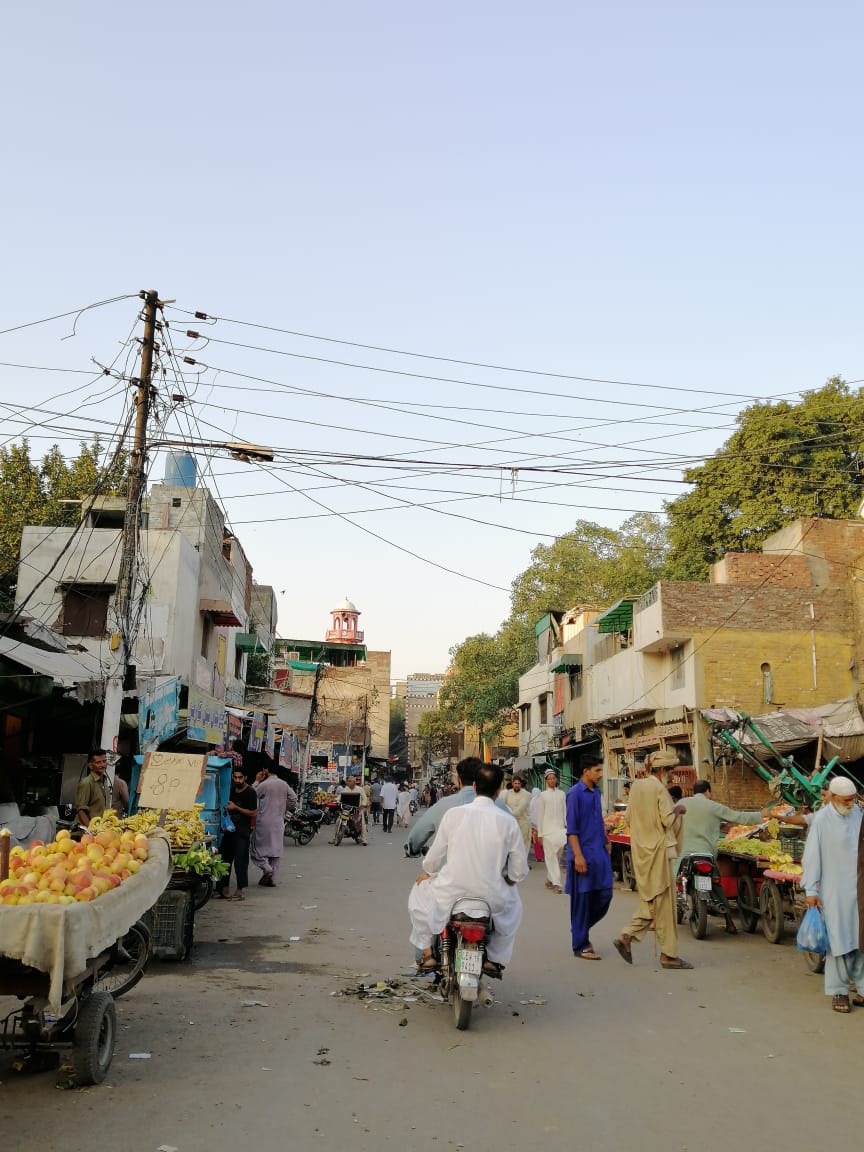
A narrow street, once the standing ground of the unofficial 13th gate of Lahore- Mori Gate which was demolished by the British. Dec. 1, 2019. (AN Photo)
Lahori Gate-
This gate still stands-- the first gate constructed by Emperor Akbar. It faces Anarkali Bazar and remains a commercial hub to this day.
Once, the glamorous red-light district was located inside Lahori Gate, and the city’s richest dancers would reside here in beautiful palaces called Havelis.
A few derelict Havelis still exist, inhabited by multiple families without a care for the historic value of their homes.
The area was also the first international market of the sub-continent as Europeans began the business of buying indigo here. It was the biggest market of the indigo dye in the world, and Lahore its biggest producer.
“It is a wrong perception that the West started the business of spices in the sub-continent first... rather they started buying bluing from here and exported it to Europe,” Adil Lahori said.
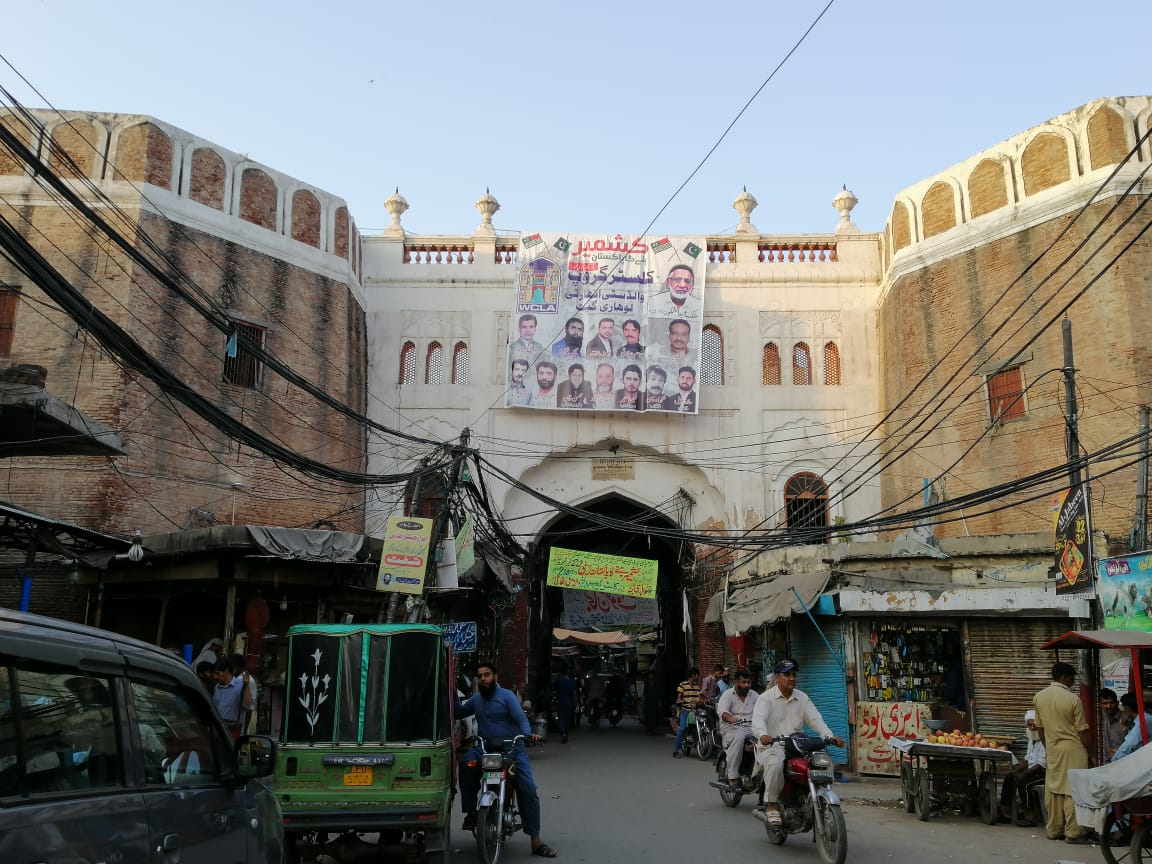
Lahori Gate as it stands today, rebuilt by the British in the 19th century. Dec. 1, 2019. (AN Photo)
Shah Alam Gate-
Lovingly called Shahalmi by Lahore’s residents, the original gate was destroyed when its buildings and a majority of its residents were reduced to ashes during pre-partition riots in 1946.
It was once a Hindu-dominated area and a hub of commerce and trade. Even today, it depicts the same tradition of business with one of Asia’s largest wholesale markets.
“In 1957, the partly burnt Shahalmi Gate was pulled down by the Lahore administration for rebuilding-- a dream that never came true,” said Ahmad Hassan, 90, an old resident of Shahalmi.
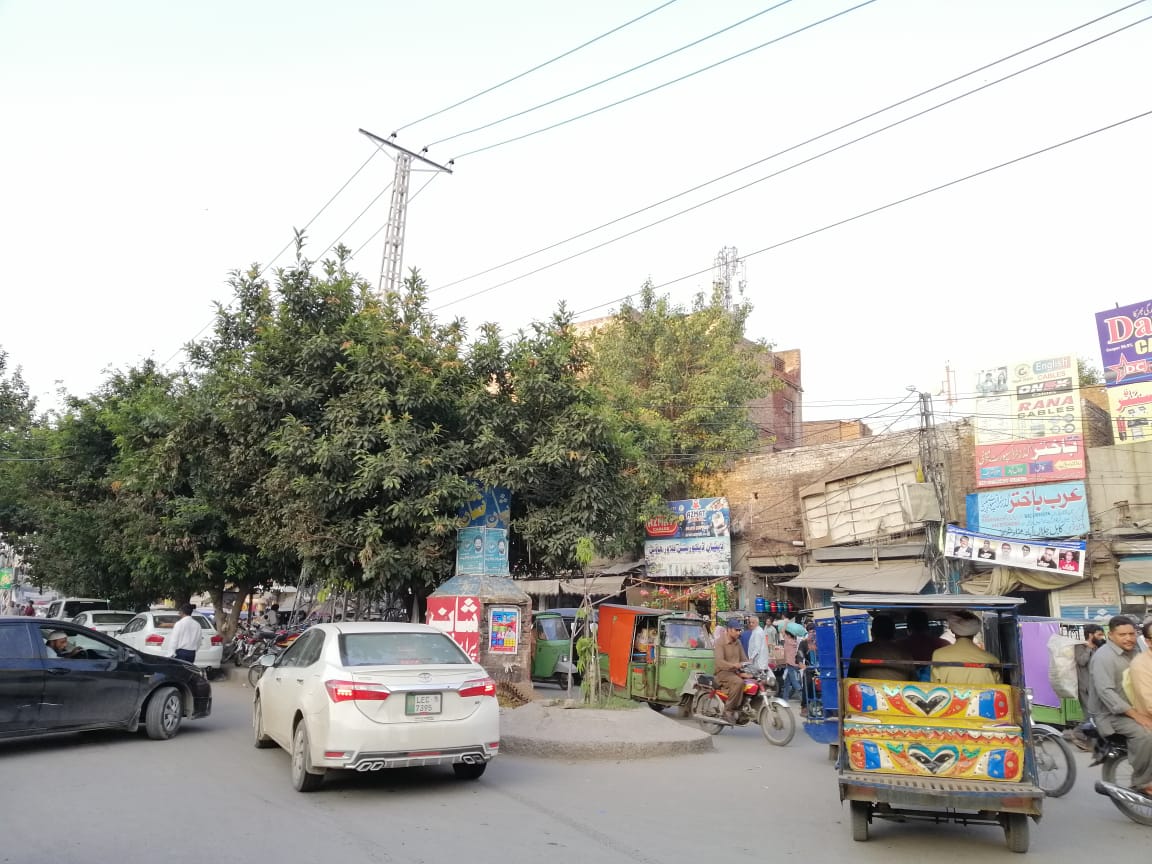
The facade of shop-fronts where Shah Alam Gate once stood before being burnt to the ground in the 1946 pre-partition riots. Dec 1, 2019. (AN Photo)
Mochi Gate-
Inside the Mochi gate, shops sell dry fruit, fireworks, and kites. The area is home to iconic Shi’ite buildings, nestled in the middle of the walled city’s network of narrow and bustling streets, from where the annual procession of Moharram begins.
Historically, the area inside Mochi gate served as the city’s ‘ordinance factory,’ where arrows, swords, bows, horse-saddles, and javelins were produced.
Mochi gate was also demolished by the British.
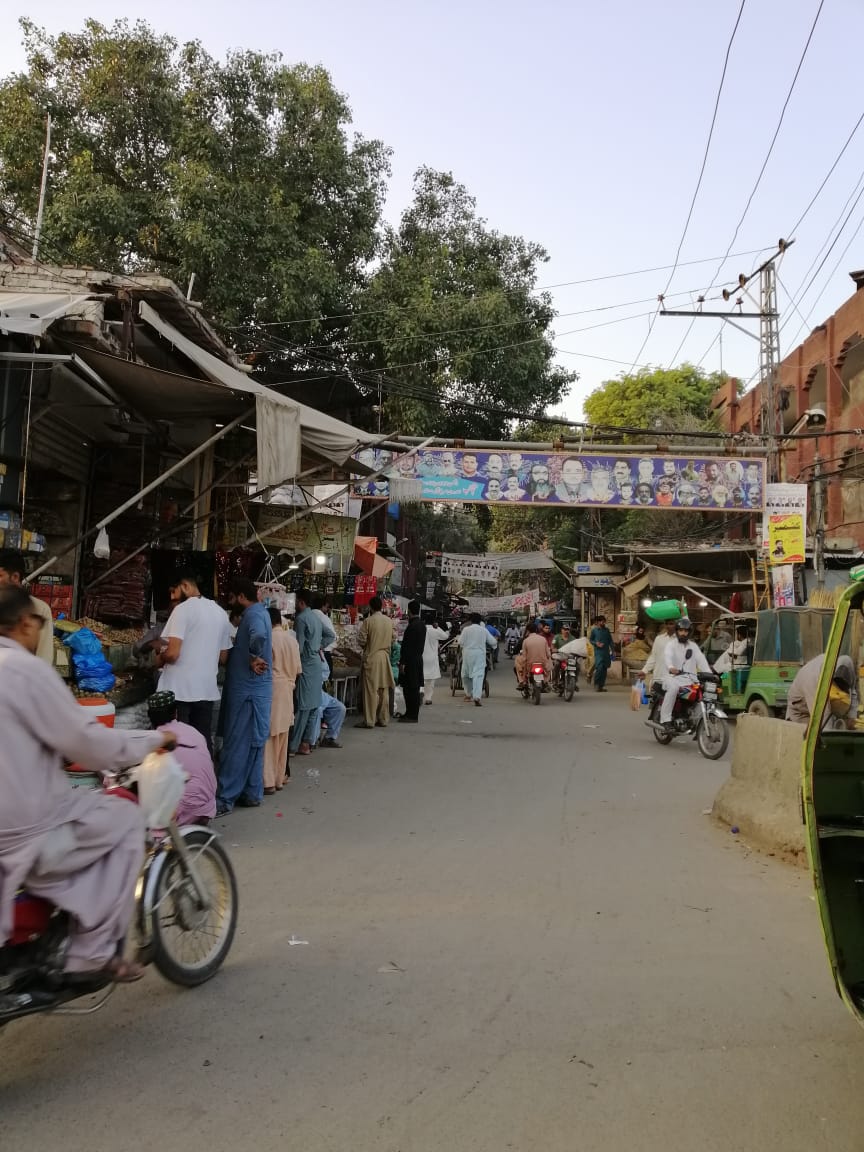
Street in Lahore's walled city, once leading to Mochi gate before it was destroyed by the British during colonial rule. Dec. 1, 2019. (AN Photo).
Akbari Gate-
Within this gate, there was a great spice market during the Mughal era, with traders visiting from all over South and Central Asia. Even today, it is considered an important market for spices and grain.
“This is a centuries’ old market of spices that not only caters to the needs of Pakistan but also Afghanistan. The Afghans buy spices from here and export them to the Central Asian states,” Hammad Butt, a spice trader, told Arab News.
The British East India Company began its trade of spices from this very place. The original gate was demolished by the British.
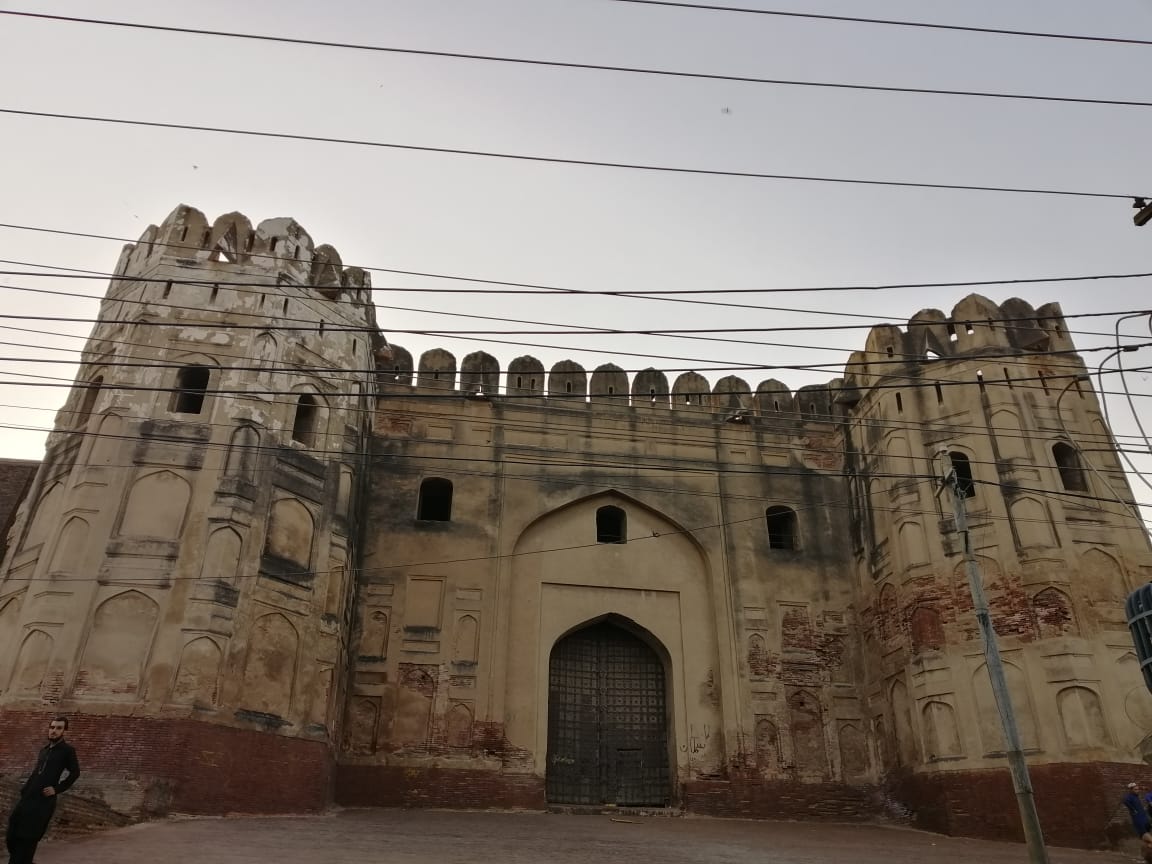
Akbari Gate of Lahore's famous fort. The gate was used by Mughal kings to get into the fort and the city. Dec. 1, 2019. (AN Photo)
Delhi Gate-
The famous ‘Delhi Darwaza’ is situated on the eastern side of Lahore’s Walled City and opens in the direction of Delhi in India, the capital of the Mughal dynasty.
The gate has been conserved by authorities and is illuminated at night for tourists.
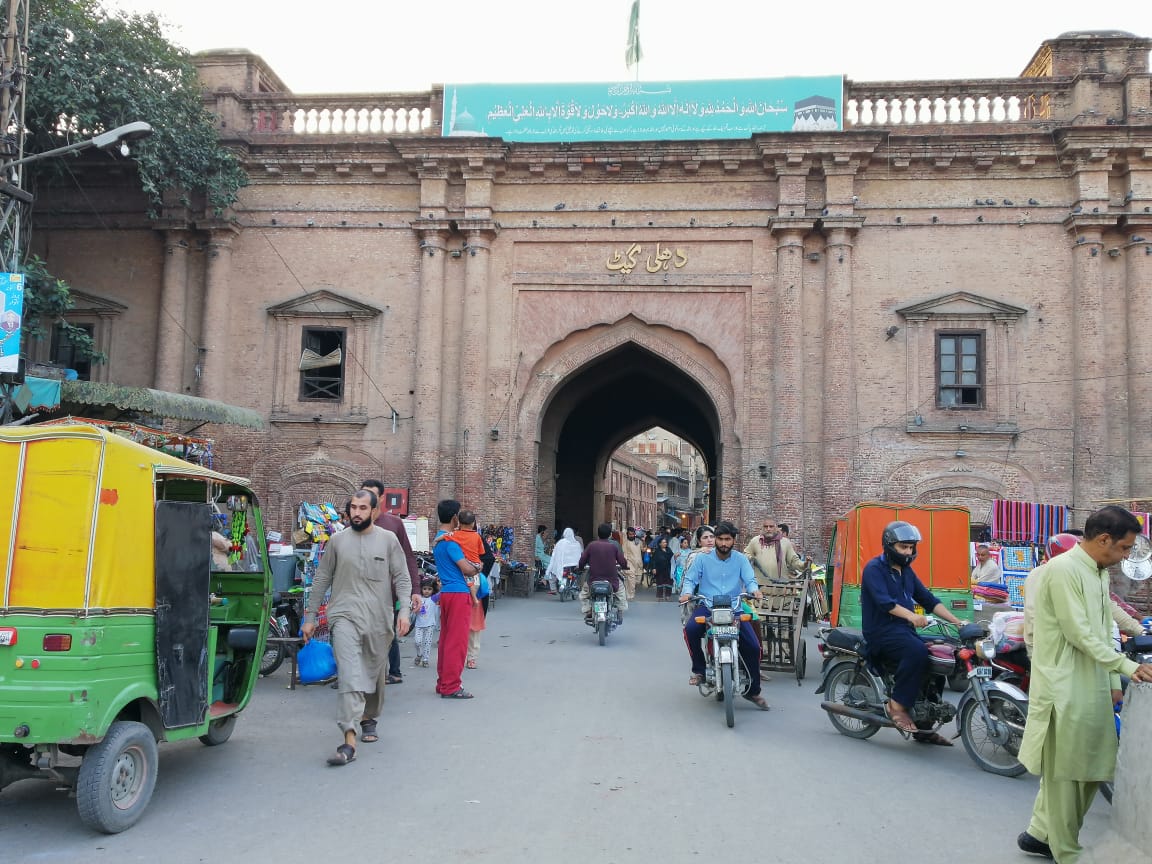
Delhi gate, one of Lahore's most famous gates, still shows signs of some of its old grandeur. (AN Photo)
Kashmiri Gate-
Kashmiri gate is so named because of its direction toward the valley of Kashmir. It houses one of the biggest cloth markets in Asia-- Azam Cloth Market.
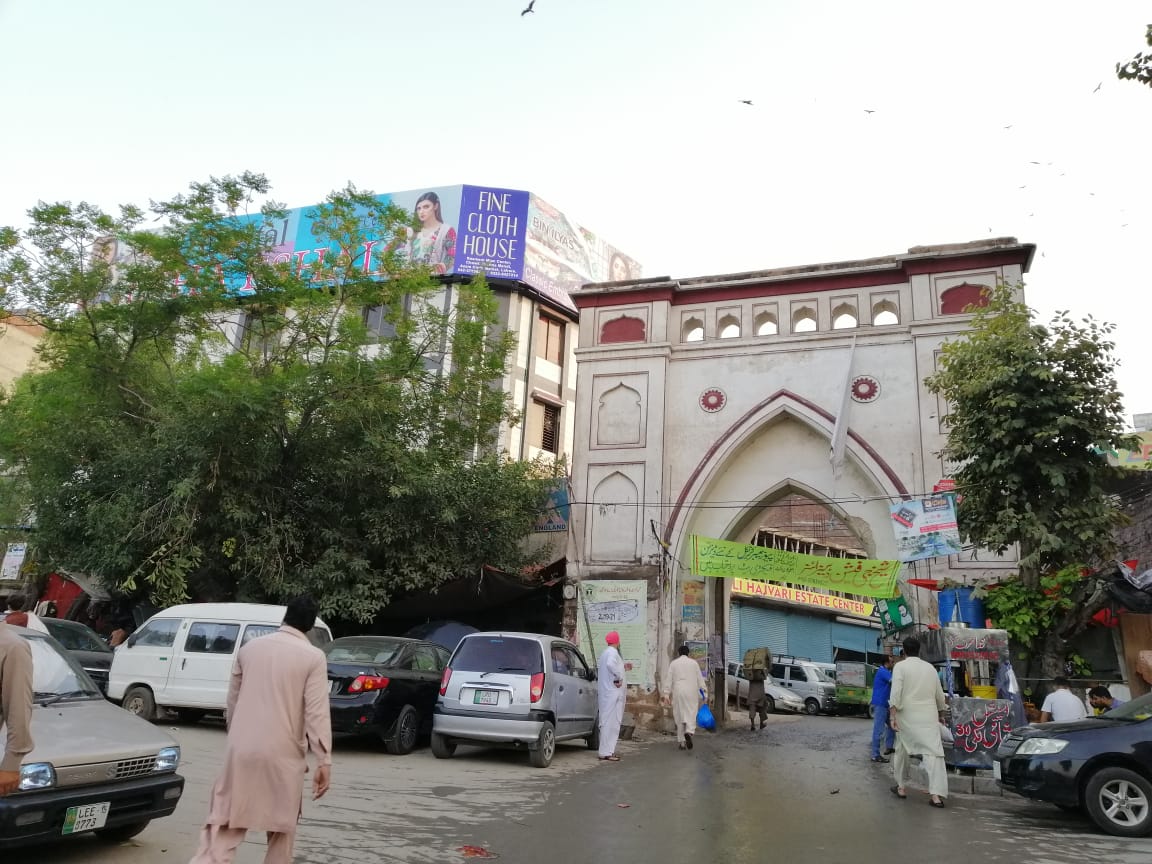
A view of the walled city's Kashmiri gate. The original gate was razed to the ground and in its current form built by the British government in India. The gate has been renovated several times. Dec. 1, 2019. (AN Photo)
Yakki Gate-
The last gate on the eastern side, where several Mughal courtiers spent their lives, with the remains of their Havelis still existing. The gate was demolished during the British Raj and never constructed again.
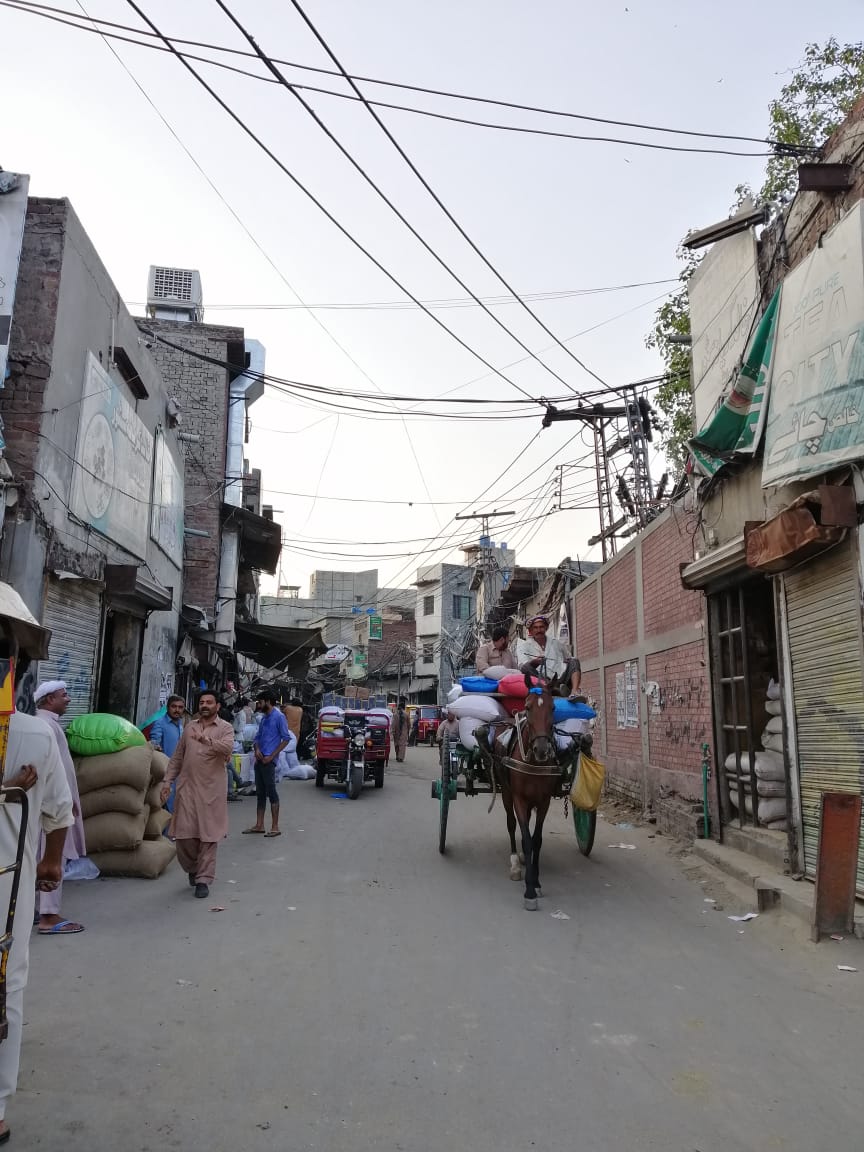
A road and market that was once the location of the ancient Yakki gate. Dec. 1, 2019. (AN Photo)
Khizri Gate-
This gate was constructed on the banks of the Ravi river flowing by the city walls, with residents traveling by boats. The gate still stands but in a derelict state.
Masti Gate-
This was the gate the Mughals used to reach the fort. At present, wholesale and retail markets for shoes are spread out inside the gate.
Roshnai Gate-
This is the only gate that has survived with its grandeur intact. It was used by notables, courtiers and the elite to attend court. In the evening, the lights lit here could be seen from the walled city which gave it its name, Roshnai. This gate still remains in its original shape and structure-- a hidden treasure of centuries’ old Mughal grandeur.
“The significance of these gates has been lost with the passage of time,” Meem Seen Butt, a Lahore-based historian, and writer of several books on the city, told Arab News.
“Now they have heritage value, and are used solely for symbolic purposes.”


