

Balochistan to get first cancer center at Shaikh Zayed Hospital

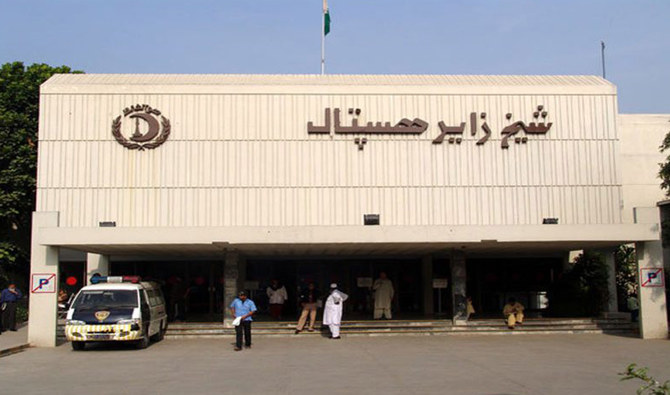
A view of Sheikh Zayed Hospital Lahore. (Photo Courtesy: Social Media)
Short Url
Updated 28 December 2019
Follow

Balochistan to get first cancer center at Shaikh Zayed Hospital

  • The province is the most underdeveloped federating unit of Pakistan
  • The health care facility will be established at the cost of Rs1 billion

KARACHI: The construction work on the first cancer center of southwestern Balochistan province at Quetta’s Shaikh Khalifa Bin Zayed Hospital will begin in January next year, an official said on Saturday.

“The cancer center will be established at Shaikh Zayed Hospital, Quetta, at the cost of Rs1 billion,” Balochistan government’s spokesperson, Liaquat Shahwani, told Arab News, adding that the province’s chief minister, Jam Kamal, would perform the groundbreaking ceremony.

“Another new block will also be established separately for pediatric oncology,” Shahwani said, terming the establishment of the health care facility as a “landmark” development.

The health indicators in the sparsely populated Balochistan are not as good as other provinces of the country, and many patients have to travel to Karachi to get their medical treatment.

According to a report, around 35,000 cancer patients from Balochistan undergo cancer treatment in the country’s major urban centers where treatment and accommodation charges are usually too high for them.

“It is an old demand of the people of Balochistan, and the provincial government has finally managed to fulfill it,” the spokesperson said, adding: “The government has allocated Rs1 billion in the current Public Sector Development Program for the establishment of the health care facility.”

He confirmed that this would be the first cancer center in Balochistan and treat patients from across the province.

Prof. Dr. Roohullah, a former professor at the Center for Nuclear Medicine and Radiotherapy (CENAR), Quetta, maintained that the cancer center was a positive step.

He said that the support of other departments of Shaikh Khalifa Bin Zayed Hospital would make the center “a complete hospital which the province needed for a long time.”


Pakistan PM approves framework for National Energy Plan aimed at cutting power costs

Updated 24 December 2025
Follow

Pakistan PM approves framework for National Energy Plan aimed at cutting power costs

  • Electricity costs in Pakistan have been a major concern for both industries and domestic consumers
  • PM Shehbaz Sharif instructs authorities to expedite privatization of power distribution companies

ISLAMABAD: Prime Minister Shehbaz Sharif on Wednesday approved the framework for a National Energy Plan aimed at ensuring low electricity costs for industries and facilitating domestic consumers, Pakistani state broadcaster reported. 

The development took place during a meeting of the Cabinet Committee on Energy in Islamabad presided over by Sharif. The Pakistani prime minister directed all ministries and provincial governments to present a “workable and coordinated” strategy under the proposed plan.

Electricity costs in Pakistan have been a major concern for both industries and domestic consumers. Industrial users often face high tariffs that increase production cost while residential consumers struggle with rising bills that impact household budgets. 

“Prime Minister Shehbaz Sharif has given in-principle approval for the formulation of a comprehensive National Energy Plan in consultation with relevant ministries and provincial governments,” Radio Pakistan said in a report.

“He emphasized that the government’s top priorities include ensuring electricity supply to industries at the lowest possible cost and providing facilitation for domestic consumers.”

Sharif also approved the establishment of a dedicated secretariat for the National Energy Plan and gave approval to the framework guidelines for auctioning wheeling charges, it added.

Wheeling charges are fees paid for using another company’s power grid to transmit electricity from a generator to a consumer, covering the cost of transporting electricity over someone else’s network.

The report said Sharif instructed authorities to include the recommendations of the climate change, finance, industries and petroleum ministries into the plan. 

Sharif also gave instructions to expedite the privatization of power distribution companies (DISCOs) and urged competitive tariffs for industries to boost production capacity.

Fluctuations in fuel prices, inefficiencies in the power sector, and reliance on imported energy have contributed to high electricity costs in Pakistan in recent years, making energy affordability and stability a key focus for government policies and reforms.

Pakistan has pushed energy sector reforms to tackle long-standing issues like circular debt, power theft, and transmission losses, which have caused blackouts and high electricity costs. 

In February, Pakistan developed a new energy policy that it says will help the country attract $5 billion in investment through public-private partnerships.