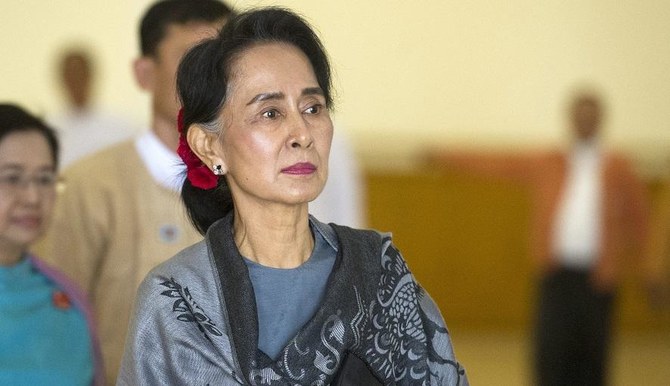
YANGON: An official from Aung San Suu Kyi’s political party was killed in Rakhine state after planning a show of support for the leader’s defense of Myanmar against genocide allegations at The Hague, a spokesman said Thursday.
The National League for Democracy’s Ye Thein, party chairman in Buthidaung township, had been held for weeks by the Arakan Army, insurgents fighting for more autonomy for ethnic Rakhine Buddhists.
The rebels said he was killed in military attacks on Christmas day but the claim could not be verified and NLD spokesman Myo Nyunt said the group bore responsibility.
Ye Thein was detained on December 11 ahead of demonstrations backing Suu Kyi’s high-profile opening statements at the UN’s top court the same day.
“We, all members of NLD, are very sorry for the loss,” Myo Nyunt told AFP. “His gathering to support her was righteous and it was not a crime.”
The Arakan Army has carried out a series of daring kidnappings, bombings and raids against the army and local officials in Rakhine state.
Myanmar’s military has hit back hard, deploying thousands of additional soldiers to the western state and carrying out what Amnesty International called enforced disappearances, torture and extrajudicial executions.
The clashes are taking place in the same area where the military drove around 740,000 Rohingya Muslims over the border to Bangladesh in a bloody 2017 campaign.
The small African, mainly Muslim state of Gambia opened arguments against Buddhist-majority Myanmar at the International Court of Justice on December 10 accusing it of breaching the 1948 UN genocide convention in its operations against the Rohingya.
Backed by the 57-nation Organization of Islamic Cooperation, Canada and the Netherlands, Gambia sought emergency measures to prevent further violence against the Rohingya, pending a fuller case that could take years.
The Arakan Army said ahead of the hearings that it endorsed the case in a rare display of solidarity with Rohingya who are seen in Myanmar as non-citizens.
Suu Kyi stunned observers when she agreed to lead a team to The Hague in mid-December to represent Myanmar.
The former democracy icon’s reputation lies in tatters over the crisis but at home she enjoys broad support and several events across the country were organized to cheer her on.
Suu Kyi said in her opening statement there was no proof of “genocidal intent” and said army operations were in response to Rohingya militant attacks.


![]()

Aung San Suu Kyi party official killed in Myanmar’s Rakhine
Short Url
https://arab.news/wceaa
Aung San Suu Kyi party official killed in Myanmar’s Rakhine
- The National League for Democracy’s Ye Thein had been held for weeks by the Arakan Army, insurgents fighting for more autonomy for ethnic Rakhine Buddhists
- The Arakan Army has carried out a series of daring kidnappings, bombings and raids against the army and local officials in Rakhine state


Latest updates


Recommended


© 2026 SAUDI RESEARCH & PUBLISHING COMPANY, All Rights Reserved And subject to Terms of Use Agreement.