

Pakistani tribal region's only church celebrates Christmas

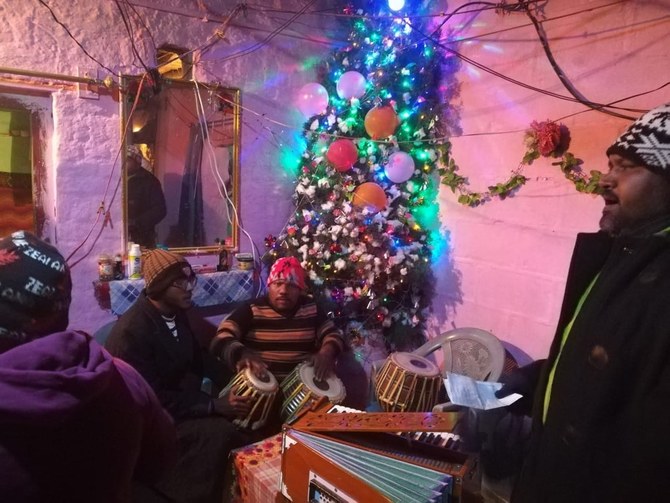
Members of the Christian community sing carols at their church in Wana, South Waziristan, on Dec. 24, 2019. (Photo courtesy: Wana church)
Short Url
Updated 27 December 2019
Follow

Pakistani tribal region's only church celebrates Christmas

  • We have no sectarian conflict, Christians and Muslims in Wana live in harmony, say tribal elders
  • The region used to be known as the epicenter of terrorism and one of the most dangerous places on earth

DERA ISMAIL KHAN: The sound of Christmas carols was heard again in Wana, South Waziristan on the Pakistani-Afghan border, where not long ago violence and Taliban rule would silence all happy celebrations.

“Our tiny Christian community observed Christmas with a zeal. Last night, we had door-to-door visits to celebrate the birth of Jesus with our community members,” pastor Zeeshan Alam told Arab News on Wednesday.

On Christmas Eve, enjoying support from their Muslim neighbors, members of the small congregation prayed for peace at their little church in the tribal district, which used to be known as the epicenter of terrorism and one of the most dangerous places on earth.
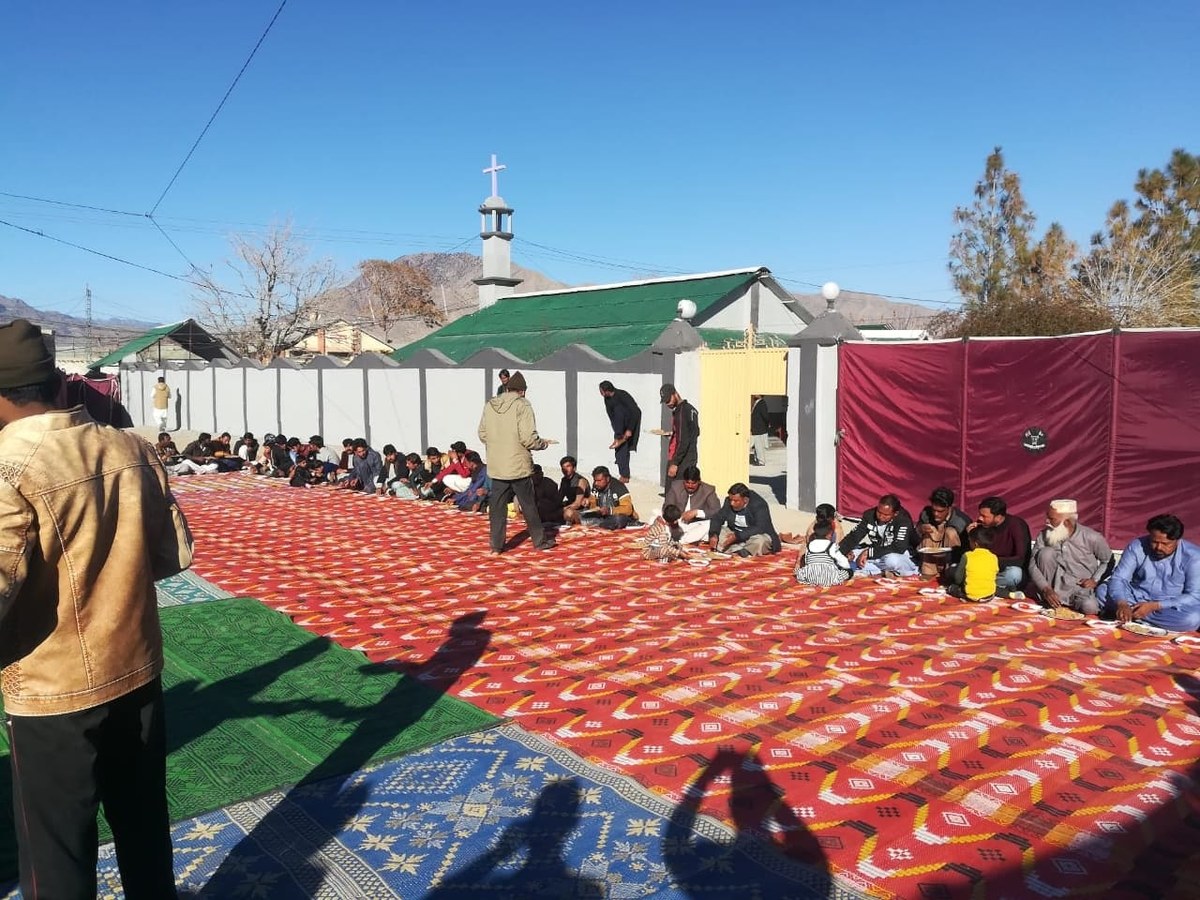


People gather for a communal meal on Christmas Day in Wana, South Waziristan, Dec. 25, 2019. (Photo courtesy: Wana church) 

In times of trial and worry, members of both communities would visit and assist each other, the pastor said.

Tribal elder Khalid Anwar said that Christians and Muslims in what used to be a troubled and violent region, have been living in harmony, and there has never been a single incident of communal violence.

“Look, we had experienced the worst vicious cycles of terrorism in the past decade. Locals have no problem with people of other communities observing their religious rituals. We are proud that people of other faiths live here in harmony,” he said.

Noor Alam, a retired civil defense official, said the pastor was widely known as a noble man who enjoyed great respect among tribal people. He said that Christians and the tribal community understand each other well, and share moments of grief and happiness together. “We have no sectarian tendencies here,” he added.

Next to the church stands the main mosque of Wana.
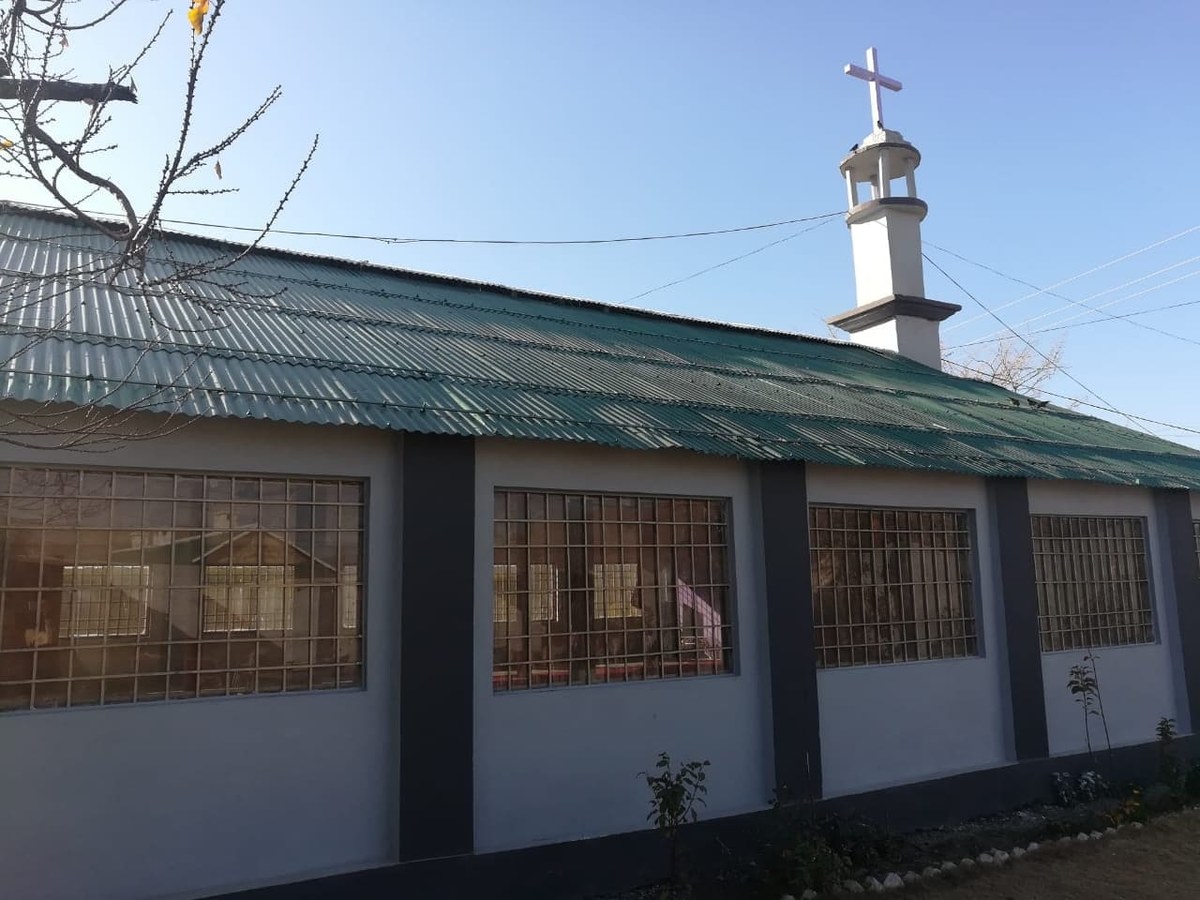


The sole church in Wana, South Waziristan, is seen on Christmas Day, Dec. 25, 2019. (Photo courtesy: Wana church) 

Pastor Zeeshan said that Frontier Constabulary Inspector General Maj. Gen. Azhar Abbasi was invited as guest of honor to the Christmas event, during which children sang traditional carols and “special dishes were prepared to serve guests and relatives.”

The Christian community, which now counts 113 families, has been living in Wana since 1947, said the pastor, a business administration graduate who received theological training from schools in Gujranwala and Karachi.
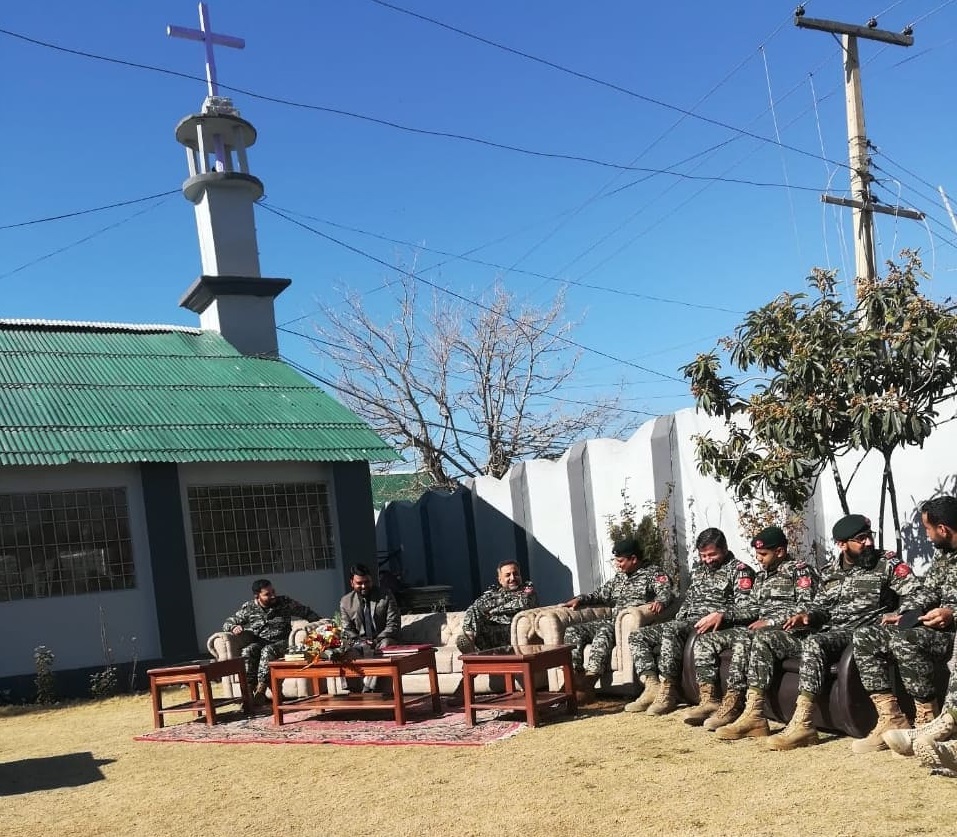


Security officials are on duty on Christmas Day at the Wana church in South Waziristan on Dec. 25, 2019. (Photo courtesy: Wana church)  

When the foundation stone of the Wana church was laid in 2000, the ceremony was attended by civil and military officials, the 33-year-old pastor said. But a few years later the district, which is now part of Khyber Pakhtunkhwa province, was overrun by the Taliban. Violent fights between the militants and Pakistani security forces for years took peace away from the region.

After long military operations, a sense of normalcy has finally returned.


Punjab expands Pakistan-India Wagah border arena with museum, partition-themed park

Updated 4 sec ago
Follow

Punjab expands Pakistan-India Wagah border arena with museum, partition-themed park

  • The border crossing, near eastern city of Lahore, is the primary land route between Pakistan and India and one of the most recognizable symbols of their often-tense relations
  • The site is best known for its daily flag-lowering ceremony, a choreographed military ritual performed by border forces from both countries that draws thousands of spectators

ISLAMABAD: Maryam Nawaz, chief minister of Pakistan’s Punjab province, on Thursday inaugurated the newly constructed arena at Wagah border cross between Pakistan and India, which includes a museum and a partition themed park.

The Wagah border crossing, located near the eastern city of Lahore, is the primary land route between Pakistan and India and one of the most recognizable symbols of the often-tense relationship between the two neighbors. It serves as a key point for prisoner exchanges and limited movement of travelers, while remaining tightly regulated due to security considerations.

The site is best known for its daily flag-lowering ceremony, a choreographed military ritual performed by border forces from both countries that draws thousands of spectators. Over the years, the ceremony has evolved into a popular tourist attraction, blending displays of nationalism with public spectacle and making it one of Pakistan’s most visited landmarks, which connects with India’s Attari.

Flanked by military officials, CM Nawaz visited the crossing and inaugurated the new arena, with its seating capacity increased from 7,500 to 25,000 spectators, the state-run Radio Pakistan broadcaster reported. The chief minister also visited the martyrs’ monument and offered her respects.

“In addition to the arena’s expansion, several new constructions have been added at the Joint Check Post Wagah. These new developments include a theme park depicting the partition of the Subcontinent, featuring models of a railway station, military equipment and a Martyrs’ Memorial,” the broadcaster reported.

“A Pakistan Museum has also been established within the arena, showcasing the country’s history and culture from the Freedom Movement to the present day.”

In August 1947, Britain divided the Indian Sub-continent, its former colony, into two countries — Hindu-majority India and Muslim-majority Pakistan.

Excitement over independence was quickly overshadowed by some of the worst bloodletting that left up to 1 million people dead as gangs of Hindus and Muslims slaughtered each other.

Creating two independent nations also tore apart millions of Hindu and Muslim families in one of the world’s largest peacetime migrations, which displaced at least 15 million people.

The fate of Kashmir, then a princely state, was left undecided. The Himalayan territory continues to remain a flashpoint in relations between the neighbors, who have fought multiple wars over it.