BEIRUT: Rafi Tabakian’s clothing store in a Beirut suburb is usually buzzing with customers during the holiday season, but with Lebanon’s economy in ruins, shoppers are in short supply.
“We’ve been in business for 30 years, and I’ve never seen anything like this,” he said, adding that sales have dropped 80 percent in December even though he has cut his prices.
“Now we see customers entering, asking for the price, and then leaving. It’s scary,” Tabakian, who produces and sells clothes in the densely populated, commercial Burj Hammoud neighborhood of the capital, said.
Lebanon is suffering its worst economic crisis, rooted in decades of state corruption and waste, since the 1975-1990 civil war, leaving streets dimmer and shopping centers emptier, with many stores and restaurants void of customers.
The economic woes have sparked huge protests against the ruling elite, banks are imposing capital controls, pressure has piled on the pegged Lebanese pound, and a hard currency crunch has pushed importers to hike prices.
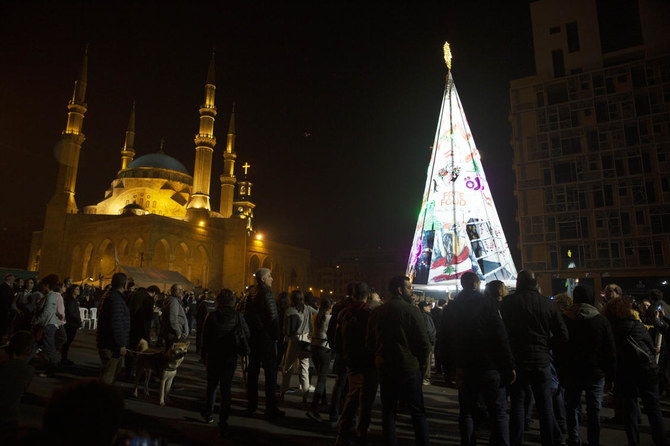
Hotel bookings, flights and events have plunged during what is usually a busy commercial season for Lebanon, which has the Arab world’s biggest proportion of Christians.
Many from Lebanon’s large diaspora normally return home to streets packed with cars and decked out with lights.
But Pierre Ashkar, the head of Lebanon’s hotel association, said December bookings have plummeted from a usual 65-75 percent occupancy to 7-15 percent this year.
“Hotels have closed some parts of their buildings, are giving employees unpaid leave and removing services such as free shuttle transportation to the airport to minimize losses.”
Some local councils have opted to either re-use old decorations or do without.
“We put up last year’s decorations, without adding anything because these are exceptional circumstances,” said Raymond Atieh, head of the Jdeideh municipality, north of Beirut.
“The holidays are coming, but they’re coming with a pinch. People are angry ... People are getting fired, paid half-salaries, or not working,” Atieh added.
Charbel Daccache, a priest in Mount Lebanon’s largely Christian town of Adma, said it was better to help feed the poor in tough times “than to decorate and throw glitter.”
“Some days are harsh; others are better but it’s not the end. That’s why I tell people, let it be a joyous time.”


![]()

Christmas in Lebanon not so merry as economic crisis bites
Short Url
https://arab.news/m5ujx
Christmas in Lebanon not so merry as economic crisis bites
- Lebanon is suffering its worst economic crisis, rooted in decades of state corruption and waste
- The economic woes have sparked huge protests against the ruling elite

Latest updates



© 2026 SAUDI RESEARCH & PUBLISHING COMPANY, All Rights Reserved And subject to Terms of Use Agreement.