ISLAMABAD: Pakistan’s ailing former dictator on Wednesday said the death sentence given to him by a court in a treason case is based on a 'personal vendetta'.
It was Pervez Musharraf’s first reaction to Tuesday’s court verdict, which had already been denounced by the country’s powerful military.
Musharraf’s supporters have held small rallies across the country in his support since the court sentenced him to death after finding him guilty of imposing an emergency in violation of the constitution.
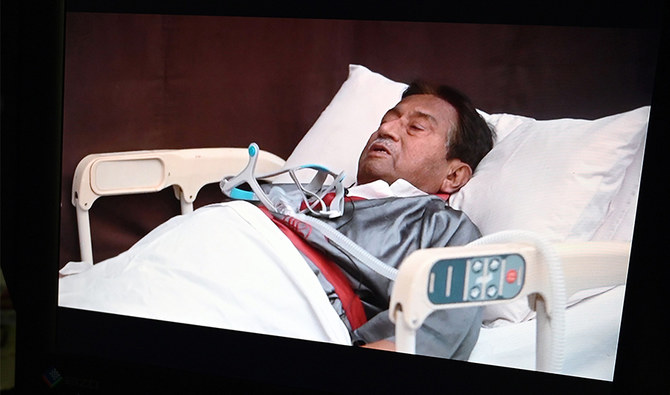
In the video released by his party, Musharraf said “there is no example of such a decision in which neither the defendant and nor his lawyer was given permission to say something in his defense.”
He said the court that held his trial in intervals from 2014 to 2019 rejected his request to record a statement in Dubai, where he has been living since 2016, when he left the country to receive medical treatment.
Musharraf’s health has witnessed ups and downs, and he was again taken to a hospital this month. He said the court verdict against him was questionable and that the supremacy of rule of law was not maintained.
“I will say that there was no need to hear this case under the constitution but this case was taken up and heard because of personnel vendetta of some people against me and one person was targeted in this case,” he said.
Without citing names, he said that those who acted against him “are enjoying high positions and they misuse their office”.
He praised the people and armed forces of Pakistan for standing by him after the court sentenced him to death for imposing the state of emergency in his tenure as president when he was also holding the position of the army chief.
Musharraf said he would take a decision about his future after consulting his lawyers and that he expected and hoped that justice will be done.
His laweyrs have already said that he will challenge death sentence.
Hours earlier, Pakistani Prime Minister Imran Khan consulted his advisers to decide how to handle the situation arising from the sentencing.
Pakistan and the UAE have no extradition treaty and Emirati authorities are unlikely to arrest Musharraf.
The military earlier said it received the court verdict “with a lot of pain and anguish,” saying that Musharraf, “who has served the country for over 40 years, fought wars for the defense of the country can surely never be a traitor.”
Musharraf seized power in 1999 by ousting the elected government of former Prime Minister Nawaz Sharif. In 2007 he imposed an emergency and placed several key judges under house arrest in the capital, Islamabad, and elsewhere in Pakistan.
Later, when he was back in office, Sharif accused Musharraf of treason in 2013. The general was formally charged in 2014. Sharif again came into power in 2013 but a court ousted him from the office in 2017 on corruption charges. Sharif is currently receiving treatment in London after being release d on bail.


![]()

Musharraf sees 'personal vendetta' behind his conviction
Short Url
https://arab.news/zbjy6
Musharraf sees 'personal vendetta' behind his conviction
- Special court in Pakistan sentenced Gen Pervez Musharraf to death in a high treason case
- Emirati authorities unlikely to arrest Musharraf as no extradition treaty exits between Pakistan and the UAE
Latest updates




© 2026 SAUDI RESEARCH & PUBLISHING COMPANY, All Rights Reserved And subject to Terms of Use Agreement.