

LONDON: Late on Tuesday last week, 20-year-old art student Ceren Ozdemir left her ballet class in the Black Sea province of Ordu to start her walk home.
She was followed. The man keeping up with her went undetected. When Ozdemir reached her front door, he stabbed her several times. Left to die in the street, she later succumbed to her injuries in hospital.
The next day, her killer — who has a dozen previous convictions, including robbery and assault — was arrested at a bus stop. He is now facing state prosecution.
Women’s rights organization We Will Stop Femicide said that Ozdemir’s death was the 430th registered murder of a woman in Turkey this year.
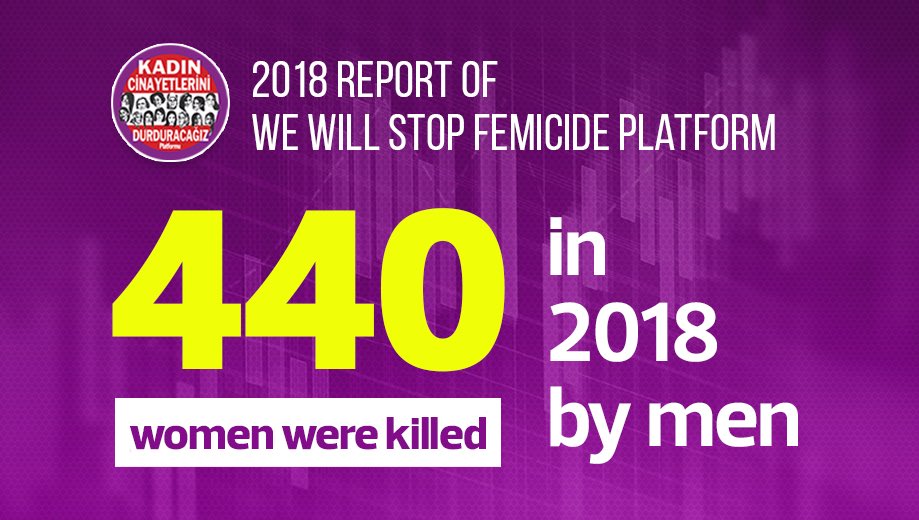
The group — widely considered to be a trusted source on violence against women in the country — claims that 440 women were killed last year, with 2019 set to beat that unwelcome record.
In this decade, the group says that more than 2,600 women have been killed, most of them at the hands of their partners.
Turkish women and rights activists are furious. Their anger is directed not only at male murderers and their accomplices, but also at the authorities, which they accuse of inaction and of fostering a culture that ignores the plight of women.
On Nov. 25, a week before Ozdemir’s murder, 2,000 women gathered in Istanbul on the International Day for the Elimination of Violence Against Women.
They were forced away by the police, who used plastic bullets and tear gas to disperse the crowd.
On Dec. 8, hundreds assembled again in Istanbul’s Kadikoy district to protest violence against women.
They gathered to join a coordinated international movement performing a dance and song called “A rapist in your path.”
The event, first created by Chilean group Las Tesis, set social media ablaze after its debut performance in Santiago, Chile, went viral.
The Istanbul police once again used tear gas to disrupt the rally and deny women the opportunity to deliver their performance.
The EFE news agency reported that after demonstrators started to perform the Spanish- language song in Turkish, police snatched their megaphones.

Fidan Ataselim, below, the leader of We Will Stop Femicide: “The law should be applied properly in order to keep women alive.” (Supplied)
Among those arrested was the leader of We Will Stop Femicide, Fidan Ataselim. One protester told EFE: “We came to scream against patriarchal violence and they have attacked us.”
The group, which has branches across the country and around the world, released a statement demanding that a “minister of women” be established.
“The president, the prime minister and the leaders of all political parties should condemn violence against women,” the statement added.
Clearly, Turkish women are disappointed with the political response to the spate of killings.
In August, after a woman’s murder was captured on video — sparking nationwide outrage — President Recep Tayyip Erdogan announced that he would support any parliamentary act that would restore the death penalty.
But We Will Stop Femicide said: “Practices such as ‘capital punishment’ ... are human rights violations and (this group) rejects them as possible solutions.”
The filmed murder of Emine Bulut, 38, whose throat was slit by her ex-husband in front of her daughter, led more than just Erdogan to wake up to the problem.
Istanbul Mayor Ekrem Imamoglu promptly blamed “male violence” for her death. Major football club Besiktas held a minute’s silence in memory of Bulut.
And despite Erdogan’s death-penalty propositions not being received positively by campaigners, Justice Minister Abdulhamit Gul said in September that his ministry would do anything to halt the violence.
“If it will save just one person, if it prevents one child, one woman from dying or facing violence, we will change not just a law but even the constitution,” he said.
Ankara drove forward the ratification of a 2011 Council of Europe accord, the Istanbul Convention, which prioritizes gender equality. Turkey also passed laws in 2012 designed to protect women from violence.
“Men cannot accept that Turkey is a modern country where women have rights. Some of these men don’t even think we have the right to live.”
Fidan Ataselim, general secretary of We Will Stop Femicide
But in a 2018 report, the Council of Europe said that the cause of violence against women in Turkey was gender inequality, and called on the country to remove traditions that lead to their practice.
Many Turkish Islamist commentators and public figures who support socially conservative laws have opposed the Istanbul Convention, arguing that equality is a corrosive influence in society.
In an interview with Reuters, Islamist writer Abdurrahman Dilipak said that restraining orders and laws for the protection of women fuel divorces and violence.
“Wandering among us is a devil with an angel’s face which is organizing conflict, not peace, within the family,” he added.
“The family is collapsing. With an international agreement (the Istanbul Convention), a trap is being set up against women, men, children and the family.”
But campaigners believe that the devils are not the laws designed to protect them, but the men killing their mothers, sisters, daughters, cousins and friends.
Fidan Ataselim, We Will Stop Femicide’s general secretary, said: “Men cannot accept that Turkey is a modern country where women have rights. Some of these men don’t even think we have the right to live.”
But hope is not lost. Ataselim believes that with the right legal campaigns, Turkish society can successfully fight back against the scourge of domestic violence and sexist killings.
“It’s possible to stop femicide. The Istanbul Convention has to be applied effectively to strengthen and protect women. When it was signed in 2011, we saw a decrease in femicide figures,” she said.
“We have to take this path. The law should be applied properly in order to keep women alive.”