BEIRUT: Dozens of people gathered outside Beirut’s national museum to light candles for a British woman and three Arab women murdered in the past week in Lebanon.
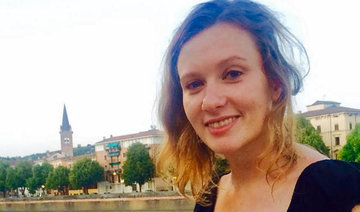
The killing of the British Embassy worker Rebecca Dykes last week has sparked extensive media coverage in Lebanon, prompting activists to press for more attention to be given to widespread violence against women.
Lebanese women’s rights activists held the vigil to mourn the victims, demand better laws, and to protest against the violence — including the three reported murders in northern Lebanon alone over the past week.
“Society refuses to listen to us or see us until our blood is spilled,” Leen Hashem, an organizer, told the crowd from the steps of the museum. “This violence is structural and systematic.”
“Justice is not only arresting the criminal. Justice is for all; this not to happen to us in the first place,” she said. Participants laid white roses over pictures of the four women, and lined the steps with candles.
Wafaa Al-Kabbout stood on the sidelines, holding a framed photo of her 21-year-old daughter Zahraa, whose ex-husband shot her dead last year. “Now my daughter is gone, she’s not coming back,” she said. “But all these young women are our daughters. And there is still fear for the young women after them.”
The UN says a third of women worldwide have suffered sexual or physical violence.
A 2017 national study by the Beirut-based women’s rights group ABAAD said that one in four women have been raped in Lebanon. Less than a quarter of women who faced sexual assault reported it, the survey said.
“Little by little, we are breaking the silence ... for women to come forward and talk about the violence they are facing,” said Saja Michael, program manager at ABAAD.
In the past five years, women have become more likely to report violence and seek help, she said, though sexual assault remains a bit more taboo. Part of the reason is that NGOs have set up new shelters and community centers, with psychological, legal, medical, and other services, Michael added.
“It’s becoming more of a public discourse,” she said. “It’s no longer what’s happening behind closed doors.”


![]()

Violence against women in Lebanon ‘structural and systematic’
Violence against women in Lebanon ‘structural and systematic’

Latest updates





Recommended


© 2026 SAUDI RESEARCH & PUBLISHING COMPANY, All Rights Reserved And subject to Terms of Use Agreement.