

AMC Cinemas opens second location in Saudi capital

1 / 5
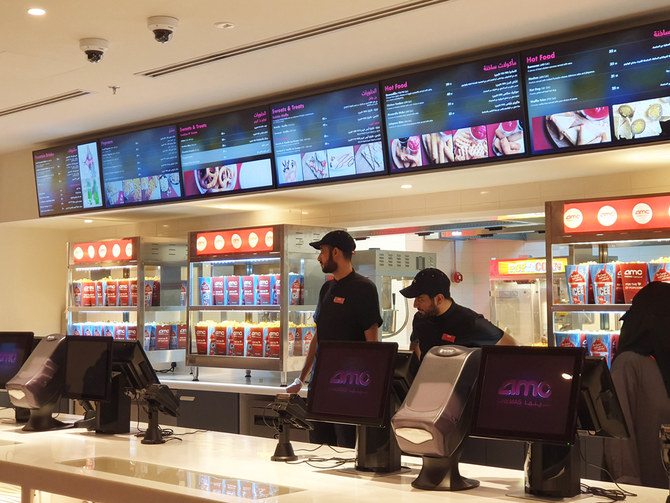
Guests were treated to a sneak peek at the AMC Cinemas’s facilities at Panorama Mall in Riyadh on Sunday. (AN Photo/Hala Tashkandi)
2 / 5
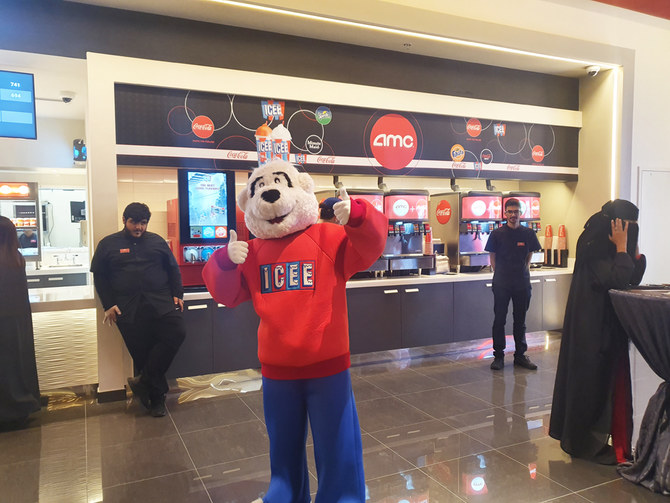
Guests were treated to a sneak peek at the AMC Cinemas’s facilities at Panorama Mall in Riyadh on Sunday. (AN Photo/Hala Tashkandi)
3 / 5
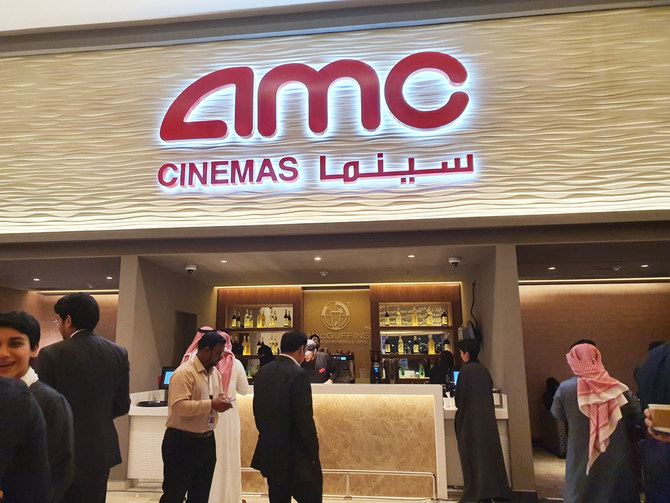
Guests were treated to a sneak peek at the AMC Cinemas’s facilities at Panorama Mall in Riyadh on Sunday. (AN Photo/Hala Tashkandi)
4 / 5
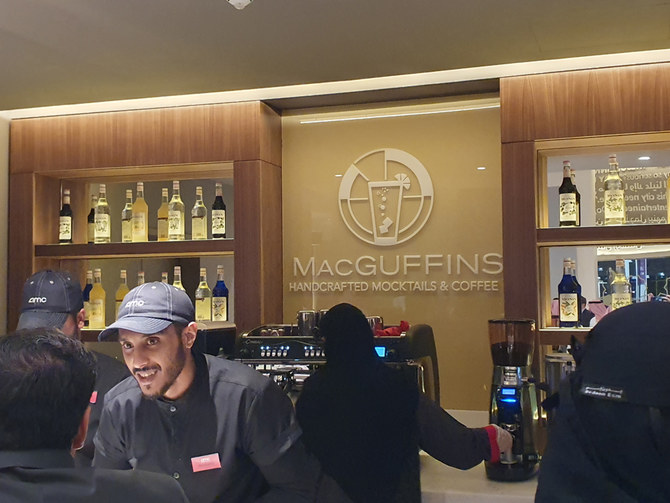
Guests were treated to a sneak peek at the AMC Cinemas’s facilities at Panorama Mall in Riyadh on Sunday. (AN Photo/Hala Tashkandi)
5 / 5
Guests were treated to a sneak peek at the AMC Cinemas’s facilities at Panorama Mall in Riyadh on Sunday. (AN Photo/Hala Tashkandi)
Short Url
Updated 17 December 2019
Follow

AMC Cinemas opens second location in Saudi capital

  • AMC's first location is in Riyadh's King Abdullah Financial District, which opened last year
  • CEO Adom Aron reveals plans to open up 50 theaters in the next 4 years

RIYADH: AMC Cinemas held an event at their new Panorama Mall location on Sunday evening to celebrate their second cinema opening in the Kingdom. The ten-screen, 800-seat theater has started selling tickets to the public, with screenings of films to begin tomorrow.

Guests were treated to a sneak peek at the cinema’s facilities, a chance to sample the food options on offer at the concessions stand, and a screening of their choice of some of the latest films in cinemas, such as “Dark Water,” “Jumanji: The Next Level,” and “Ford v Ferrari”.

During the opening ceremony, Adom Aron, CEO of AMC, welcomed guests to “our prettiest theater” and declared the cinema officially open.

He also revealed AMC’s future plans in the Kingdom. “We now have two theaters open in Riyadh, but we expect to open between eight and ten theaters by June, between 12 and 20 theaters next year, and 50 theaters in the next three, four years, and we expect to be the biggest and most luxurious cinema operator in Saudi Arabia,” he said.
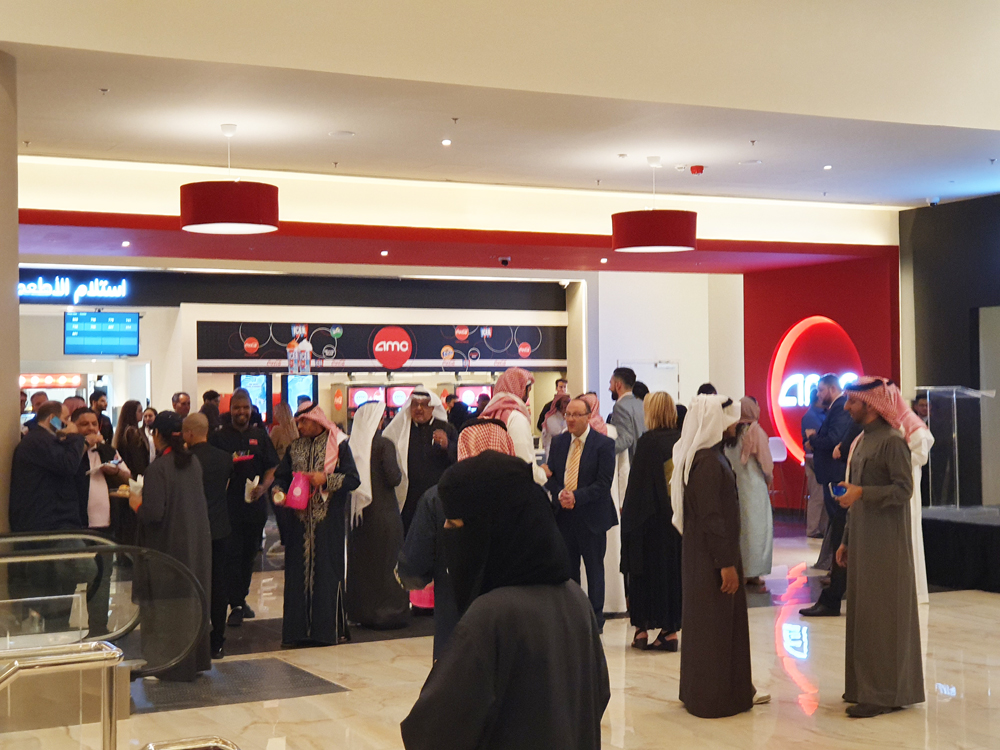


Guests were treated to a sneak peek at the AMC Cinemas’s facilities at Panorama Mall in Riyadh on Sunday. (AN Photo/Hala Tashkandi)

Minister of Media Turki Al-Shabanah was also in attendance, and thanked Aron for helping him make his vision a reality.

“It’s my pleasure, seriously, to be next to you, with your expertise and your achievements worldwide, to open this beautiful luxury cinema here in Riyadh,” he said.

The AMC locations in the Kingdom are a result of a collaboration between the Development and Investment Entertainment Company (DEIC), a wholly owned subsidiary of the Public Investment Fund (PIF) and the US cinema chain.

The Panorama Mall location is the chain’s second location in Saudi Arabia. The first is located in the King Abdullah Financial District, which became the first cinema to officially open in the country on April 18 of 2018.

However, since then, competitor Vox Cinemas has already opened 7 locations in Saudi Arabia, with several more planned and in development.

AMC Marketing Manager Mishal Alsowayan echoed Aron’s statement that AMC was definitely looking to expand in the region: “We’re very happy to open AMC Panorama tonight, and we’re looking forward to opening more and more locations soon.”

However, many are hoping that the opening of a new location for AMC Cinemas will make for actual competition between Vox and AMC, giving people more of a choice in which cinema they will go to.

Movie afficionado and frequent cinema visitor Salman Al-Abdullatif told Arab News that he was hoping to see better customer service and decreased cinema prices if the two cinema chains became competitive.
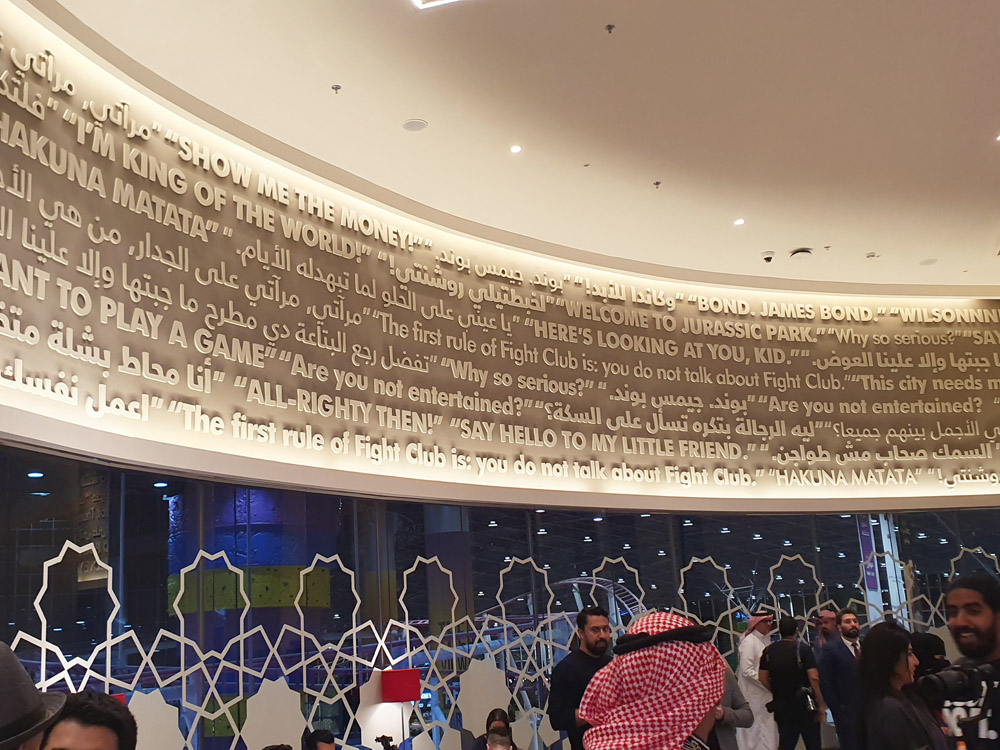


Guests were treated to a sneak peek at the AMC Cinemas’s facilities at Panorama Mall in Riyadh on Sunday. (AN Photo/Hala Tashkandi)

He also pointed out that Vox essentially made the rules for moviegoers in the Kingdom, and was hoping they would loosen up on some of their policies now that competition was on its way.

“I go to the cinema at least once a week, and I’m always put off by how expensive it is each time. I also find it kind of unfair that they charge for things like 3D glasses when you’re going to see a 3D movie like having the glasses is optional, or the fact that they don’t ever issue refunds in any case. I’m hoping that will change if people aren’t forced to settle for one cinema option,” he said.

And indeed, not all cinema seats are created equal. AMC’s facilities are decidedly more luxurious than those of Vox, with comparable prices. A premium seat at Vox Cinemas will set you back SR60 ($16) while an AMC standard ticket is SR55, and a luxe seat is SR65. AMC’s luxe option is comparable to Vox’s Gold option, which will set you back SR140 for just the seat, with additional costs for food and beverages from the chain’s gourmet food bar, ThEATre by Rhodes.

However, another moviegoer, Samar Aljadid, argues that the experience is worth the price, and she is waiting to see if AMC is up to snuff.

“When I go to the cinema, I’m treating myself. It should feel luxurious. Yes, it’s expensive, which is why I don’t go often, but in my opinion going to the cinema is a rare treat, and when I go, I want to go all out. I don’t mind paying a higher price, but I’d better be getting everything I paid for,” she said.

Tickets for the Panorama Mall cinema, as well as the newly reopened and redecorated KAFD location are available on AMC’s official website.


From historic desert landscapes to sound stages: AlUla’s bid to become the region’s film capital

Updated 07 February 2026
Follow

From historic desert landscapes to sound stages: AlUla’s bid to become the region’s film capital

DUBAI: AlUla is positioning itself as the center of cinema for the MENA region, turning its dramatic desert landscapes, heritage sites and newly built studio infrastructure into jobs, tourism and long‑term economic opportunity.

In a wide‑ranging interview, Zaid Shaker, executive director of Film AlUla, and Philip J. Jones, chief tourism officer for the Royal Commission for AlUla, laid out an ambitious plan to train local talent, attract a diverse slate of productions and use film as a catalyst for year‑round tourism.

“We are building something that is both cultural and economic,” said Shaker. “Film AlUla is not just about hosting productions. It’s about creating an entire ecosystem where local people can come into sustained careers. We invested heavily in facilities and training because we want AlUla to be a place where filmmakers can find everything they need — technical skill, production infrastructure and a landscape that offers limitless variety. When a director sees a location and says, ‘I can shoot five different looks in 20 minutes,’ that changes the calculus for choosing a destination.”

At the core of the strategy are state‑of‑the‑art studios operated in partnership with the MBS Group, which comprises Manhattan Beach Studios — home to James Cameron’s “Avatar” sequels. “We have created the infrastructure to compete regionally and internationally,” said Jones. “Combine those studios with AlUla’s natural settings and you get a proposition that’s extremely attractive to producers; controlled environment and unmatched exterior vistas within a short drive. That versatility is a real selling point. We’re not a one‑note destination.”

The slate’s flagship project, the romantic comedy “Chasing Red,” was chosen deliberately to showcase that range. “After a number of war films and heavy dramas shot here, we wanted a rom‑com to demonstrate the breadth of what AlUla offers,” said Shaker. “‘Chasing Red’ uses both our studio resources and multiple on‑location settings. It’s a story that could have been shot anywhere — but by choosing AlUla we’re showing how a comical, intimate genre can also be elevated by our horizons, our textures, our light.

“This film is also our first under a broader slate contract — so it’s a proof point. If ‘Chasing Red’ succeeds, it opens the door for very different kinds of storytelling to come here.”

Training and workforce development are central pillars of the program. Film AlUla has engaged more than 180 young Saudis in training since the start of the year, with 50 already slated to join ongoing productions. “We’re building from the bottom up,” said Shaker. “We start with production assistant training because that’s often how careers begin. From there we provide camera, lighting, rigging and data-wrangling instruction, and we’ve even launched soft‑skill offerings like film appreciation— courses that teach critique, composition and the difference between art cinema and commercial cinema. That combination of technical and intellectual training changes behavior and opens up real career pathways.”

Jones emphasized the practical benefits of a trained local workforce. “One of the smartest strategies for attracting productions is cost efficiency,” he said. “If a production can hire local, trained production assistants and extras instead of flying in scores of entry‑level staff, that’s a major saving. It’s a competitive advantage. We’ve already seen results: AlUla hosted 85 productions this year, well above our initial target. That momentum is what we now aim to convert into long‑term growth.”

Gender inclusion has been a standout outcome. “Female participation in our training programs is north of 55 percent,” said Shaker. “That’s huge. It’s not only socially transformative, giving young Saudi women opportunities in an industry that’s historically male-dominated, but it’s also shaping the industry culture here. Women are showing up, learning, and stepping into roles on set.”

Looking to 2026, their targets are aggressive; convert the production pipeline into five to six feature films and exceed 100 total productions across film, commercials and other projects. “We want private-sector partners to invest in more sound stages so multiple productions can run concurrently,” said Jones. “That’s how you become a regional hub.”

The tourism case is both immediate and aspirational. “In the short term, productions bring crews who fill hotels, eat in restaurants and hire local tradespeople,” said Shaker. “In the long term, films act as postcards — cinematic invitations that make people want to experience a place in person.”

Jones echoed that vision: “A successful film industry here doesn’t just create jobs; it broadcasts AlUla’s beauty and builds global awareness. That multiplies the tourism impact.”

As “Chasing Red” moves into production, Shaker and Jones believe AlUla can move from an emerging production destination to the region’s filmmaking epicenter. “We’re planting seeds for a cultural sector that will bear economic fruit for decades,” said Shaker. “If we get the talent, the infrastructure and the stories right, the world will come to AlUla to film. And to visit.”
