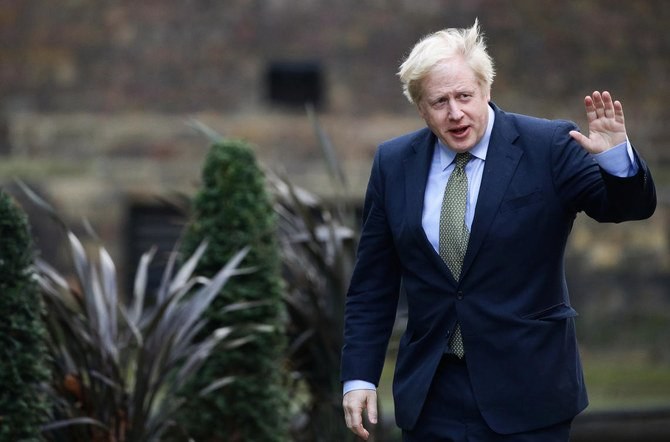

LONDON: There is a “palpable sense of fear amongst Muslim communities” in the UK, the Muslim Council of Britain (MCB) has warned, after Prime Minister Boris Johnson secured a crushing victory in the 2019 general election.
“We entered the election campaign period with longstanding concerns about bigotry in our politics and our governing party. Now we worry that Islamophobia is ‘oven-ready’ for government. Mr Johnson has been entrusted with huge power, and we pray it is exercised responsibly for all Britons,” the MCB’s Secretary-General Harun Khan said.
The warning came as accusations of Islamophobia within the Conservative Party continue to plague it.
Despite concern that Islamophobia is “oven-ready” for government, a record number of Muslim MPs were elected on Thursday, with 19 winning seats in the general election; an increase of four from the last election in 2017.
Of these, 15 belong to the Labour Party and the other four, including Chancellor of the Exchequer Sajid Javid, are Conservatives.
As the UK saw a record number of 220 women elected to the House of Commons, this trend was also seen in the number of Muslim women, with 10 winning seats.
Despite this, Muslims are still not proportionally represented in parliament.
Only 3 percent of the UK’s 650 MPs are Muslim, whilst the country’s Muslim population stands at around 5 percent.
The MCB’s concerns about bigotry and Islamophobia were echoed on Thursday by ex-party chairwoman Baroness Sayeeda Warsi, the first female Muslim cabinet member.
Warsi said the Conservative Party “must start healing its relationship with British Muslims,” and the fact that her colleagues in the party had retweeted comments from Islamophobes Tommy Robinson and Katie Hopkins was “deeply disturbing.”
She added: “An independent inquiry into Islamophobia is a must — the battle to root out racism must now intensify.”
The Tory peer has repeatedly called for an inquiry into Islamophobia in the Conservative Party, and told BBC Radio 4’s Today program in November that the party had a “deep problem” with Islamophobia.
“Remember, we’re now four years into these matters first being brought to the attention of the party … the fact that we’re still prevaricating about even having an inquiry, and the kind of inquiry we’re going to have, shows just how dismissive the party have been on the issue of Islamophobia.”
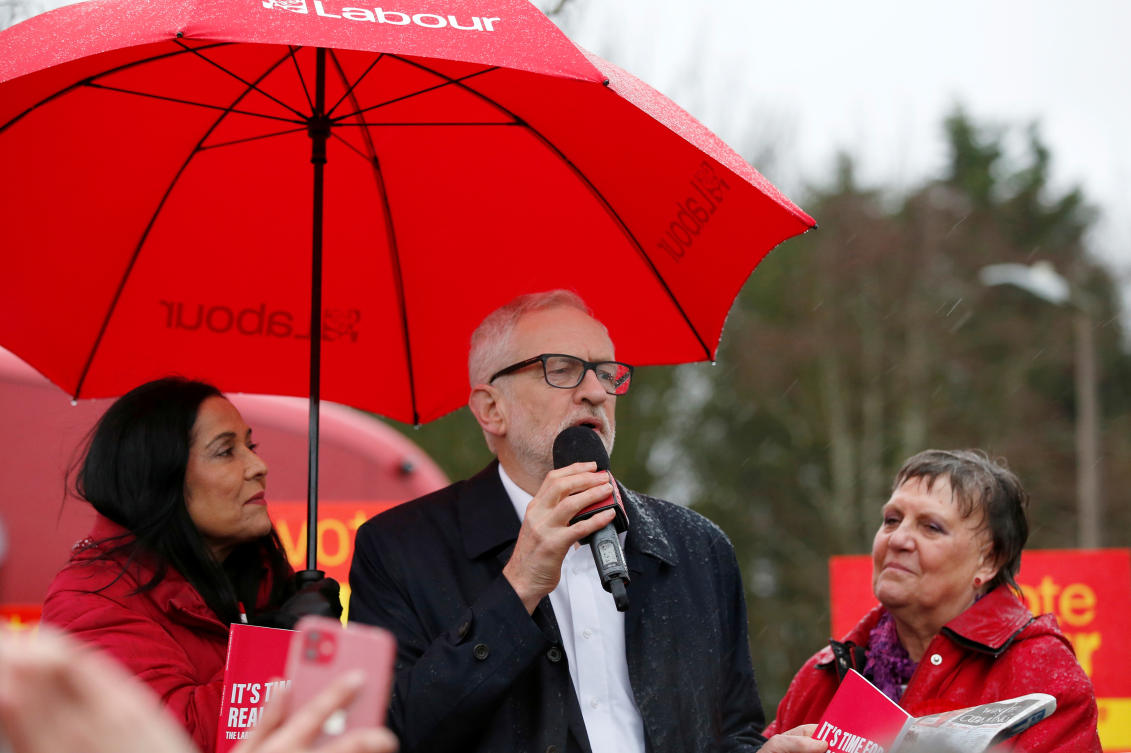
Britain's opposition Labour Party leader Jeremy Corbyn and Labour MP for Bolton South East Yasmin Qureshi (L) attend a general election campaign event in Bolton, Britain December 10, 2019. (Reuters)
Later in November, Johnson apologized for the “hurt and offence” that had been caused by Islamophobia in the Conservative Party, and said that an inquiry into “every manner of prejudice and discrimination” would begin by Christmas.
Despite apologizing, he remained silent about his own comments on Muslim women wearing the niqab in his Daily Telegraph column in August 2018, when he wrote that Muslim women wearing it “look like letter boxes” or “bank robbers.”
Fourteen party members were suspended in March after posting Islamophobic or racist comments on social media, and a member who had previously been suspended in 2015 for comments on social media was due to stand in local elections this year.
Peter Lamb was readmitted to the party after he had served a suspension and apologized for his comments.
Lamb, who has since quit the party, tweeted in 2015: “Islam (is) like alcoholism. The first step to recovery is admit you have a problem.”
Yasmin Qureshi, a female Muslim Labour MP, has held her Bolton South East seat since 2010 and was re-elected on Thursday for the fourth time.
Speaking to Arab News, Qureshi said many Muslims were “very fearful and very disappointed” at Johnson’s victory.
“Generally, you can say whatever you want about Muslims in this country now and nobody is really bothered, nobody challenges it, and if it is challenged, it is very mildly dealt with.
“Islamophobia is a big issue and although everybody rightly spoke about anti-semitism, there was not as much emphasis and talk about Islamophobia.
“Islamophobia is not just in the Conservative party, it is actually in the establishment. It is especially present in the media in this country; most of the newspapers of our country are very right-wing and anti-Muslim.
She added: “It doesn’t matter whether you malign Muslims, it’s essentially okay, you can get away with it. That is sadly a reflection of the current state of affairs in the UK.”