KARACHI: Pakistan has made significant progress on the recommendations of the Financial Action Task Force (FATF), Dr. Reza Baqir, Pakistan’s central bank chief said on Saturday, while speaking to media at a financial crime summit in Karachi.
In October, the Paris-based terror financing watchdog, FATF, retained Pakistan on its grey-list until Feb. 2020, and warned the country could get further downgraded for failure to make progress on its 27-point action plan.
In case of an FATF black-listing, Pakistan would be heavily sanctioned which could cripple its struggling economy.
“FATF is a very important area for us and the country. We have made substantial progress in this area,” he said and added that the International Monetary Fund had also endorsed Pakistan’s progress in its report.
But with the FATF’s February deadline looming over the horizon, Pakistan faces considerable skepticism over whether announcements to crack down on money laundering and militant groups operating from its territory, have translated into real action.
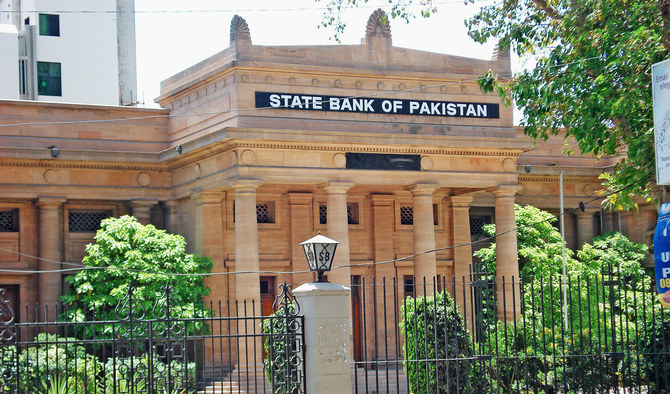
The State Bank of Pakistan (SBP) governor said steps had been taken to completely eliminate trade-based money laundering and terror financing under a ‘zero tolerance policy.’
“The country has zero tolerance for terror financing. Trade based money laundering is being halted... money laundering in trade is very difficult now,” Baqir said.
“Steps are being taken to separate criminal proceedings and economic affairs through the strict monitoring of money laundering and terror financing,” he said, and added: “Pakistan’s financial system is being reformed.”
In May, with barely enough foreign exchange reserves to cover two months of exports, Pakistan reached an agreement with the IMF for a three-year, $6 billion bailout deal, as a life-line to its slowing economy. But the IMF deal came with its own set of stringent reform conditions, including the call for a market-determined, free-floating exchange rate for the rupee which led to the Pakistani currency hitting record lows against the dollar.
On Saturday, the State Bank chief defended the move and said the measures had restored the confidence of investors, attracted investment in the Pakistani rupee, encouraged savings and strengthened the foreign exchange reserve position of the country.
Foreign reserves held by the country surged to $16.04 billion during the week ending on Dec. 06, 2019 and central bank reserves increased by $121 million to $9.23 billion. The SBP also received $1.3 billion from Asian Development Bank.
The stock market has also shown positive growth as the benchmark KSE 100 index increased by 7,259 points (21.6%) during the last seven weeks-- its highest since September 2009.


![]()

Pakistan making 'substantial progress' against terror financing — SBP chief
Short Url
https://arab.news/c4e9x
Pakistan making 'substantial progress' against terror financing — SBP chief
- In Oct., terror financing watchdog FATF retained Pakistan on its ‘grey-list’ until Feb. 2020
- ‘Zero tolerance policy’ for terror financing and money laundering: SBP chief
Latest updates


Recommended


© 2026 SAUDI RESEARCH & PUBLISHING COMPANY, All Rights Reserved And subject to Terms of Use Agreement.