



Umerkot, Sindh: Rasool Bux is a Muslim activist who hosts gatherings on two major Hindu festivals, Diwali and Holi, in Umerkot – a small city in Pakistan’s Sindh province and famous for being the birthplace of Mughal emperor Jalal-ud-din Muhammad Akbar.
With a population of over one million, Umerkot or Amarkot is home to equal numbers of Hindus and Muslims who continue to uphold Akbar’s values of interfaith harmony.
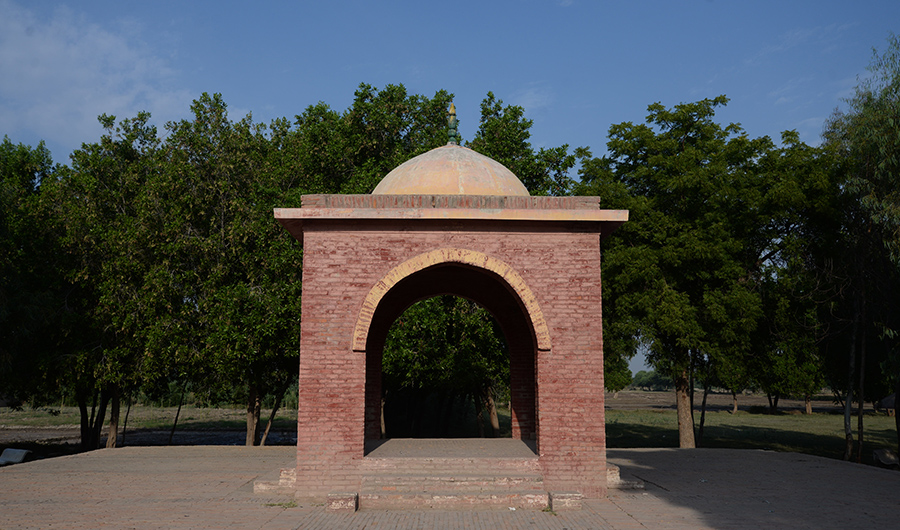
This canopy in the Umerkot city of Pakistan's Sindh province is the birthplace of Mughal emperor Jalal-ud-din Muhammad Akbar, popularly known as Akbar the Great.(AN Photo by S.A. Babar)
“During Akbar’s reign, Muslims and Hindus maintained exemplary interfaith harmony. This is the city of Akbar. It’s a city of interfaith harmony,” Bux said.
Historical data suggests that Akbar, who ruled India for almost half a century as one of its most illustrious monarchs, was born on November 23, 1542 in Umerkot.
It was during a time when Humayun, after being routed by Sher Khan, the-then Afghan Governor of Bihar, took refuge in Umerkot along with his wife Hamida Banu, seven horsemen and a handful of followers.
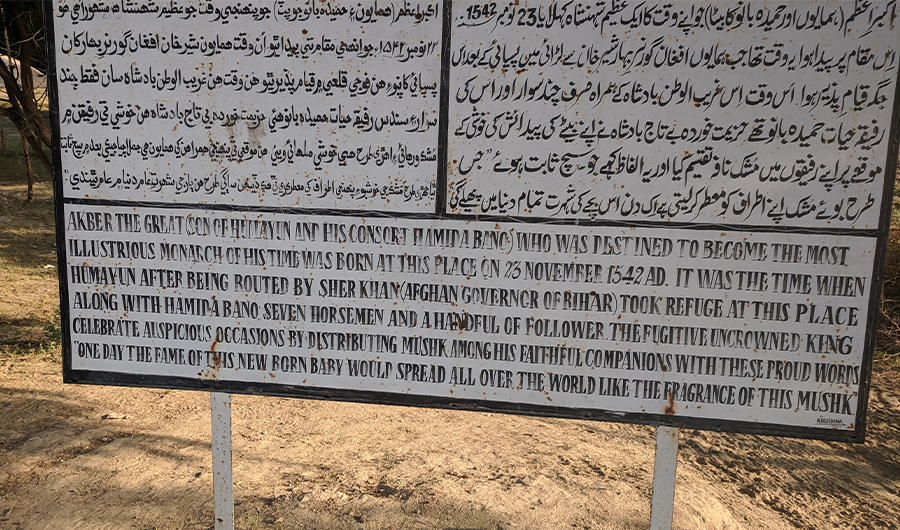
A plaque shows details at the birthplace of Mughal emperor Jalal-ud-din Muhammad Akbar in the Umerkot city of Pakistan’s Sindh province.(AN Photo by S.A. Babar)
“The fugitive uncrowned king celebrated the auspicious occasion [of his son’s birth] by distributing Mushk (a perfume) among his faithful companions with these proud words: ‘One day, the fame of this new born baby will spread all over the world like the fragrance of this Mushk’,” a plaque at Akbar’s birthplace reads.
The popular monarch, who earned the moniker “Akbar, the Great” for his vision and secular attitude, is known to have celebrated Diwali, and would allow Brahmin priests to tie strings around his wrists as a form of blessing. He had also renounced consuming beef and forbade the sale of all meats on certain days.
It’s these very qualities that have trickled down from one generation to another.
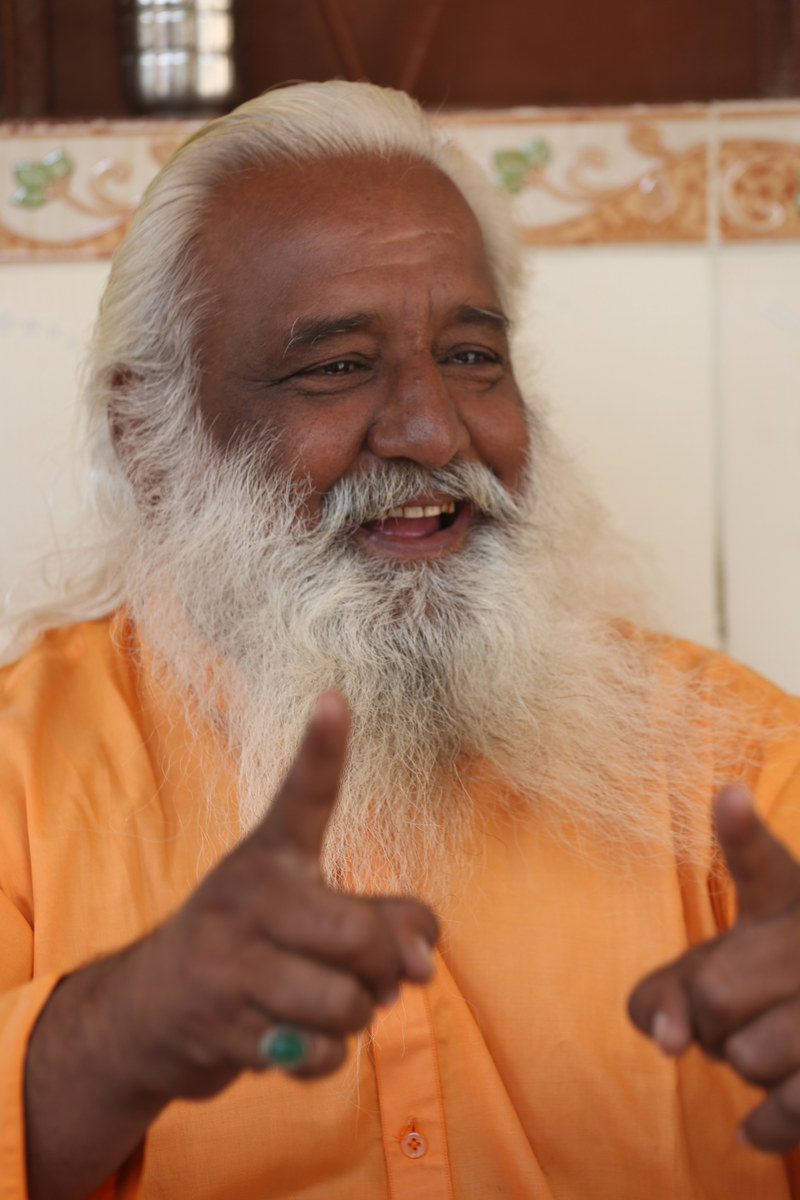
Maharaj Gyan Puri Goswami talks to Arab News on November 27, 2019. (AN Photo by S.A. Babar)
Raja Ramu Chand runs a small restaurant in Umerkot and said it was difficult to identify who was a Muslim or a Hindu in the city.
“Only when someone enters his place of worship, then people get to know about his/her faith,” Chand said, adding that they “only know love.”
“We have kept the fire of hatred extinguished. We have got this value of brotherhood from our elders,” he said.
The feeling is mutual says Dileep Kumar a Hindu resident of Umerkot who waits to celebrate Prophet Muhammad’s (PBUH) birthday every year.
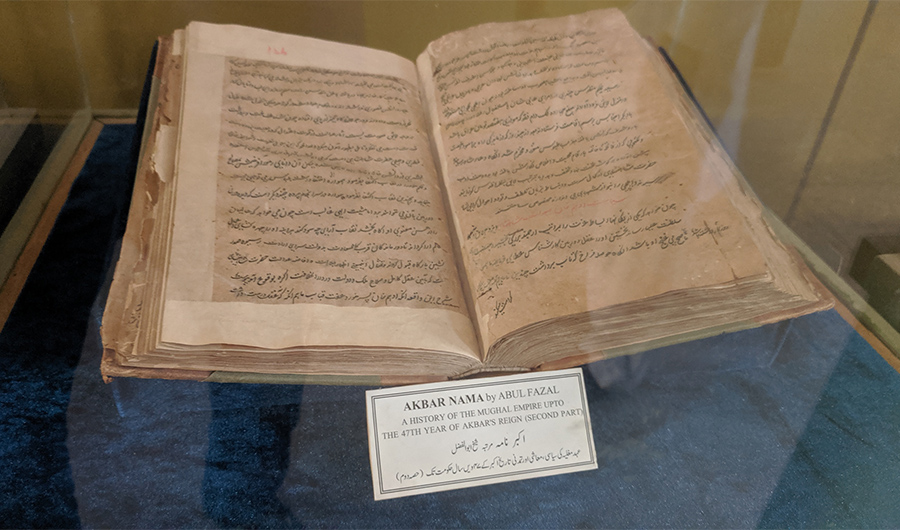
Akbar Nama, a book by Abul Fazal which details the history of the Mughal empire up to the 47th year of Akbar’s reign, on display at the museum in Umerkot city of Pakistan's Sindh province.(AN Photo by S.A. Babar)
It’s on this occasion, among others, when Hindus and Muslims share the stage at the city’s community hall.
When the processions pass by, it’s Kumar’s duty to ensure the participants stay hydrated by offering them water at regular intervals.
“On Diwali, the diyas of my home light with oil which my Muslim friends bring,” Kumar, a trader, said before explaining why this “love and respect for another faith is not one way.”
Kumar said his family has been participating in Muharram processions for the past 35 years.
“Whether Holi or Diwali, our Muslim brothers join us in our moment of happiness,” he said.
Umerkot is also home to a temple of Hindu deity, Shiv, which houses Pakistan’s only Shivling.
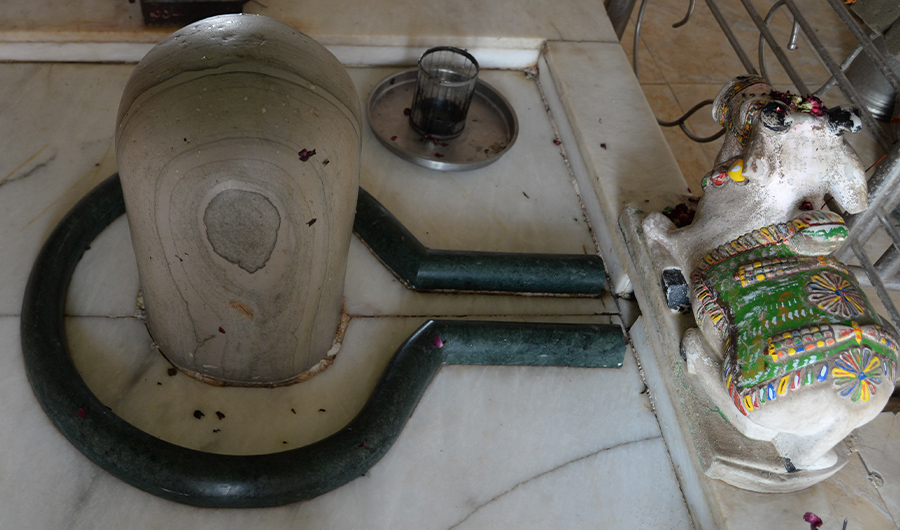
A photo of the Shivling which Maharaj Gyan Puri Goswami told Arab News is one of the 12 divine stones for Hindus. (AN Photo by S.A. Babar)
“We have been part of each other’s events of happiness and grief,” Gyan Puri Goswami, Maharaj of the Shiv Mandir, said, adding that not only Hindus but Muslims also visit the temple.
Arbab Naik Muhammad is a Muslim scholar of history. He said that celebrating each other’s achievements is an important part of Umerkot’s DNA.
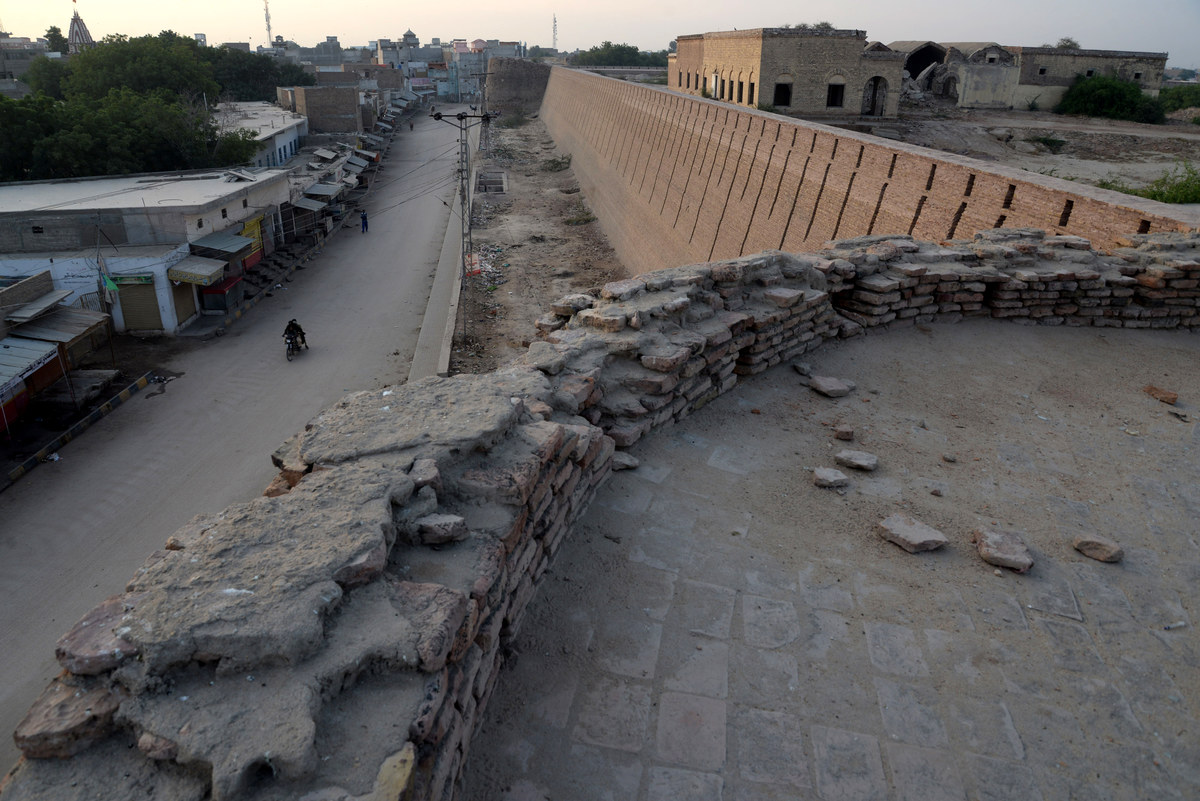
This picture taken on November 27 offers an aerial view of Umerkot city from the wall of the Umerkot fort. (AN Photo by S.A. Babar)
“When a girl from the village gets married, all villagers, irrespective of their faith, give her the gifts and when the bridegroom comes he is considered a son-in-law of the entire village...
“The poetry of Shah Abdul Latif Bhittai, a Muslim, is recited in Hindu temples and that of Bhagat Kabir, a Hindu, can be heard from a mosque”.
And this, he said, is because we have common heroes.


