

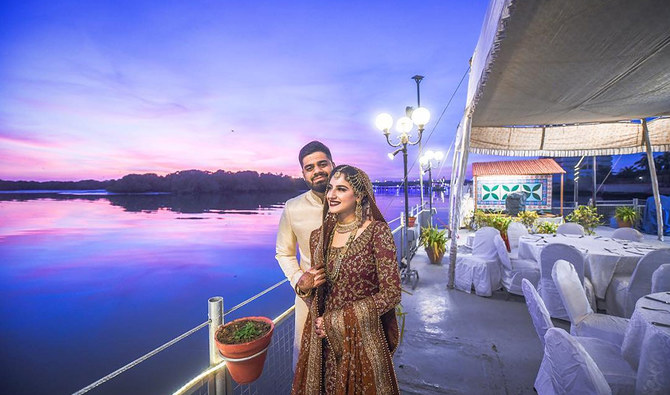
ISLAMABAD: As wedding season is in full swing, photographers have their lenses focused more than any other time of year on preserving some of the most important and intimate memories.
While these memories are about people, everyone wants them to be set in beautiful and special places. Arab News asked professional photographers in three Pakistani cities about their favorite spots for wedding portraits.
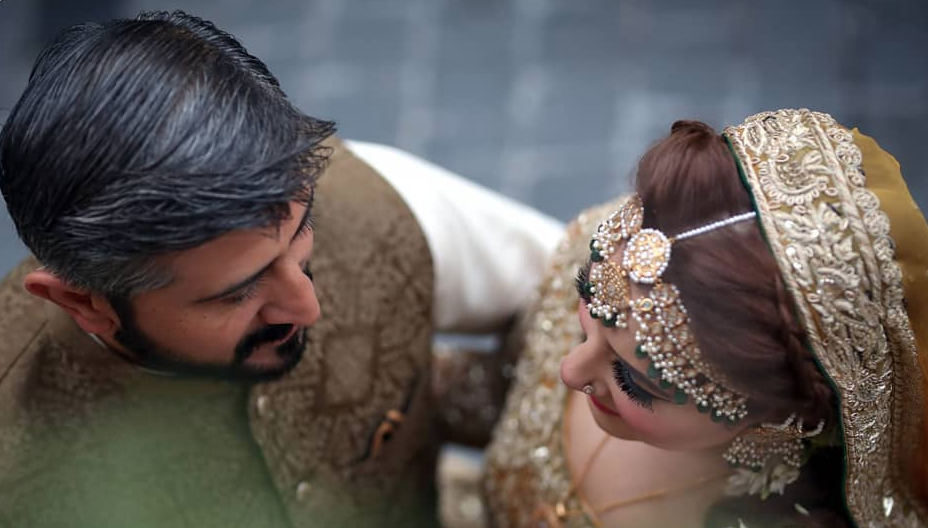
Newly weds smile for a wedding portrait in Islamabad, November 29, 2019. (Photo courtesy of Qamar Anwar)
In Islamabad, Qamar Anwar named five places that are classic go-tos for newly weds. Lok Virsa Museum is one of them as it offers a variety of heritage and cultural scenes. “There are classy backgrounds, modern painted spaces and it’s huge, giving a number of possible set-ups,” he said.
Another favorite spot, Cafe 1969, is right next to Lok Virsa. It is loved by those who are fond of sunsets. “It’s a huge, private place with a beautiful tree line at one corner, which makes for a stunning backdrop. You also get a solid sunset there.”
Both places charge Rs5,000 for one day of shooting.
Another place in Islamabad is F9 Park, the largest park in the capital. Anwar said it is a popular choice for couples because it gives diverse foliage, walking paths, and most beautiful sunset light. There are no fees for taking shots in the park.
Saidpur Village is another top choice with “beautiful color backgrounds,” Anwar said, adding that the gurdwara there has beautiful architecture, and the place offers many classic and exceptionally photogenic staircases that look great on photographs.
For indoor shots, the most desired place, according to Anwar, is the Serena Hotel.
“It has a large lobby, beautiful rich interior, and huge chandeliers, which are a treat for photographers, though getting permission for shoots there is not easy now,” he said.
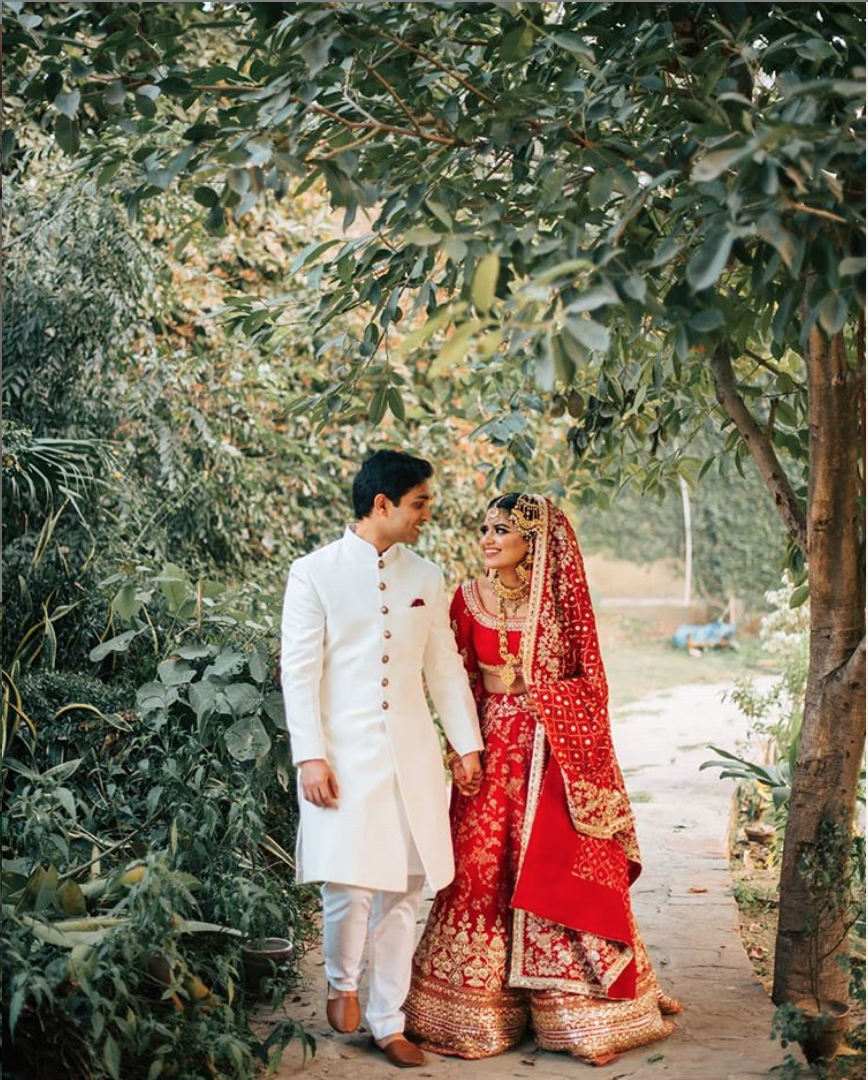
Newly weds stroll in a lush garden, Lahore, March 3, 2019. (Photo courtesy of Palwasha Minhas)
In Lahore, Lawrence Gardens and the Old City’s favorite historical sites are always preferred by couples, said Rizwan Pehelwan who runs a wedding photography business with his photographer wife Palwasha Minhas.
“Lawrence Gardens has the Quaid-e-Azam Library, that white building which everyone seems to love a lot,” Pehelwan told Arab News. “The second most popular place is Badshahi Mosque, but getting portraits done there is a hassle, they do not allow it, so you have to book the actual nikah ceremony there, but as nikah usually takes only about 30 minutes, most of the time is for documenting the couple.”
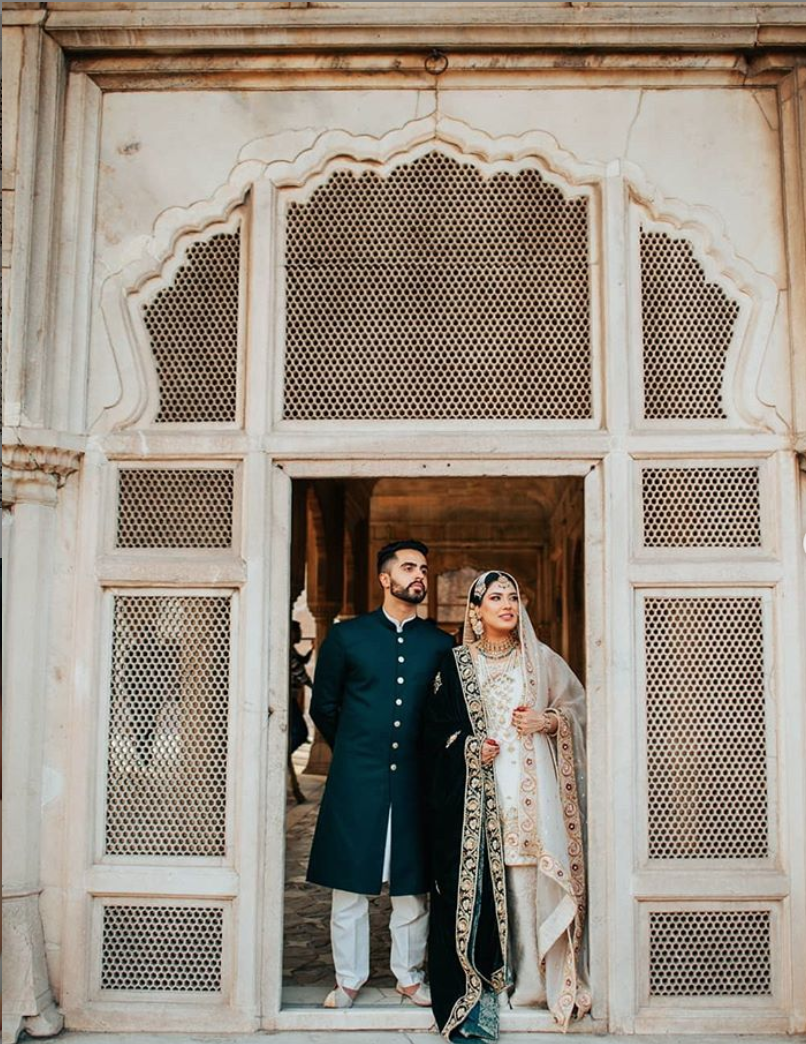
Newly weds pose at the Lahore Fort, Lahore, July 21, 2019. (Photo courtesy of Palwasha Minhas)
“These are the two most popular spots in Lahore, but we advise our clients to pick a place where they feel comfortable,” Pehelwan said, adding that location is secondary, as what matters is that the couple can be themselves, walk around comfortably, without too many spectators.
“Wazir Khan Mosque is now becoming popular, it is a more intimate location,” he said.
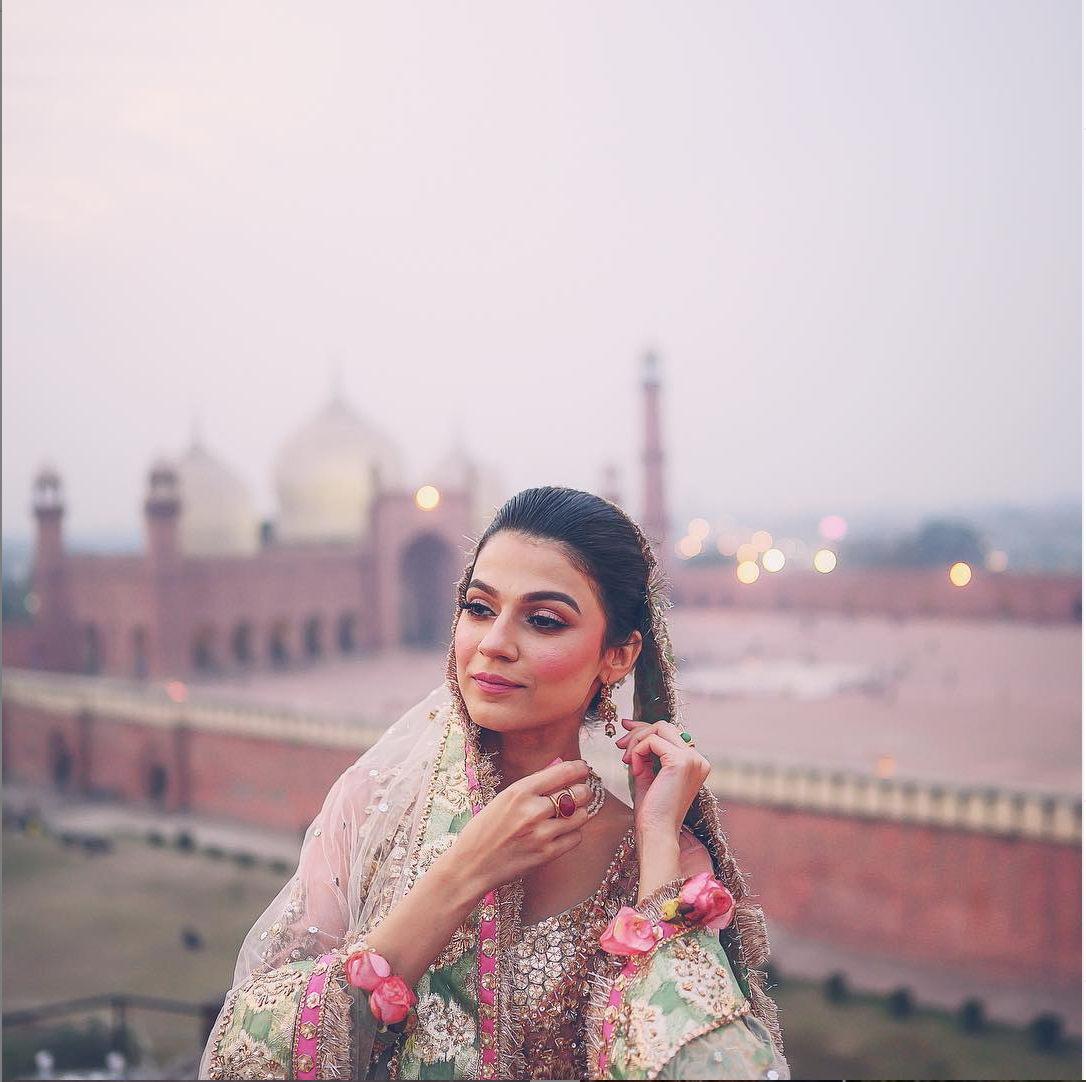
A bride poses in front of Badshahi Mosque, Lahore, February 21, 2019. (Photo courtesy of Ali Khurshid)
In Karachi, two places are generally preferred for wedding photography.
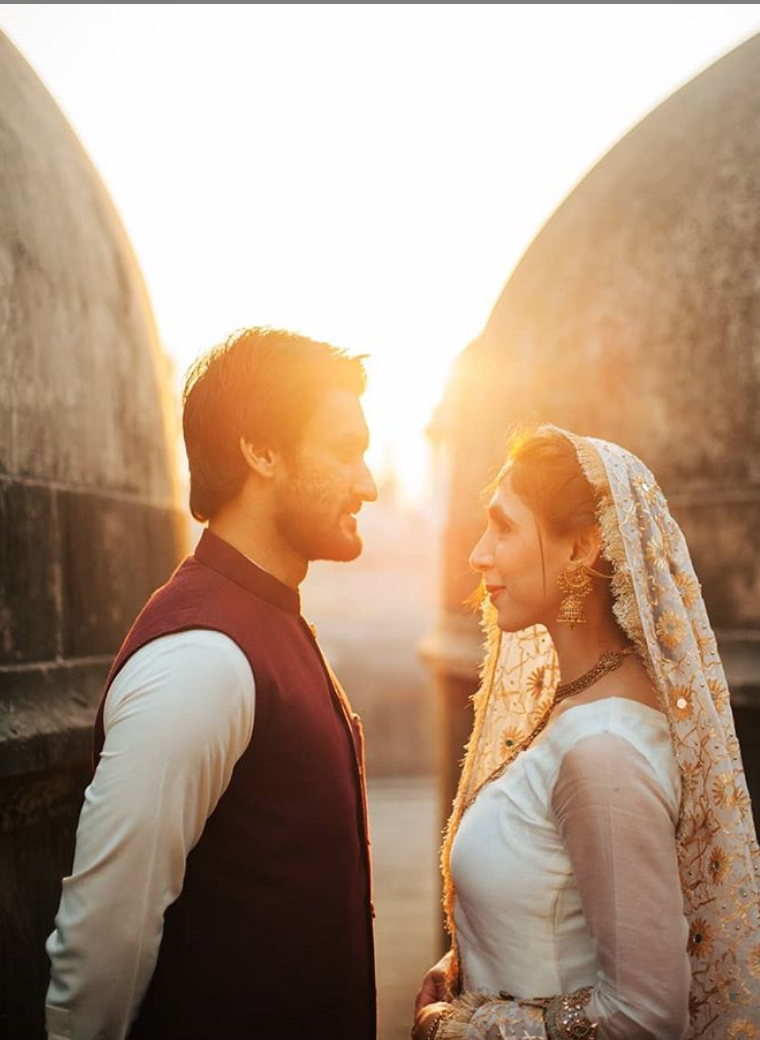
A couple stands in sunset light, Lahore, November 29, 2018. (Photo courtesy of Palwasha Minhas)
According to photographer Ali Khurshid, Frere Hall – an 19th century building with now serves as an exhibition space and library – and Mohatta Palace in the posh seaside locale of Clifton, are particularly coveted venues. Another spot is the Port Grand complex, which offers both modern ambiance and sea view from the 19th-century Native Jetty Bridge.


