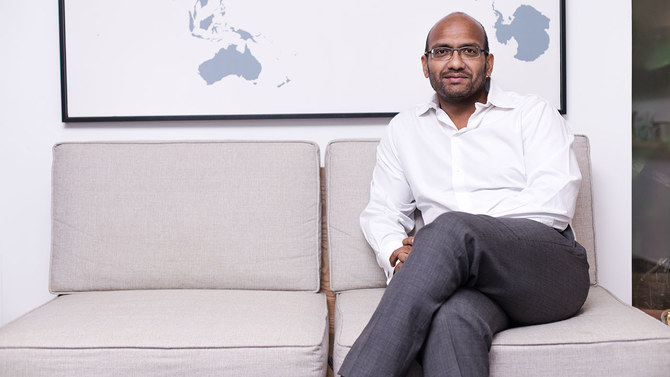
KARACHI: Stanford graduate Atif Azim, a successful tech entrepreneur who previously spent time working in San Francisco’s Silicon Valley, said that Pakistan is moving through an exciting phase, and that this is just the right time for people to implement high tech business ideas in the country.
“We can replicate the Silicon Valley model for sure,” the co-founder and chief executive officer of VentureDive, a firm that develops bespoke technology solutions for businesses, told Arab News on Sunday.
Azim’s company is behind the success of Careem Networks, one of the fastest growing tech startups in the Middle East and North Africa. He said that the main ingredients required to implement the Silicon Valley model are all available in Pakistan.
“Three things are needed to know why Silicon Valley is what it is today,” he said.
“One, you have universities that are churning out smart people whether in business or technology. Then you have financiers who are willing to fund and invest in these people, and you have the customers/ industries who are willing to buy the system and use it for their benefit.”
Discussing the development of the Careem app, Azim said that it was young Pakistani developers who worked wonders.
“Our young developers are the best in the world. As Pakistanis, we can proudly say that the initial work was all done in the country,” he said.
“Pakistani software engineers have got the experience of not just writing codes but building high-tech systems. They will now mentor upcoming engineers who will help the country,” he said.
Azim, whose VentureDive has been on board many local and international projects, believes that Pakistani industries are beginning to realize the importance of investing in technology.
“Investors are learning more about investment in technology as it was too easy to invest in real estate up until now. Industries are now realizing that they cannot miss the technological advancement, and what they need to do now is to support and trust Pakistani innovations,” he added.
“Our challenge is how to get the right skills and right talent that the world needs,” he continued.
Currently, Azim is advising Roads and Transport Authority, generally known as RTA Dubai, on mobility and providing technical consultancy services for Expo 2020.
“We are advising them (RTA) on the mobility of different modes of transport and how to build a platform that allows us to integrate different routes at the city level,” he said.
His company is also developing an integrated solution to the growing problem of diabetes in the Middle East. “We are working on a HealthTech platform for a Middle Eastern country that will help solve some of the diabetes challenges. The data and behavioral driven integrated online system with medical devices will allow users to manage their diabetes,” he said.
IslamicFinder.org is the another platform where the company is engaged with its partners in Saudi Arabia.
“This has grown into the number two platform in the world now. Out of our Lahore office, we have developed road and technical maps. It is now doing very well with a huge growth of 50 million active users at the web and over 10 million downloads,” Azim said.
The company is also working with the Bill and Melinda Gates Foundation on mother and child health care and nutrition that will allow data drive decision making.


![]()

After Middle East success, tech entrepreneur says Pakistan ready for Silicon Valley model
After Middle East success, tech entrepreneur says Pakistan ready for Silicon Valley model
- Pakistani tech company behind Careem Networks’ success is now working on diabetic solutions for Middle East
- Pakistan’s tech developers ‘best in the world,’ says Atif Azim
Latest updates


© 2026 SAUDI RESEARCH & PUBLISHING COMPANY, All Rights Reserved And subject to Terms of Use Agreement.