

Saudi Aramco IPO subscriptions reach SR73bn in first 5 days

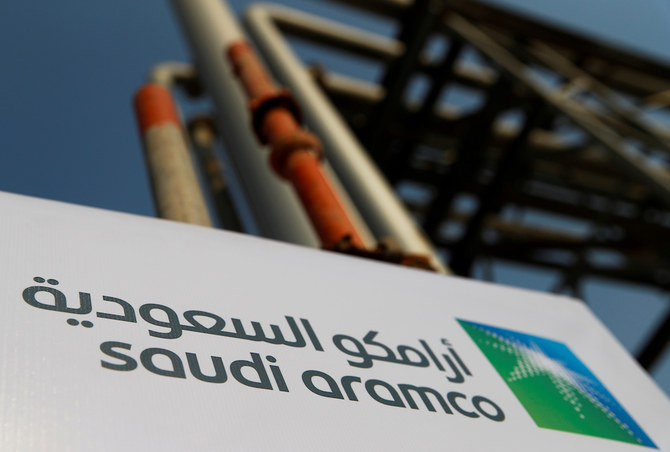
Institutional subscriptions in the first five days reached SR58.39 billion. (Reuters/File photo)
Updated 26 November 2019
Follow

Saudi Aramco IPO subscriptions reach SR73bn in first 5 days

  • Institutional subscriptions in the first five days reached SR58.39 billion
  • Retail subscriptions during this period totalled SR14.59 billion

RIYADH: Institutional tranche and retail subscriptions to Saudi Aramco’s initial public offering have reached almost SR73 billion in less than a week, Samba Capital Vice-Chairman Rania Nashar said on Thursday.

“Retail and Institutional subscription levels for the first five days of the offering have reached an unprecedented scale, demonstrating the confidence of investors in Saudi Aramco, and we anticipate further increases in subscription levels during the remainder of the offering period,” she said.

Institutional subscriptions amounted to SR58.4 billion and 1.8 billion total subscribed shares. Retail subscriptions were worth SR14.6 billion, representing 1.8 million subscribers and 465 million total subscribed shares.


Samba Capital Vice-Chairman Rania Nashar

Earlier, it was announced that the Kingdom will sell 3 billion shares in Aramco during its stock market launch — representing about 1.5 percent of the total — at a valuation between SR30 ($8) and SR32 a share. This gives the business a total valuation of between $1.6 and $1.7 trillion, making it the most valuable company in history.

Investment professionals welcomed the valuation, which was below than the highest estimates of Aramco’s worth, as a “compromise” between the Kingdom and the financial world.

Setting a price range and the number of shares to be sold starts a “book-building” process during which Aramco and its advisers will consult potential investors and await bids from institutions and private investors to help decide at what price the shares will be sold. The final pricing decision will be announced on Dec. 5, with trading expected to start on the Tadawul shortly after.


Oman property price index jumps 17.3% in Q3 

Updated 34 sec ago
Follow

Oman property price index jumps 17.3% in Q3 

JEDDAH: Oman’s real estate price index recorded a 17.3 percent increase in the third quarter of 2025 compared with the same period in 2024, according to official data. 

The commercial property price index rose 14.6 percent, driven by a 19 percent increase in commercial land prices, while the cost of commercial shops fell by 8.5 percent, as per the country’s National Centre for Statistics and Information, or NCSI, based on figures from the Ministry of Housing and Urban Planning. 

Industrial land prices posted a moderate increase of 5.5 percent, while residential property prices recorded stronger growth of 18.7 percent year on year, the Oman News Agency reported. 

The rise in Oman’s real estate price index comes amid broader momentum across Gulf property markets, where residential activity remained resilient in the third quarter of 2025. Higher demand in major cities across the region, supported by population growth and ongoing infrastructure investment, helped underpin price gains, even as some markets faced tighter financing conditions. 

“As for the residential property price index, it achieved clear growth in the third quarter of 2025, with a rate of 18.7 percent compared to the third quarter of 2024, as residential land prices increased by 19.6 percent, residential apartments by 22.4 percent, in addition to the growth of villa prices by 16.5 percent, while the prices of other houses decreased by 0.5 percent,” the ONA report stated. 

Oman’s residential land prices climbed 19.6 percent, with apartments rising by 22.4 percent, while villas increased by 16.5 percent. Prices of other types of houses saw a slight decline of 0.5 percent. 

At the governorate level, Muscat recorded the highest increase in residential land prices at 48.3 percent, followed by Musandam at 29.7 percent, Al-Dakhiliyah at 12.3 percent, Al-Batinah South at 8.7 percent, North Al Batinah at 8.1 percent, and Dhofar at 4 percent. 

On the other hand, some governorates saw declines in residential land prices, with Al-Dhahirah down 25.8 percent, Al-Buraimi down 24.6 percent, Al-Wusta down 13.3 percent, Al-Sharqiyah North down 4 percent, and Al-Sharqiyah South down 2.2 percent. 

“This increase reflects continued demand in Oman’s real estate market, with residential properties in Muscat and Musandam driving much of the growth,” the ONA report added. 

The data also show clear differences across regions, with price gains concentrated in major urban areas. Strong demand in Muscat and coastal governorates was supported by population growth, investment, and infrastructure spending, while some interior regions recorded declines as market activity softened.