
JEDDAH: Amnesty International, citing “credible reports,” said on Tuesday it believes at least 106 people have been killed during protests in Iran over a rise in government-set gasoline prices.
Iran’s government, which has not made nationwide numbers available for the toll of the unrest that began on Sunday, did not immediately respond to the report.
Amnesty added that it “believes that the real death toll may be much higher, with some reports suggesting as many as 200 have been killed.”
Harvard scholar and Iranian affairs expert Dr. Majid Rafizadeh said the international community must push for an emergency meeting of the UN Security Council in order to address the brutal suppression of civilians.
“The agenda for such a Security Council meeting would also represent an opportunity to showcase a policy, which should include, at a minimum, serious, multinational efforts to deny the Iranian regime the tools to halt the flow of information within the country, or out of it,” he told Arab News. “International powers must also issue statements of support for the Iranian people.”
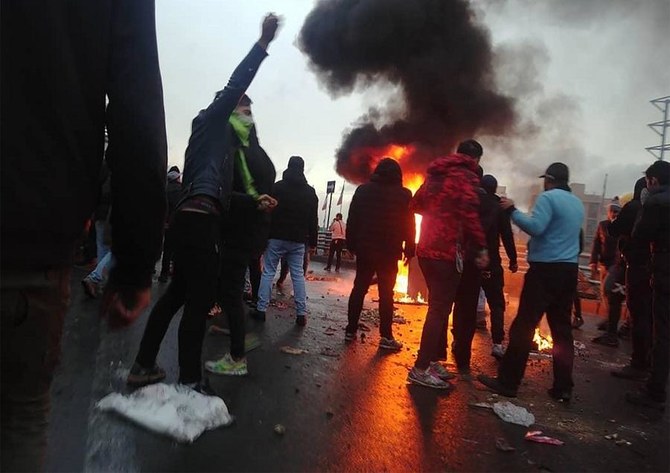
Iran since has shut down the internet and deployed police and anti-riot forces to quell the unrest. Demonstrations are believed to still be going on in the country.
#WATCH: Students from #Tehran University chant "death to the dictator" on Monday evening, The #IranProtests continued to rage Tuesday despite an internet shutdown and a wave of arrestshttps://t.co/7H8eLGdRty pic.twitter.com/0sw9K667FU
— Arab News (@arabnews) November 19, 2019
Hard-liners in Iran meanwhile threatened violent protesters with executions by hanging as sporadic demonstrations still gripped pockets of the country.
It remains unclear how many people have been arrested, injured or killed in the protests that began Friday and quickly spread across at least 100 cities and towns in Iran.
Maryam Kazemi, a 29-year-old accountant in the southern Tehran suburb of Khaniabad, said that the hefty hike in fuel prices was “putting pressure on ordinary people.”
“It was a bad decision at a bad time. The economic situation has long been difficult for people and Rouhani unexpectedly implemented the decision on fuel,” she said.
Three members of the Iranian security forces have been stabbed to death by “rioters” near #Tehran, the ISNA and Fars news agencies reported late Monday https://t.co/7H8eLGvsl6 pic.twitter.com/Qhar1EeTZt
— Arab News (@arabnews) November 19, 2019
The UN rights office said it was alarmed by reports live ammunition was used against protesters and had caused a “significant number of deaths across the country.”
Its spokesman Rupert Colville told reporters in Geneva that Iranian media and a number of other sources suggest “dozens of people may have been killed and many people injured during protests in at least eight different provinces, with over 1,000 protesters arrested.”
He said: ”We urge the Iranian authorities and security forces to avoid the use of force to disperse peaceful assemblies.”
Journalists saw two petrol stations in Tehran gutted by fire and damage to infrastructure, including a police station. They were prevented from filming as hundreds of riot police guarded squares with armored vehicles and water cannons.

keywords