ISLAMABAD: Pakistan government has allowed businessmen to import tomatoes from neighboring Iran to meet increasing demand at home and to control the skyrocketing price of the commodity in the local market.
“The tomatoes import from Iran is allowed for three to four weeks to meet the shortage,” Muhammad Ameer Sultan, Parliamentary Secretary for National Food Security and Research, told Arab News on Friday.
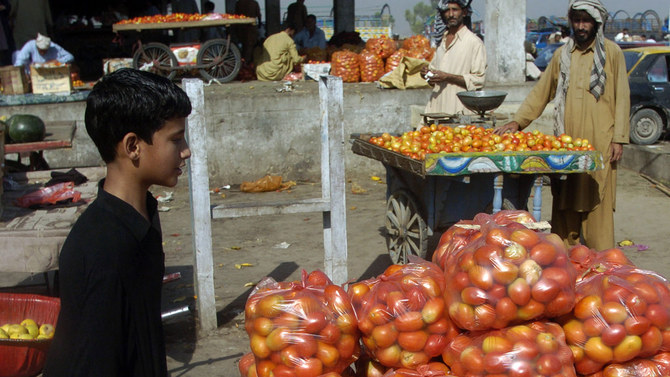
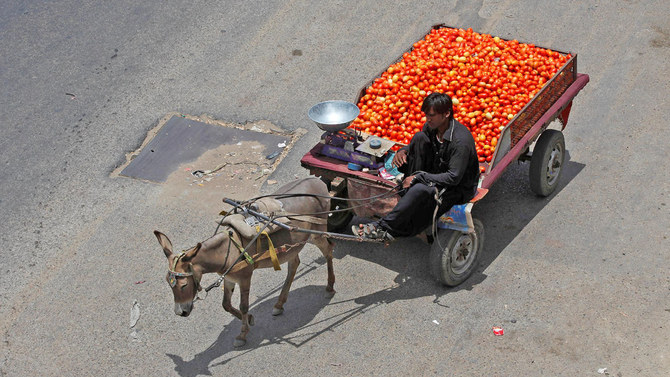
Tomato is one of the major staples in Pakistan and its recent shortage and resultant price hike in the market has fueled public protests and criticism of the government. This has prompted Prime Minister Imran Khan’s government to allow import of the commodity from neighboring country which is otherwise struggling to discourage imports to bring down the ballooning trade and current account deficits.
Sultan said that the tomato crop arrival has been delayed in Sindh and Balochistan provinces due to cold weather while Punjab’s production has already hit the market. “This is a temporary shortage … the import from Iran will help bring down the commodity’s prices in the market,” he said.
He expected the imported tomatoes would reach Pakistani vegetables markets in the next few days. He also clarified that Pakistan had not been importing tomatoes from India since 2017 due to a ‘disease’ in the produce, which could harm the local crop seed.
“This is a misconception. We weren’t importing tomatoes from India even when the bilateral trade was open,” he said.
The tomatoes price shot up in the market in recent days owing to the acute shortage of the produce and it is being sold as high as Rs300 ($1.93) per kilogram in different parts of the country. The official price of one kilogram of tomatoes on average in major cities is calculated to be Rs164 ($1.05), according to Pakistan Bureau of Statistics.
The government has not set any exact quota or quantity of tomatoes to be imported from Iran, the parliamentary secretary said, adding that the import would end automatically after the arrival of the new crop in the market by early December.
Iran has been under the US economic sanctions for its controversial nuclear program that has inhibited Pakistan and other countries to establish trade and economic relationship with the Islamic Republic. Islamabad therefore has no legal banking channel with Tehran for payments against any import or export. The volume of bilateral trade between the two countries stands around mere $400 million per annum.
“The US sanctions don’t apply on trade related to food items,” the parliamentary secretary said, “we have been doing barter trade with Iran for vegetables and fruits only.”


![]()
![]()

Iranian tomatoes arrive in Pakistan to meet demand gap
Iranian tomatoes arrive in Pakistan to meet demand gap
- Says the US sanctions don’t apply on trade related to food items
- The import will be for about four weeks to meet the shortage in local market, official says
Latest updates


© 2026 SAUDI RESEARCH & PUBLISHING COMPANY, All Rights Reserved And subject to Terms of Use Agreement.