A closer look at Pakistan’s signature truck art

1 / 13
2 / 13
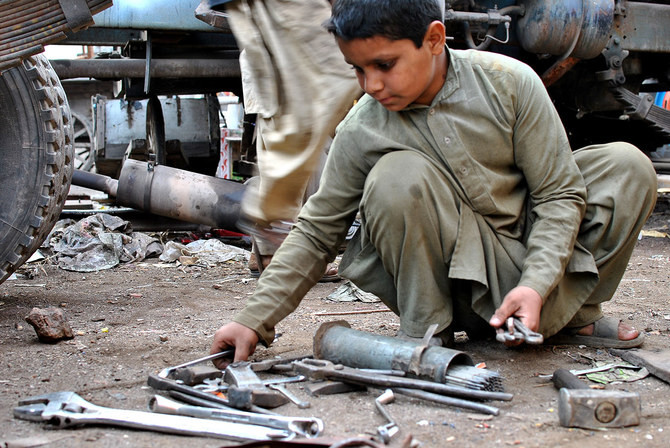
Abdur Rehman, a young welder, is busy arranging his tools to start working on a truck on Nov. 11, 2019. (AN Photo by Saba Rehman)
3 / 13
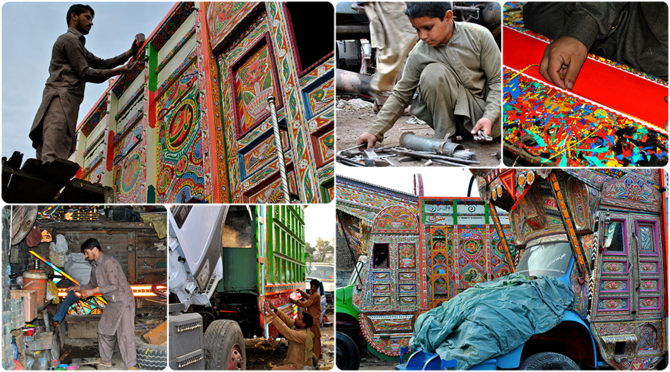
Skillful artists preparing the main body of a truck on Nov. 11, 2019. (AN Photo by Saba Rehman)
4 / 13
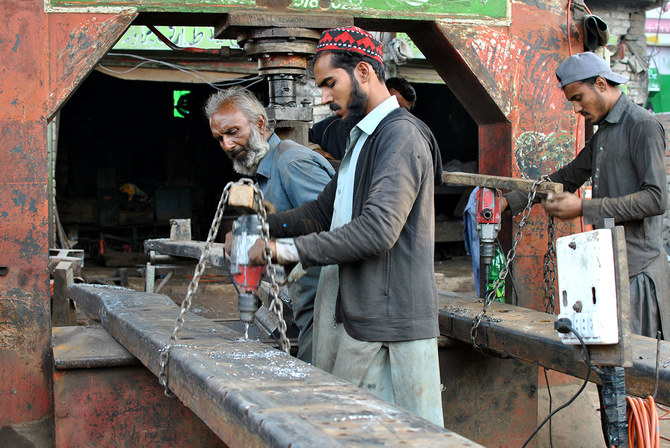
A welder is preparing the base to install new frame on a truck on Nov. 11, 2019. (AN Photo by Saba Rehman)
5 / 13
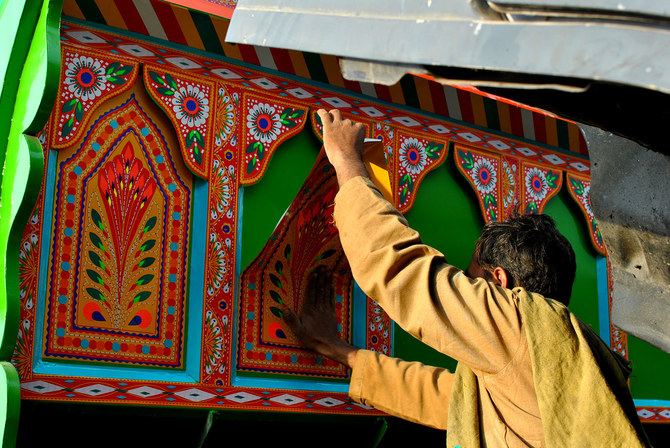
Truck Art is colorful and uses striking shades to attract people. Picture taken on Nov. 11, 2019. (AN Photo by Saba Rehman)
6 / 13
Artists also use printed stickers to decorate trucks. Picture taken on Nov. 11, 2019. (AN Photo by Saba Rehman)
7 / 13
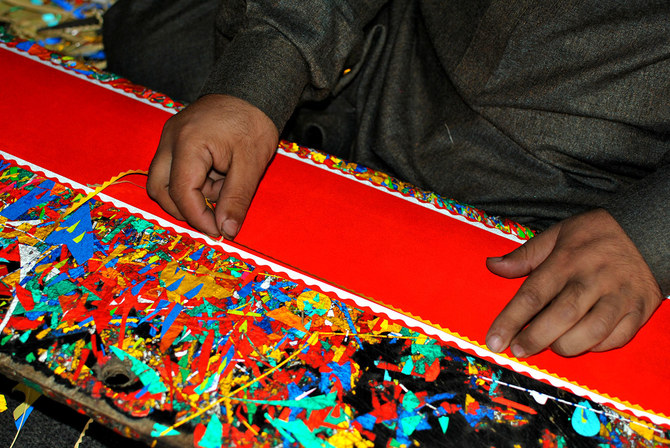
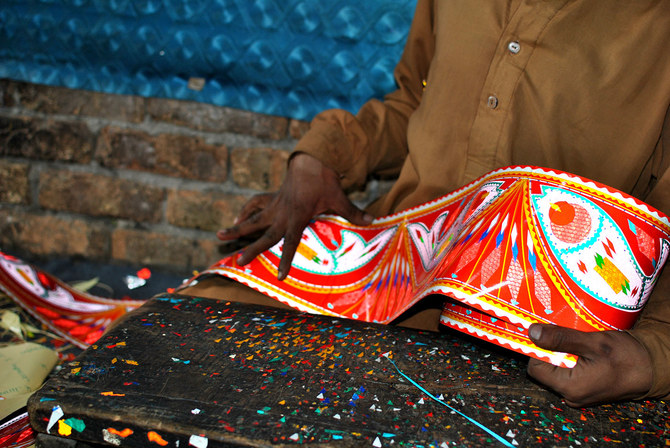
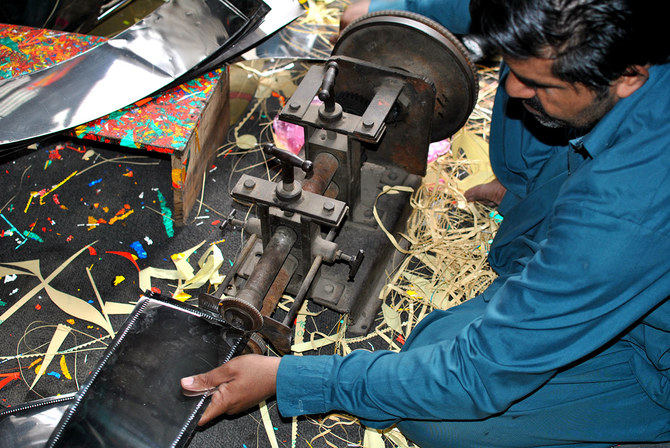
An artist is cutting stickers before pasting them on a truck on Nov. 11, 2019. (AN Photo by Saba Rehman)
8 / 13
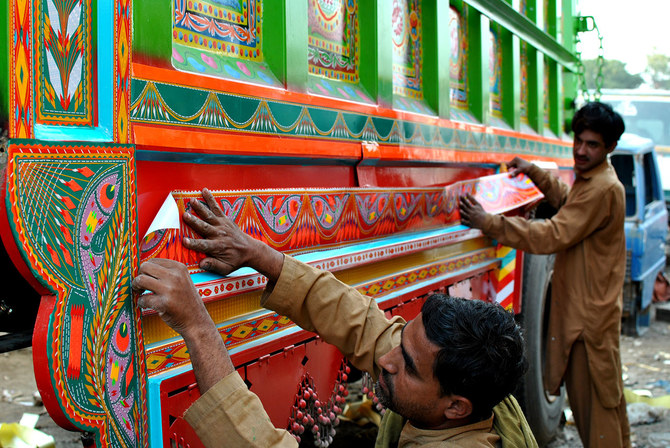
Artists paste stickers on a truck body on Nov. 11, 2019. (AN Photo by Saba Rehman)
9 / 13
Imported stickers from China are pasted on a truck on Nov. 11, 2019. (AN Photo by Saba Rehman)
10 / 13
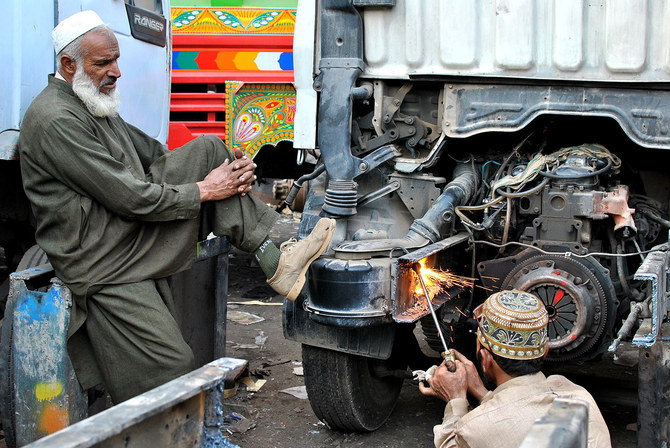
The owner of a truck is keeping an eye on the artists painting his vehicle on Nov. 11, 2019. (AN Photo by Saba Rehman)
11 / 13
Artists giving final touches to a truck on Nov. 11, 2019. (AN Photo by Saba Rehman)
12 / 13
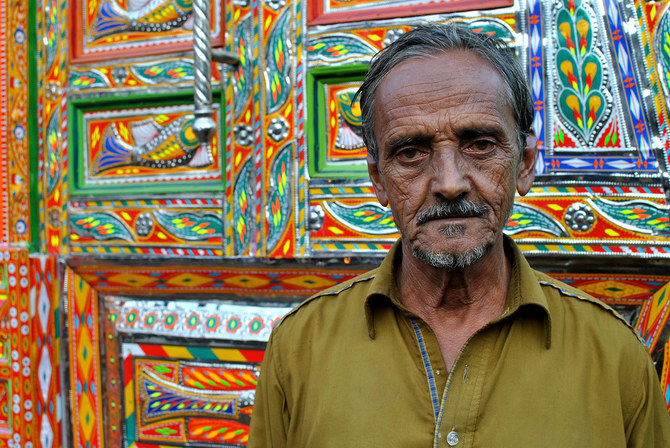
70-year-old artist, Muhammad Saleem, has decorated trucks for the last 45 years. Picture taken on Nov. 11, 2019. (AN Photo by Saba Rehman)
13 / 13
The tradition of decorating trucks in Pakistan is long and colorful. Artist use everything from metal, wood, jangling chains and shiny objects to decorate their trucks, making this unique form of art popular across the world. (AN Photo by Saba Rehman)
Updated 14 November 2019
Follow

A closer look at Pakistan’s signature truck art

  • It takes several weeks to completely decorate a truck
  • Truck art allows us to project a positive image of our country, says an artist

ISLAMABAD: The tradition of decorating trucks in Pakistan is long and colorful. Artist use everything from metal, wood, jangling chains and shiny objects to decorate their trucks, making this unique form of art popular across the world.
Truck drivers also ask the artists to paint images of different personalities, including celebrities and political figures, animals, flowers and landscapes. Similarly, artists mainly work with contractors who make deals with truck owners.
60-year-old Khurshid Khan from Mardan city of Khyber Pakhtunkhwa province migrated to Islamabad in 1986. Since then, he has been painting trucks that can be seen on highways and roads across the country.
Khan said he recently sent a decorated truck to Saudi Arabia.
“Malik Ibrar, a Pakistani businessman, from Peshawar paid us seven million rupees to paint and decorate a truck that could be parked at a family restaurant in Al-Azizia [in the Kingdom],” he told Arab News, adding that 12 artists completed Ibrar’s truck in two months’ time.
70-year-old Muhammad Saleem is also associated with this profession for the last 45 years. “I started doing this to earn some money, but with the passage of time I devoted [my life] to this profession. I have decorated hundreds of trucks,” Saleem said, adding that truck art allowed him to project “Pakistan’s positive image to the world.”


Pakistan destroyed seven TTP camps in Afghanistan strikes, 80 militants killed — official

Updated 5 sec ago
Follow

Pakistan destroyed seven TTP camps in Afghanistan strikes, 80 militants killed — official

  • Saturday’s airstrikes followed a series of attacks inside Pakistan amid a surge in militancy
  • The Afghan Taliban authorities accuse Pakistani forces of killing civilians in the airstrikes

ISLAMABAD: Pakistan’s airstrikes in Afghanistan destroyed seven Tehreek-e-Taliban Pakistan (TTP) camps and killed over 80 militants, a Pakistani security official said on Sunday, with the Afghan Taliban accusing Pakistani forces of killing civilians in the assault.

Saturday’s airstrikes followed a series of attacks inside Pakistan amid a surge in militancy. Authorities say the attacks, particularly in Khyber Pakhtunkhwa province and the Pakistani capital of Islamabad, were carried out by the TTP and allied groups that Islamabad alleges are operating from sanctuaries in Afghanistan. Kabul denies this.

According to Pakistan’s information ministry, recent incidents included a suicide bombing at a Shiite mosque in Islamabad, separate attacks in Bajaur and Bannu, and another recent incident in Bannu during the holy month of Ramadan, which started earlier this week. The government said it had “conclusive evidence” linking the attacks to militants directed by leadership based in Afghanistan.

“Last night, Pakistan’s intelligence-based air strikes destroyed seven centers of Fitna Al-Khawarij TTP in three provinces of Nangarhar, Paktika and Khost, in which more than eighty Khawarij (TTP militants) have been confirmed killed, while more are expected,” a Pakistani security official, who spoke on condition of anonymity, told Arab News.

An earlier statement from Pakistan’s information ministry said the targets included a camp of a Daesh regional affiliate, the Islamic State Khorasan Province (ISKP), which claimed a suicide bombing at an Islamabad Shiite mosque that killed 32 people this month.

In an X post, Afghan government spokesperson Zabihullah Mujahid said Pakistani forces had violated Afghan territory.

“Pakistani special military circles have once again trespassed into Afghan territory,” Mujahid said. “Last night, they bombed our civilian compatriots in Nangarhar and Paktika provinces, martyring and wounding dozens of people, including women and children.”
 
The Afghan Taliban’s claims of civilian casualties could not be independently verified. Pakistan did not immediately comment on the allegation that civilians had been killed in the strikes.

In a post on X, Afghanistan’s foreign ministry said it had summoned Pakistan’s charge d’affaires to Afghanistan Ubaid-ur-Rehman Nizamani and lodged protest through a formal démarche in response to the Pakistani military strikes.

“IEA-MoFA (The Islamic Emirate of Afghanistan’s Ministry of Foreign Affairs) vehemently condemns the violation of Afghanistan’s airspace and the targeting of civilians, describing it as a flagrant breach of Afghanistan’s territorial integrity & a provocative action,” it said in a statement.

“The Pakistani side was also categorically informed that safeguarding Afghanistan’s territorial integrity is the religious responsibility of the Islamic Emirate of Afghanistan; henceforth, the responsibility for any adverse consequences of such actions will rest with the opposing side.”

Tensions between Islamabad and Kabul have escalated since the Afghan Taliban returned to power in 2021. Pakistan says cross-border militant attacks have increased since then and has accused the Taliban of failing to honor commitments under the 2020 Doha Agreement to prevent Afghan soil from being used for attacks against other countries. The Taliban deny allowing such activity and have previously rejected similar accusations.

Saturday’s exchange of accusations marks one of the most direct confrontations between the two neighbors in recent months and risks further straining already fragile ties along the volatile border.