HONG KONG, BEIJING: Chinese electric vehicle (EV) manufacturer XPeng, backed by Alibaba Group Holding Ltd., said on Wednesday it has raised $400 million from investors including Xiaomi Corp. to fund its growth.
Sources familiar with the matter told Reuters earlier about the fundraising and about Xiaomi being an investor.
The fundraising comes at what bankers and industry insiders describe as an increasingly tough financing environment for Chinese EV startups which must jostle for attention in a crowded sector and produce convincing arguments about future profitability despite government cuts to EV subsidies and plans to phase them out.
XPeng, which announced the fundraising in a statement, did not comment on its valuation. But the sources said the latest fundraising valued the five-year-old firm, led by 42-year-old tech entrepreneur He Xiaopeng, at nearly $4 billion, higher than the 25 billion yuan ($3.57 billion) valuation in the last funding round.
The dollar fundraising comes as Guangzhou-based XPeng, which has mostly raised yuan-denominated capital, mulls going public in the coming years, with New York among one of possible listing venues, the people said. It is also considering Hong Kong and Shanghai’s Nasdaq-style tech board, said one of them.
With Xiaomi, XPeng will explore more applications of smartphone technologies on intelligent connected vehicles, said one of the sources.
“The signing of the new fundraising, which not only attracted new strategic investors such as Xiaomi Corporation but also received strong support from many of our current shareholders, is a renewed endorsement of our long-term strategy,” XPeng Chief Executive He said in the statement.
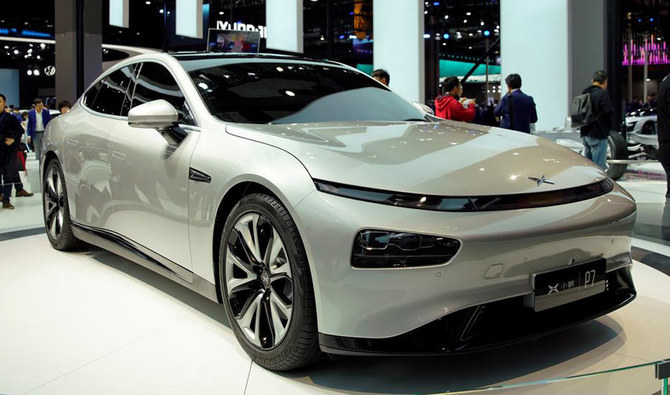
The proceeds will be mainly used for research and development of autonomous driving-related software, mass production of its G3 sport-utility vehicle model and P7 sedan, branding and expanding its retail network, said one of the people, who declined to be identified as the matter was private.
XPeng also secured “several billions” of yuan-dominated unsecured credit lines from banks including China Merchants Bank, China CITIC Bank and HSBC, the statement said, without specifying figures.