BEIJING: China lifted its annual rare earth output quotas on Friday by 10% to record-high levels for 2019, potentially easing fears the world’s dominant producer of the group of 17 prized minerals will restrict supply.
Beijing in late May raised the prospect of weaponizing its control of rare earths, used in everything from consumer electronics to sophisticated military equipment, in its trade war with the United States but has yet to announce any formal restrictions.
China is home to at least 85% of global rare earth processing capacity, according to Adamas Intelligence.
The full-year rare earth mining quota has been set at 132,000 tons for 2019 and the smelting and separation quota at 127,000 tons, the Ministry of Industry and Information Technology said in a statement.
The quotas, up from 120,000 tons and 115,000 tons, respectively, in 2018, are the “highest volume ever allocated” David Merriman, a London-based manager at commodity research firm Roskill, said in an email.
China has now increased the allowances for two years in a row and an official at the Association of China Rare Earth Industry confirmed the numbers were record highs.
They imply a quota of 72,000 tons for mining in the second half of 2019, up more than 54% from an unusually low level a year earlier.
For smelting and separation, or the processing of ore into material manufacturers can use, the second half quota is 69,500 tons.
The quota hikes could be seen as a message that China has “the capability to increase supply, making life difficult for (rare earths) under development in regions such as the Americas, EU and Australia,” Roskill’s Merriman said.
But it likely “has much more to do with the domestic Chinese supply-chain situation,” he added, noting that China had been increasingly looking overseas for feedstock amid an environmental crackdown at home.
The move will allow state-run miners and processors to “legally maintain market share,” Merriman said.
China typically issues the rare earth quotas twice a year for six-month periods. In March, the first-half quotas were set at 60,000 tons for mining and 57,500 tons for smelting and separation.
The late release of the full-year quotas comes as Beijing and Washington work to iron out the details on a so-called “phase one” deal to end trade hostilities.
China’s rare earth exports in October rose by 1.9% from the previous month to 3,639 tons, according to customs data released earlier on Friday.


![]()

China raises annual rare earth output quotas to record high
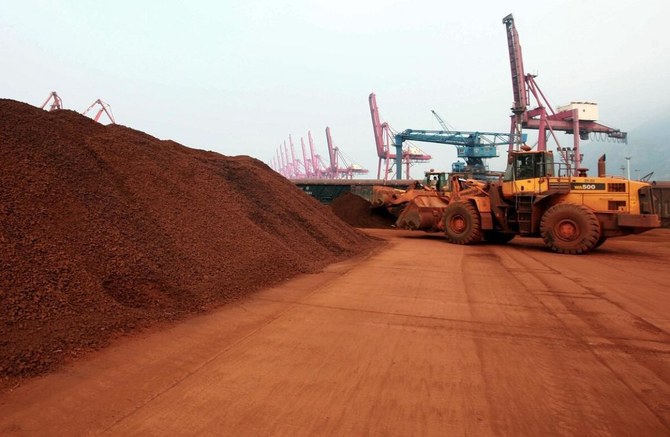
China raises annual rare earth output quotas to record high
- Annual quotas for 2019 are highest volumes ever allocated
- Beijing had raised prospect of limiting supply in US trade row

Latest updates


Recommended


© 2026 SAUDI RESEARCH & PUBLISHING COMPANY, All Rights Reserved And subject to Terms of Use Agreement.