

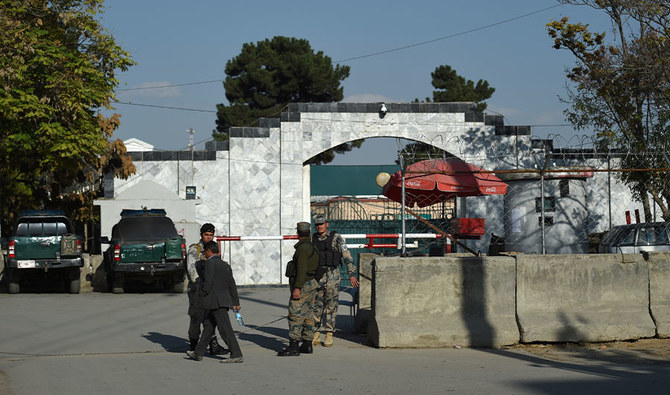
KABUL: Hundreds of Afghans — many needing urgent medical treatment — gathered near the Pakistani embassy in Kabul on Monday, waiting for word of when the visa section might re-open.
The embassy announced late Sunday it was indefinitely shuttering its consular office in Kabul for security reasons after it said several staff were harassed by unknown assailants on roads in the Afghan capital.
The visa section’s closure comes amid fresh tensions between Afghanistan and Pakistan, which last week exchanged fire in a border area.
It also highlights the reliance many Afghans have on Pakistan, where they seek the type of medical care that is unavailable or unaffordable in Afghan hospitals.
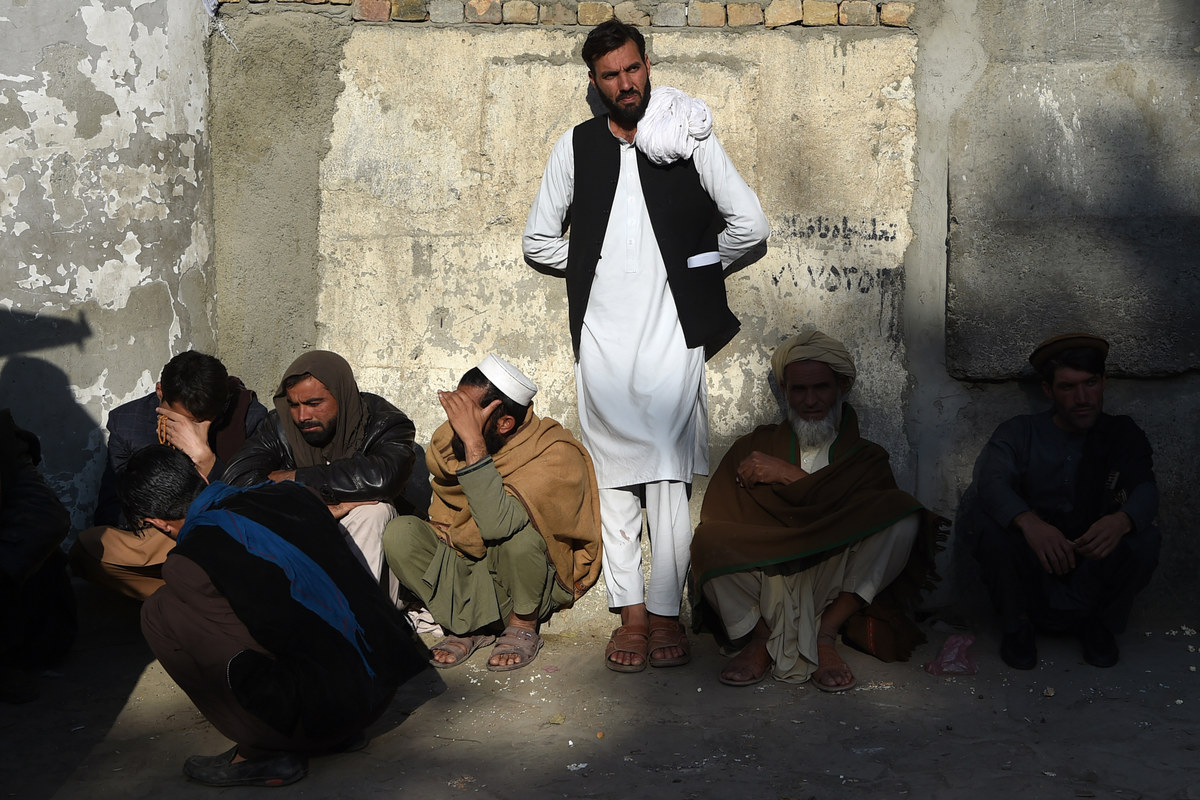
Afghan men wait for their visas outside Pakistan's embassy, in Kabul on November 4, 2019. Hundreds of Afghans -- many needing urgent medical treatment -- gathered near the Pakistani embassy in Kabul on November 4, waiting for word of when the visa section might re-open. (AFP)
“I am in a hurry to reach Pakistan, as the mother of my seven children is very ill, and I urgently need to take her to Pakistan for treatment,” Abdullah Abded, who had traveled from Parwan province north of Kabul, told AFP.
“I feel desperate. I may have to tell my children that their mother may die because we cannot get the visa.”
Pakistan’s health care system is derided by critics as chaotic, corrupt and vastly under-resourced, yet when coming from Afghanistan, it can be a lifeline.
While the war-torn country has many health facilities, these are concentrated in the cities and access is often determined by wealth.
Specialist treatment in Kabul, for instance, can cost double what it would in Pakistan, people outside the embassy said.
“I have a kidney disease and need to go to Pakistan on a regular basis for treatment or my kidneys will fail,” said Nabi Yosufzai, a 26-year-old shopkeeper.
The consulate has closed in the past, usually for short periods. A sign on the consular section’s door in Pashto on Monday said it had been closed until further notice.
An embassy spokesman told AFP the consular section gets about 2,000 applications daily and is usually able to process about 1,500 visas within a 24- or 48-hour timeframe.
Apart from medical help, Afghans seek Pakistan visas to visit loved ones, buy and sell goods and get university educations.
“I feed my big family by selling Afghan almonds or pomegranates in Pakistan in small amounts,” said Kabul trader Nematullah, who only goes by one name.
“The profit is hardly enough for my family, but still better than the money you can make here.”
Relations between Afghanistan and Pakistan, both Islamic republics, have long been fraught, with Afghans blaming Islamabad for any number of woes including allegedly supporting the Taliban. Pakistan denies it helps the insurgent group.
Tensions soured further last week amid new clashes along the border in Afghanistan’s eastern province of Kunar. Such incidents happen periodically.
Both sides have accused each other’s troops of cross-border shelling.
The Pakistani foreign ministry has said six Pakistani troops were wounded October 27 and 28 in “unprovoked mortar and heavy weapon firing” by Afghan soldiers.
Kunar deputy governor Gul Mohammad Bidar told AFP there had been no new shelling since last week. He said two women were killed and 11 more civilians were injured in Pakistani rocket fire during those exchanges.
Pakistani consular services remained open in Herat, Jalalabad, and Mazar-i-Sharif.


