JOHANNESBURG: Ratings agency Moody’s moved South Africa one step closer to “junk” status on Friday by revising the outlook on the country’s last investment-grade credit rating to “negative” because of a slowdown in economic growth and rising debt burden.
Analysts had expected the outlook revision on the ‘Baa3’ rating, the lowest rung of investment grade, after a bleak mid-term budget statement this week that slashed this year’s growth forecast to 0.5% and showed government debt racing to more than 70% of gross domestic product by 2023.
S&P Global and Fitch already have South Africa’s debt in sub-investment grade.
“The negative outlook signals in part Moody’s rising concern that the government will not find the political capital to implement the range of measures it intends, and that its plans will be largely ineffective in lifting growth,” Moody’s said in a statement after South African financial markets had closed.
“The development of a credible fiscal strategy to contain the rise in debt, including in the 2020 budget process and statement, will be crucial to sustain the rating at its current level,” the agency added.
The negative outlook means there is a window of 12-18 months in which a downgrade could be delivered.
A move to “junk status” typically increases a government’s cost of borrowing by raising the premium that investors demand to hold its debt.
A downgrade to sub-investment grade could also see South Africa evicted from the benchmark World Government Bond Index of local currency debt, which could trigger billions of dollars of passive outflows.
Phoenix Kalen, director of emerging markets strategy at Societe Generale, said South Africa was now in the “last-chance saloon” and that it had to stabilize its debt trajectory.
“This will be a Herculean task,” Kalen said, citing financial pressures at state-owned companies among causes for concern.
The South African government has been forced into repeated bailouts of state companies such as struggling power firm Eskom, which is due to receive more than 100 billion rand ($6.65 billion) of state money over the next two fiscal years.


![]()

Moody’s moves South Africa one step closer to ‘junk’ status
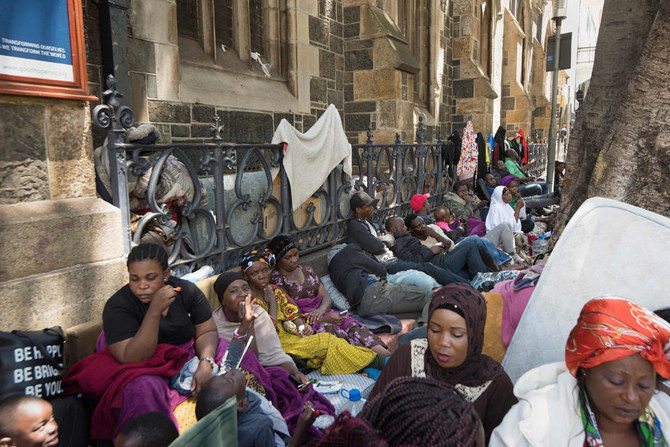
Moody’s moves South Africa one step closer to ‘junk’ status
Latest updates


© 2026 SAUDI RESEARCH & PUBLISHING COMPANY, All Rights Reserved And subject to Terms of Use Agreement.