BAGHDAD: Iraqi President Barham Saleh vowed Thursday to hold early parliamentary elections once a new law is passed and said the country's embattled premier would resign if an alternative was found.
The reforms, announced in Saleh's first televised address in weeks, appear unlikely to appease Iraqis protesting in Baghdad and the south to demand an overhaul of the political system.
"I will agree on early elections based on a new electoral law and new electoral commission," Saleh said, adding that the draft would be submitted to parliament next week.
He said Prime Minister Adel Abdul-Mahdi was ready to step down but there was so far no one to take his place.
"The prime minister expressed his willingness to submit his resignation, asking the political parties to reach an agreement on an acceptable alternative," Saleh added.
Such a consensus would "prevent a constitutional vacuum," he said.
According to Iraq's 2005 constitution, the prime minister can be put to a vote of no confidence based on a request by either the president or lawmakers.
It does not address what happens if the premier resigns.
Abdul-Mahdi, 77, came to power a year ago through a tenuous partnership between populist cleric Muqtada Al-Sadr and paramilitary leader Hadi Al-Amiri.
Al-Sadr had called for the PM to resign and for early elections to be held, but Abdul- Mahdi dismissed his demands in a letter earlier this week.
"If the goal of elections is to change the government, then there is a shorter way: for you to agree with Mr. Amiri to form a new government," Abdul-Mahdi wrote.
In Tahrir Square, the main protest camp in Baghdad, Haydar Kazem, 49, said he was unconvinced.
"The problem is with the ruling parties, not with Abdul-Mahdi," he said.
According to Iraq's complex confessional system, the prime minister is Shiite Muslim, the president is a Kurd and the speaker of parliament is Sunni Muslim.
The entrenched political class is often subject to competing influence from Tehran on one side and Washington on the other.


![]()

Iraq president says PM willing to resign, vows early polls
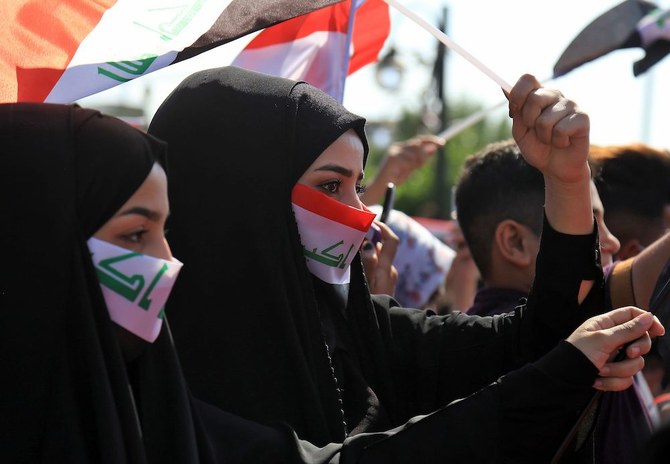
Iraq president says PM willing to resign, vows early polls
- Adel Abdul-Mahdi was 'ready to step down' but there was so far no one to take his place
- Reforms unlikely to appease Iraqis protesting in Baghdad and the south


Latest updates


© 2026 SAUDI RESEARCH & PUBLISHING COMPANY, All Rights Reserved And subject to Terms of Use Agreement.