KARACHI: Pakistan’s law enforcement agencies have confiscated over 10,000 containers to block thoroughfares in different parts of the country, said transporters on Wednesday, as Jamiat-e-Ulama-e-Islam (JUI-F), a religio-political party, prepares to hold a massive rally in Islamabad against the Pakistan Tehreek-e-Insaf (PTI) administration on Thursday.
“The container with vehicles impounded are loaded with food stuff, medicines and chemicals,” President of Karachi Goods Carrier Rana Aslam told Arab News. “More than 10,000 containers have been confiscated to block roads, causing a substantial decline in the shipping activities at the country’s ports.”
Transporters complained that the authorities were putting millions of dollars of export orders at stake by impounding containers carrying goods that were to be sent abroad.
“The ongoing political situation has completely broken the import-export cycle. No containers from Punjab is coming to Sindh. Likewise, transporters are not taking goods to Punjab, fearing seizure of vehicles for road blocks,” Senior Vice President of the Federation of Pakistan Chambers of Commerce and Industry (FPCCI) Dr Mirza Ikhtiar Baig said.
“It is causing huge losses of billions of rupees as exports are being delayed,” he added.
Textile exporters say they are assessing the extent of losses suffered by them due to delays in shipments. “Exporters are contacting us and we will assess the situation and losses to our members,” Chairman Pakistan Apparel Forum Muhammad Jawed Bilwani told Arab News.
“The government was repeatedly advised to get old containers to deal with anti-government agitations but no action was taken, except in Karachi where few containers were acquired by the police to deal with such demonstrations,” he added. “This sends a negative signal to the world community and importers of Pakistani products.”
Transporters say they are suffering huge losses due to delay in moving containers to their destinations.
“We are paying $100 per day rent to the shipping lines for the containers,” Chairman Punjab Goods Transport Association Maqbool Hussain told Arab News.
“Apart from that, the transporters are also suffering losses of around Rs15,000-20,000 per vehicle on account of salaries to the staff and other expenses,” he added.
“The government announced a compensation, but so far no payments have been received as transporters are facing losses in millions of rupees,” Spokesman of All Pakistan Oil Tankers Association Israr Ahmed Shinwari told Arab News.
He said that transporters had gone on strike against the confiscation of their containers without any compensation.
Some transporters informed their containers had been released from the areas where the JUI-F Azadi (freedom) March caravan had passed. Still they said they were reluctant to carry goods upcountry.


![]()
![]()

Pakistani transporters say police seize thousands of containers ahead of protests
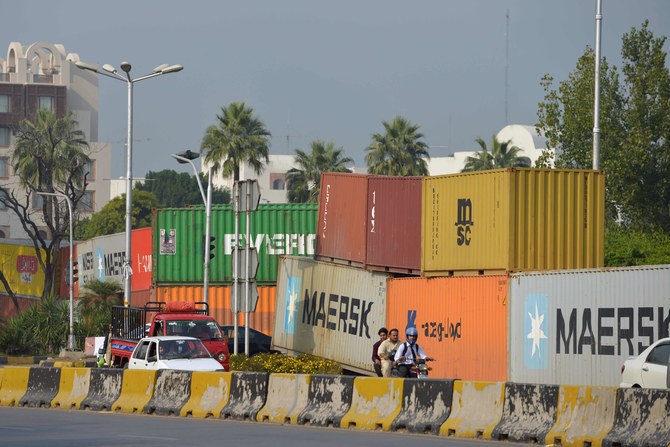
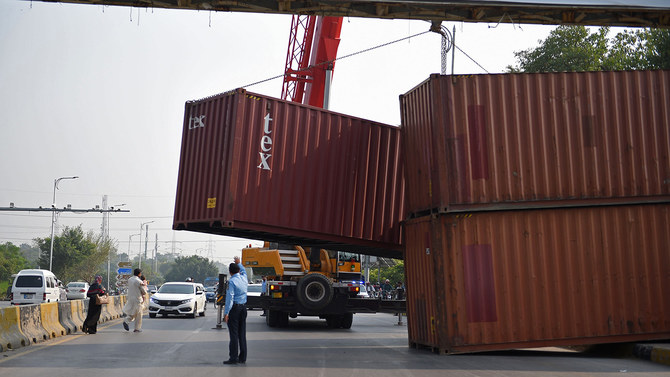
Pakistani transporters say police seize thousands of containers ahead of protests
- Many impounded containers carry food, medicines and chemicals, causing millions of rupees of losses to business community
- Transporters complain the ongoing political situation is causing logical problems, putting huge export orders at stake
Latest updates


© 2026 SAUDI RESEARCH & PUBLISHING COMPANY, All Rights Reserved And subject to Terms of Use Agreement.