KARACHI: The mass anti-government protest march led by right-wing Jamiat Ulema Islam-Fazal (JUI-F) chief Fazl-ur-Rehman, reached Rahim Yar Khan in the country's most densely populated Punjab province in a bid to finally land in Pakistan’s capital city of Islamabad by Thursday.
The procession which set out on Sunday from the southern port city of Karachi demands the resignation of Prime Minister Imran Khan citing rigged elections.
Along the 1,440 km journey to the country’s capital, the rally is passing through major Pakistani cities currently in Sindh. Marchers will also pass-through Multan, Lahore, and Faisalabad. The rally has been joined by thousands of seminary students alongside convoys of major political parties including the Pakistan Muslim League-Nawaz (PML-N) and the Pakistan People’s Party (PPP).
While addressing participants of the march, Rehman said he had turned down offers of any kind of deal with the government and would stick to demanding Khan’s resignation as well as fresh polls in the country.
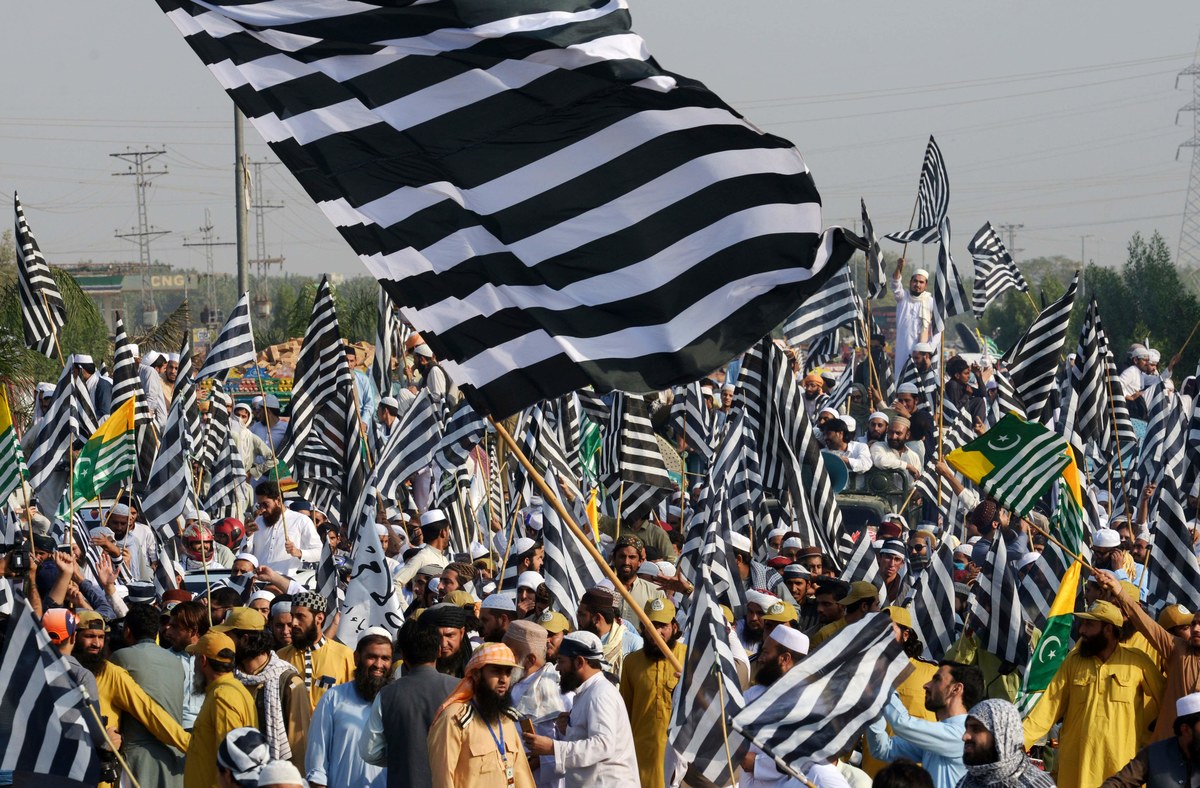
Activists of the Jamiat Ulema-e-Islam wave party flags during the anti-government "Azadi March" towards Islamabad, in Peshawar on October 27, 2019. The Jamiat Ulema-i-Islam-Fazl (JUI-F) kicked off the "Azadi March" from Karachi on October 27, after a speech from Maulana Fazlur Rehman on Kashmir Black Day. (AFP)
“Imran Khan will have to resign because he has come to power as a result of rigged polls,” he said.
“Hundreds of thousands have gathered in Karachi. What will the government do when people from across the country reach Islamabad?” he asked and added that the opposition believed in democracy and in the sovereignty of Pakistan’s Constitution.
“I will announce the next course of action in Islamabad,” Rehman said, as his container set out on the Karachi-Hyderabad motorway.
Khan won last year’s election on a promise to end corruption and help middle-class families, but the economy is running into headwinds and in July, the government agreed to a $6 billion bailout from the International Monetary Fund with stringent stabilization reforms that have led to record inflation in the country.
Earlier, while addressing the rally, Rehman said the entire country was on the “same page” on the issue of Kashmir, referring to a curfew in the Indian-administered portion of the territory.
Though the PPP and PML-N have both joined Rehman’s campaign against Khan, they earlier stated they would not support any unconstitutional action.
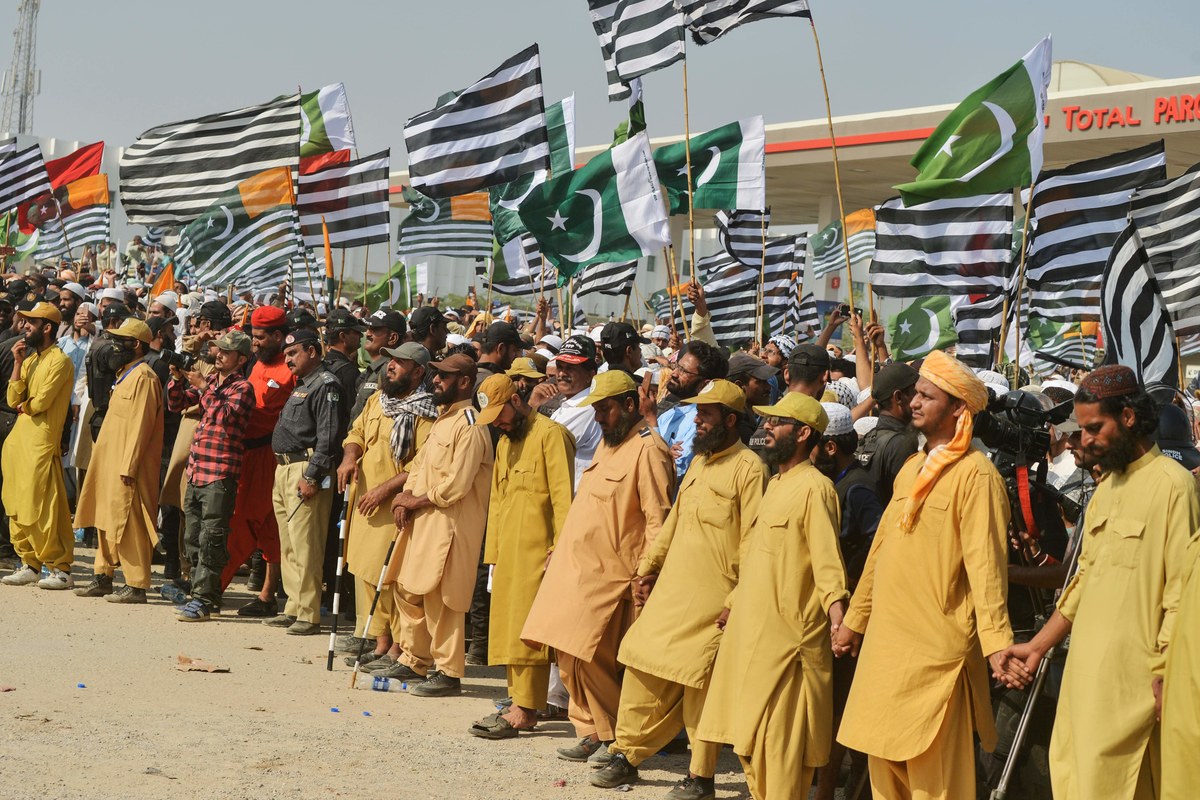
Activists and supporters of the Jamiat Ulema-e-Islam and other opposition parties gather before the start of anti-government "Azadi March" towards Islamabad, from Karachi on October 27, 2019. The Jamiat Ulema-i-Islam-Fazl (JUI-F) kicked off the "Azadi March" from Karachi on October 27, after a speech from Maulana Fazlur Rehman on Kashmir Black Day. (AFP)
“Our leader, Mian Nawaz Sharif, has instructed us to support the Azadi march,” PML-N leader and former governor of southern Sindh province, Muhammad Zubair, said and added that his party would hold receptions in every city and eventually join the marchers in the capital.
“Here institutions interfere in the domain of others. We have acquired this country after rendering matchless sacrifices and will not allow (other) forces to surpass their limits,” Raza Rabbani, senior PPP leader and former chairman of the senate said while addressing the rally.
“Pakistan has reached a stage where we don’t need a change of faces. We need to change the system,” he said.
Last year, election authorities rejected opposition complaints of rigging in the 2018 vote.
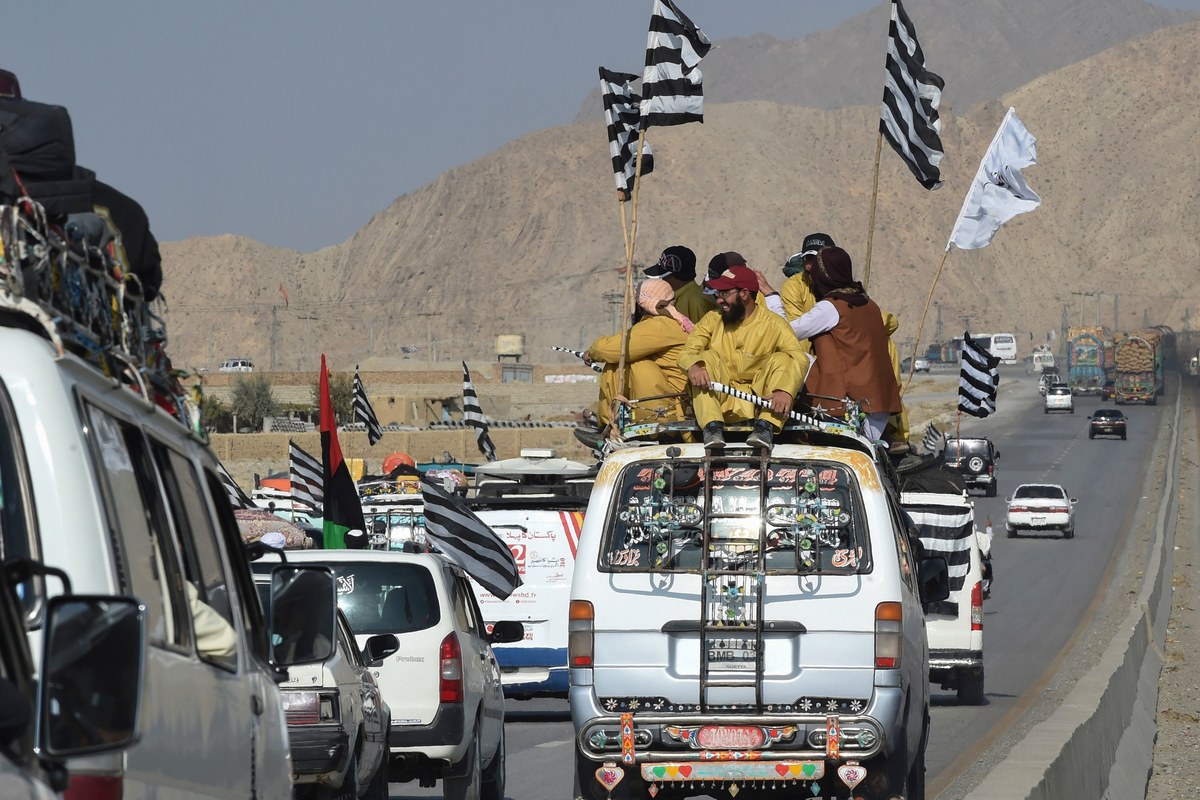
Activists of Jamiat Ulema-e-Islam travelling atop a vehicle as they take part in an anti-government "Azadi March" towards Islamabad, from Quetta on October 27, 2019. The Jamiat Ulema-i-Islam-Fazl (JUI-F) kicked off the "Azadi March" from Karachi on October 27, after a speech from Maulana Fazlur Rehman on Kashmir Black Day. (AFP)
Meanwhile, JUI-F’s Rehman, a veteran politician who heads an alliance with several seats in the Parliament, is heavily supported by students and teachers in numerous religious schools, or madrasas, across the country who came out to join the rally.
“I am going to Islamabad in my individual capacity,” Abdul Rasheed, a teacher at Gulistan-e-Zareen seminary told Arab News.
“The situation demands that we take part in the march and make it successful. The price hike has broken the backbone of people. It’s an incompetent government that needs to change,” he said.
While most protest participants did not join the moving caravan heading to the capital, a few hundred people left for Sukkur, a city with a large number of JUI-F followers. The marchers are expected to enter Punjab province by tomorrow evening.