LAHORE: A bench of the Lahore High Court granted medical bail to jailed former prime minister Nawaz Sharif in a high-profile case involving corruption in a sugar mill, local media reported on Friday, days after the ex-premier was shifted to a hospital with an alarmingly low platelet count.
The verdict came after Dr. Ayaz Mehmood, the chairman of a board constituted by the Punjab government to diagnose Sharif, told the court that the three-time prime minister was suffering from acute immune thrombocytopenic purpura (ITP), a bleeding disorder that destroys the platelets in the body.
Friday’s order does not mean Sharif, 69, is free to walk. He is currently serving a seven-year jail sentence after his conviction for corruption in a steel mill case last year. He has appealed that verdict and denies the charges, alleging that they are politically motivated. The Islamabad High Court will hear a bail appeal in that case on Tuesday.
On Monday, Sharif was taken to a hospital in the city of Lahore. Members of his PMLN party have variously claimed since that his health was deteriorating and the government was delaying treatment.
Subsequently, Sharif’s younger brother Shahbaz Sharif, who is the president of his Pakistan Muslim League-Nawaz (PMLN) party, had filed an application before the Lahore High Court that the ex-PM be released on medical grounds and allowed full treatment in Pakistan or abroad.
When the court first heard the bail application on Friday morning, Mehmood said doctors were as yet unsure why Sharif’s platelet count was so low. The court asked him to re-appear at 12:30 p.m. with the board’s full report. When the court reassembled, Mehmood presented the full report.
“The problem diagnosed is acute immune thrombocytopenic purpura, that is a bleeding disorder that results in destroying platelets in the body,” he told the court.
Sharif’s counsel Ashtar Ausaf Ali argued that the former PM’s health was deteriorating and his life was in danger. The court subsequently granted him bail on medical grounds.
Many in Sharif’s family and party have accused the government of delaying his treatment as part of a campaign against him and his party. The government denies that the legal action against Sharif and other members of his family, including daughter Maryam Nawaz, who is also in detention for suspected graft, is politically motivated.


![]()

Lahore high court grants medical bail to ailing Nawaz Sharif
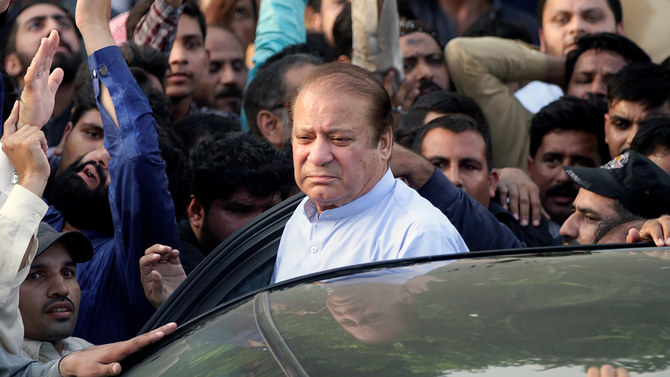
Lahore high court grants medical bail to ailing Nawaz Sharif
- Order comes in a sugar mill corruption case days after jailed ex-PM moved to hospital in critical condition
- Sharif can’t walk free until an Islamabad court hears his bail appeal in a steel mills case for which he is serving seven years
Latest updates




Recommended


© 2026 SAUDI RESEARCH & PUBLISHING COMPANY, All Rights Reserved And subject to Terms of Use Agreement.