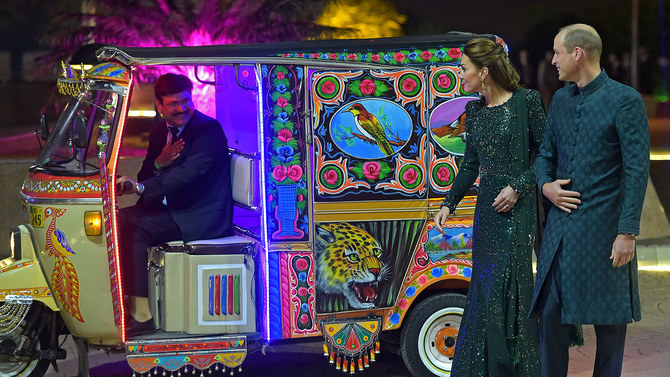

ISLAMABAD: The Pakistani man who drove the Duke and Duchess of Cambridge in a tuk-tuk to a dinner reception held in their honor at the National Museum in Islamabad last week during the royal couple's visit, said it was the “proudest moment” of his life.
Prince William and Kate Middleton arrived in Pakistan on October 15, the first visit to the country by British royals in more than a decade and made at the request of the United Kingdom foreign office.
For a special event hosted by the British High Commission at a hilltop monument in Islamabad, the couple made a colorful entrance in a rickshaw belonging to Hanif Khan who told Arab News his fully decked up vehicle was chosen after it was spotted by a British High Commission official parked at a bus stop in Rawalpindi, Islamabad’s sister city.
Thousands of people have taken pictures with the rickshaw in the days following the ride with the royals, Khan said in a phone interview this week.
“It increased my earning as I am getting more passengers when they find out that my rickshaw is the one used by the visiting prince,” Khan said. “I have been driving this rickshaw for the last six years but this is the proudest moment of my life, which I will never forget.”
Khan was not able to drive the royals himself in the specially refurbished rickshaw, which was instead driven by Arshad Hafeez, a driver who has worked for ten years at the UK embassy and was chosen due to security clearance concerns.
Hafeez, whose smiling picture inside the rickshaw as the royals alight from it has since gone viral, said he never imagined he would “get this much hype and importance.”
“It felt so good when my friends and family called me even from abroad to greet me,” he told Arab News in a phone interview. “My family is also very happy as it was a great honor for all of us.”
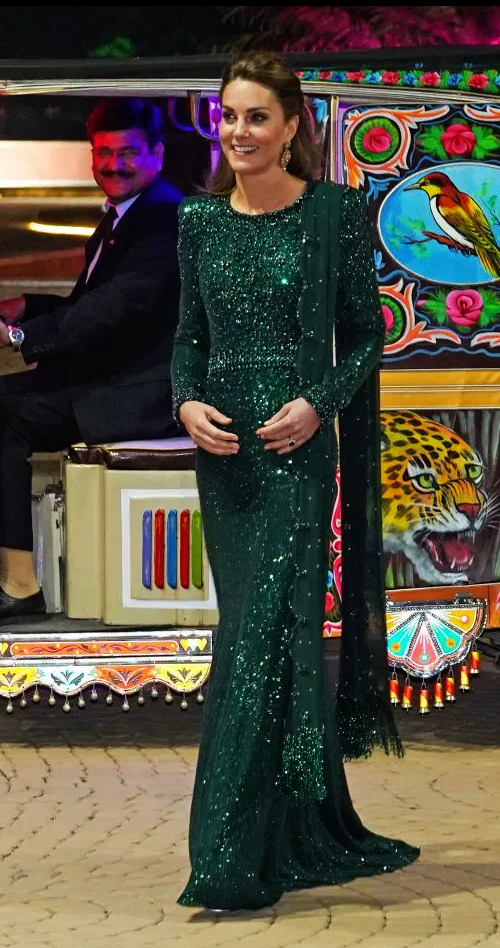
Hafeez said the Duke and Duchess of Cambridge greeted him with “hello” when they entered the rickshaw, William in a teal sherwani suit, a long dress-coat worn over trousers, and the Duchess of Cambridge in a dress by British designer Jenny Packham in deep green, the color of Pakistan’s flag.
“The Duke said to me, take us to the venue as soon as possible; I replied I will do my best and they thanked me after reaching the drop point,” Hafeez said. “This was the most memorable conversation of my life.”
In five days of outreach in Pakistan, William and Kate donned traditional Pakistani dresses by local designers and visited public schools, an orphanage, a cancer hospital and a melting glacier in the Hindu Kush mountain range. They also met top officials including the prime minister, played a match with professional cricketers, and were photographed petting trainee bomb sniffer dogs.
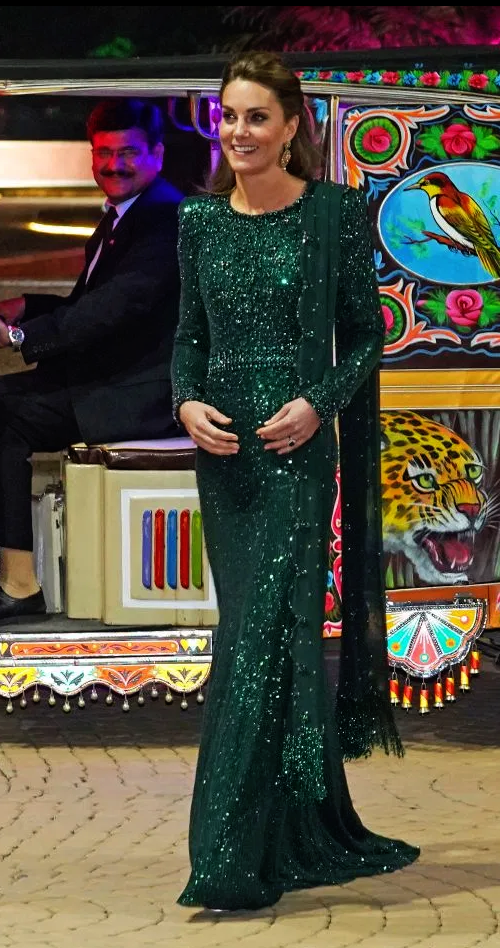
The duchess dazzled with her spectacular dress. (Reuters)
All the events were specifically designed to help boost Pakistan’s image as a tourist and business destination, after decades of militant violence and political unrest.
Other than the rickshaw the royal couple arrived to the event on, five specially decorated rickshaws each roamed the cities of Lahore and Rawalpindi during the five-day visit so ordinary Pakistanis could feel connected with the trip, Fouzia Younis, head of communication at the BHC, told Arab News in Islamabad on Tuesday.
She said a third party had been contracted to identify 10 rickshaws in excellent condition and rebrand them for the visit.
“Over 10,000 people managed to take their photos with the [ten] rickshaws and over 100,000 people have seen the videos of these beautiful rickshaws on our social media not only in Pakistan and the United Kingdom but all over the world,” Younis said.
She said the idea behind using rickshaws was to bring the royal visit to the streets of the country and showcase the unique local tradition of ‘truck art’ to the rest of the world.
The rickshaw William and Kate drove to the BHC reception in was decorated with the Pakistani and UK flags and truck art — a embellishment craft that turns decades-old vehicles into moving murals and has become one of Pakistan’s best known cultural exports, spawning offshoot jewelry, toy and furniture industries at home and inspiring gallery exhibitions abroad.
“We wanted to bring two ideas together with the branding of these rickshaws: we brought the royal visit to the streets of Pakistan and also showcased the truck art of Pakistan to the world,” Younis said. “It was incredibly important that we were able to showcase this wonderful visit for as many Pakistanis as possible.”