ISLAMABAD: Pakistan’s diplomatic mission said on Sunday it was deeply concerned about the security of Pakistani nationals during a period of violent protests in Lebanon, but was optimistic that the situation would normalize soon.
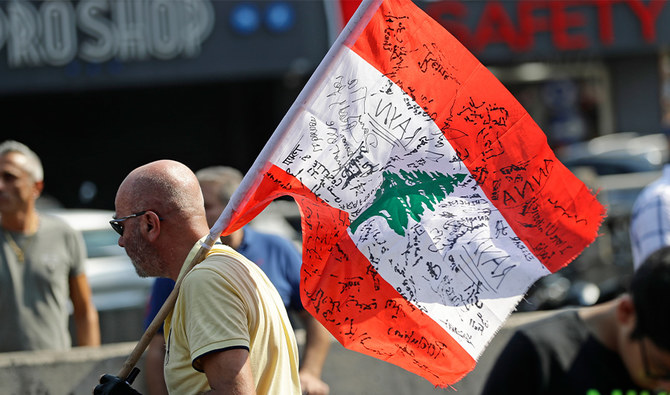
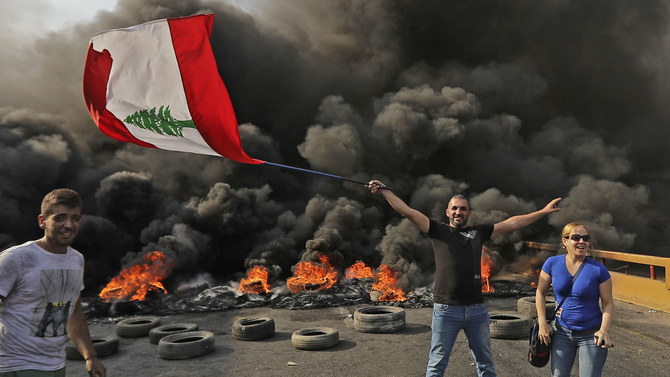
Angry protesters took to the streets across Lebanon on Thursday, agitated by rising inflation and cumbersome tax reforms including a fee on Internet voice applications, which the government almost instantly reversed on Friday. Major roads in Beirut including those leading to and from the airport remain blocked by mobs which routinely set tires ablaze on key routes and highways.
“We are seriously concerned about the safety and security of Pakistani nationals in Lebanon, therefore (our) mission is in contact with them through various channels,” Ambassador Najeeb Durrani, Pakistan’s envoy in Beirut, told Arab News but added he was hopeful things would return to normal soon and that there were no plans yet for the evacuation of the roughly 900 Pakistani expats in the country.
“We are optimistic about the peaceful resolution of the current crisis,” Durrani said. “At present, we don’t have any plans for evacuation.”
“Instructions and information is being exchanged and circulated among the small Pakistani community on a continuous basis,” he said.
Pakistani expats living across Lebanon have been directed by embassy officials to take all possible security measures and refrain from going into protest areas.
“They have been asked to stay tuned to local media for updates about the current situation and avoid unnecessary travel. In case of an emergency, they should contact our mission and inform local authorities as well,” Durrani said and added that no Pakistanis had been injured by the ongoing violence.
Protesters in Lebanon flooded the streets on Sunday, to keep the pressure on Prime Minister Saad Al-Hariri as a self-imposed deadline for Monday to deliver a program of badly needed reforms for the country’s flailing economy drew near.
But by and large, Pakistani expats living in Lebanon outside of Beirut have said they are unafraid of the sudden eruption of demonstrations nationwide, and believe the situation will normalize in the coming days.
“We are perfectly safe, and the situation has not turned violent. Much of the demonstrations are focused in Beirut but the rest is normal, and many roads are now open,” Nasir Nawaz, a Pakistani businessman living in Dora, to the north-east of Beirut told Arab News by telephone.
Fazal Abbasi, a villa keeper in Faitroun, roughly 30 km north of Beirut, told Arab News the protests had had close to no impact on his work or well being.
“The only problem I face is that I can’t go to the city since the road is blocked,” he said.
“My place is very safe. I have spoken to my friends and all are okay.”
“Give time to the Lebanese government until tomorrow,” he said. “Let’s see what happens after.”


![]()
![]()

Beirut mission "seriously concerned" about Pakistanis as Lebanon protests continue
Beirut mission "seriously concerned" about Pakistanis as Lebanon protests continue
- No plans yet to evacuate the roughly 900 Pakistani expats living in Lebanon
- Pakistanis living outside of Beirut have reported relative calm in the neighborhoods
Latest updates


© 2026 SAUDI RESEARCH & PUBLISHING COMPANY, All Rights Reserved And subject to Terms of Use Agreement.