

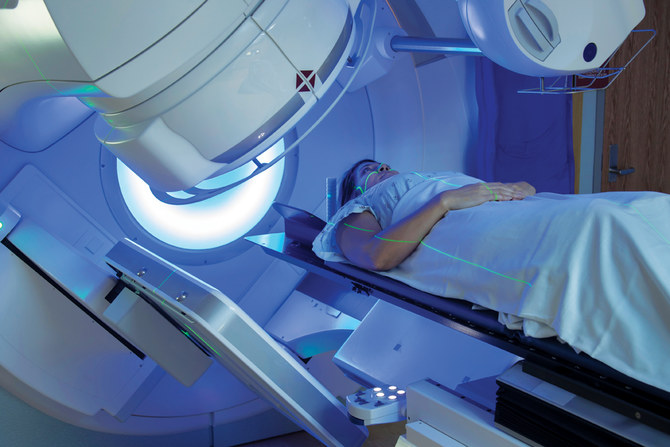

ABU DHABI: Cancer of the breast remains the most common form of the disease among women despite major advances in treatment coupled with improved screening and awareness campaigns.
Rates of the disease are increasing in nearly every region globally as aging populations and factors such as obesity take their toll.
In 2018, more than 2 million new cases were reported worldwide of what is one of the biggest and most preventable killers of women.
Dr. Samer Abushullaih, an oncologist and physician manager at Johns Hopkins Aramco Healthcare in Dhahran, said that despite rising detection rates and the introduction of cutting-edge technology, health experts cannot afford to be complacent.
“In the past 20 years we have seen major advances in the survival of breast cancer patients around the world,” he told Arab News.
“It has been an amazing journey of heightened awareness, technological advances and changes in culture. Unfortunately, we are a long way away from defeating the disease.”
The Middle East is forecast to experience the fastest increase in cancer rates globally over the next two decades. By 2030, prevalence of breast cancer is expected to be double what it was in 2012, according to experts at the War on Cancer Middle East.
Regionally, Lebanon has the highest incidence among Arab countries, followed by Bahrain and Morocco. In the UAE, cancer is the third-biggest cause of death, with breast cancer being the most prevalent type.
As the world marks Breast Cancer Awareness Month, experts say that Saudi Arabia is leading the fight against the disease regionally. Even so, cancer incidence rose in the Kingdom by 49 percent between 2008 and 2017, and breast cancer remains the most common form of the illness among women.
FASTFACTS
2.1 MILLION - women diagnosed with breast cancer worldwide each year.
627,000 - An estimated 627,000 women died of breast cancer in 2018. (WHO)
50 - Women over 50 years old affected most, but younger women also at risk.
Abushullaih said that the Eastern Province of Saudi Arabia has the largest number of breast cancer patients in the country .
“The use of 3D mammography and advanced MRI images have improved early detection,” he said, adding that treatment of breast cancer has evolved significantly in the past few years.
“Surgery moved from the traditional mastectomy and lymph node dissection to more cosmetically friendly procedures such as lumpectomies and sentinel lymph node biopsy,” he said.
“Also, the new techniques of oncoplastic surgeries, such as skin sparing and nipple sparing mastectomies, spare a lot of women the physical and emotional agony of losing their breasts.”
According to Abushullaih, advancements in molecular profiling have improved the understanding of breast cancer. Physicians can tell who needs chemotherapy, sparing those who do not the dreaded side effects.
Drug development has also evolved in the field of targeted therapy. Medicines such Herceptin, suitable for women with a particularly fast-growing form of the disease, cut the risk of cancer returning by up to half. Tamoxifen, designed as a contraceptive, is now used to prevent breast cancer in women at high risk.
“These are drugs that target the cancer cells and spare the normal cells,” said Abushullaih.
He said that new medicines, targeted therapies such as radiotherapy, and advances in surgery, along with screening, have expanded the resources available to beat breast cancer.
“On the horizon, research and advances in immunotherapy, where the body’s immune system works with medication to fight the disease, are promising to advance survival and cure rates,” said Abushullaih.
When it comes to Saudi Arabia, Abushullaih said: “The Kingdom is in the lead in the fight against cancer and other diseases, both in the GCC and the Middle East.”
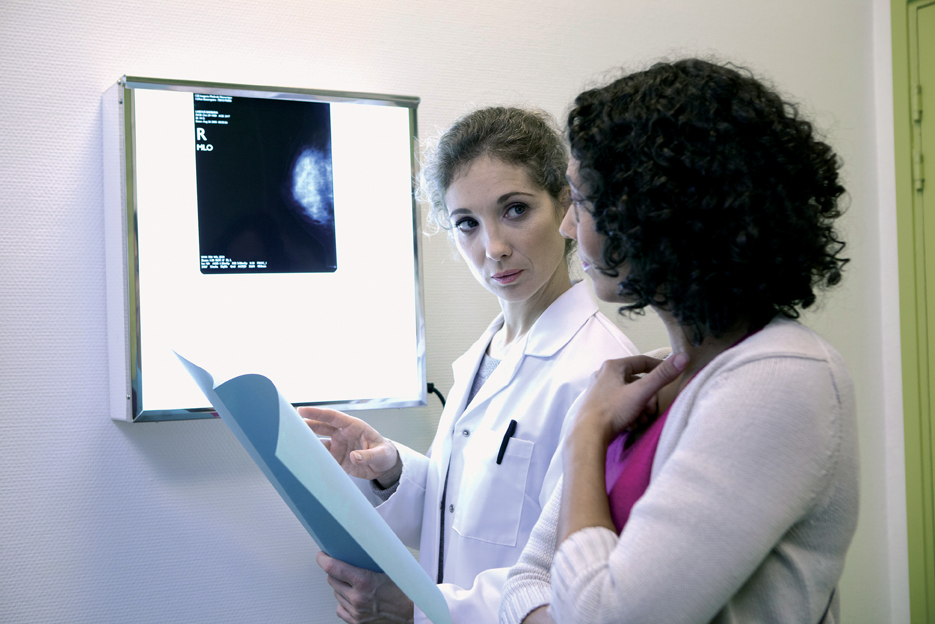
Early detection rates for breast cancer are relatively low in the Gulf. (Shutterstock)
However, he said that heightened awareness will help in early detection of the disease, ensuring that women carry out regular self-examination and get screened early.
“I think our early detection rate is still very low compared with the West. More than 50 percent of all breast cancer cases in the Kingdom are still detected after it has spread to lymph nodes or other parts of the body,” said Abushullaih.
One of the biggest obstacles facing women is being proactive in requesting a mammography, even when it is not offered, he said.
“Treating breast cancer at an early stage is much easier. Saudi Arabia and many of the countries in the Middle East fare the same way with regard to screening. However, in the Kingdom it is slowly improving.”
Another obstacle in patient care is the cost of therapy, said Abushullaih. “Here, the Kingdom fares better than most, if not all, the countries in the region as the government invested heavily early on in providing for cancer patients,” he said.
Dr. Nazura Siddiqi, a specialist in obstetrics and gynecology at the UAE’s Bareen International Hospital, said the first step to a diagnosis is self-examination.
“Women should check for lumps and change in size or other signs linked to breast cancer,” she said.
“The other forms include visiting a health care facility and getting clinical breast examination by a physician, ultrasound, MRI or mammogram.”
Siddiqi quoted research by the American Cancer Society that showed almost one in eight women suffers from breast cancer.
“In fact, according to the World Cancer Research Fund International’s statistics, 12 percent of all new cancer cases and 25 percent of all cancers in women could be linked to breast cancer,” she said.
The risk doubles for women who have one first-degree female relative (sister, mother, daughter) diagnosed with breast cancer. If two first-degree relatives have been diagnosed, the risk is five times higher than average.
“There is also a group of women who don’t have family history, yet can develop breast cancer,” Siddiqi said. “Therefore, it is highly recommended to undergo regular screening in order to detect the condition in its early stages.”
Hormonal factors such as early menarche, late menopause or late childbirth are also potential risk factors, said Siddiqi.
Use of oral contraceptives and hormone replacement therapy are also believed to raise breast cancer risks.
Lifestyle is another issue, said Siddiqi. “Research shows that factors that contribute to breast cancer and resulting mortality include alcohol use, obesity and physical inactivity,” she said.
According to the Saudi Cancer Registry of the King Faisal Specialist Hospital and Research Center, breast cancer has a prevalence rate of 21.8 percent in the Kingdom.
Earlier this year, Tareef Yousef Alaama, of the Saudi Ministry of Health, told Arab News that a string of cancer-prevention measures were planned in the Kingdom.
These included the roll-out of advanced screening programs, increased palliative care and greater public awareness about risk factors associated with the illness.


