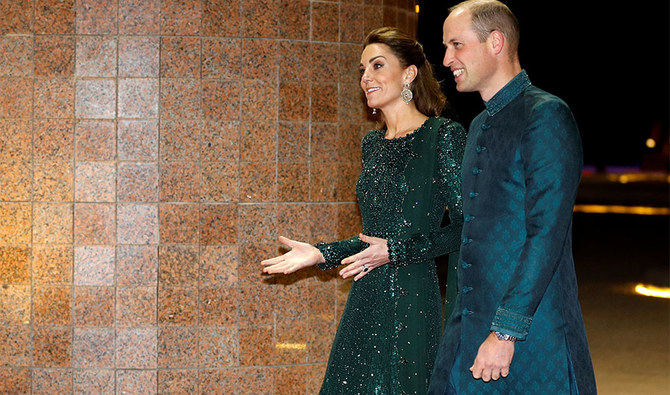

ISLAMABAD: The much awaited visit of the British royals has officially commenced and #RoyalsVisitPakistan is trending on Twitter.
Landing in Islamabad, the Duke and Duchess of Cambridge, Prince William and Kate Middleton, are the first royals to visit Pakistan in 13 years, the last being the Prince’s father and stepmother, the Duke and Duchess of Cornwall, Prince Charles and Camilla.
The country’s ruling Pakistan Tehreek-e-Insaf party tweeted their pride at the visit, calling it “History in the making, as the World witnesses an emerging and progressive image of Pakistan,” while warmly welcoming the royal couple to Pakistan.
History in the making, as the World witnesses an emerging and progressive image of Pakistan, backed by the Royal visit of Duke and Duchess of Cambridge. This is first Royal visit since 2005; Pakistan warmly welcomes Prince Williams and Princess Kate Middleton#RoyalVisitPakistan pic.twitter.com/US0c1VYzQo
— PTI (@PTIofficial) October 14, 2019
In a tweet shared over a thousand times, Shaniera Akram, philanthropist and wife of legendary cricketer, Wasim Akram, welcomed the pair to the country and wrote that one thing the couple would “definitely experience during their trip to Pakistan is feeling the fond memory of William’s mother that is still living very strongly within the hearts of the people of Pakistan.”
One of the beautiful things the Royal couple will definitely experience during their trip to Pakistan is feeling the fond memory of Williams mother that is still living very strongly within the hearts of the people of Pakistan #RoyalVisitPakistan #WelcomeDukeAndDutchess
— Shaniera Akram (@iamShaniera) October 14, 2019
The late Diana has been at the forefront of many minds, Diana being a friend and frequent (by royal standards) visitor to Pakistan. Many drew comparisons between the Duchess and her late mother-in-law.
“[History] surely repeats itself,” wrote one twitter user with a side-by-side comparison of Kate Middleton and Princess Diana on their respective arrivals to Pakistan.
history surely repeats itself.#RoyalVisitPakistan pic.twitter.com/yeEvnYq44a
— bilal’s wife, ruks. (@chandikiguriya) October 14, 2019
Middleton wore a Catherine Walker shirt and trouser that perfectly mimicked a kameez with straight trousers look, one inspired by a similar look the late Diana wore while in Pakistan in 1996.
One twitter user posted two photos, one of each visitor to Pakistan, and showed appreciation for Middleton’s choice to wear something so similar to our national dress, like Diana had done before.
“Simplicity is the ultimate sophistication.”
They both proved
Wearing Pakistan's National dress ♥ #RoyalVisitPakistan pic.twitter.com/5SktXOSoTW— Maham Jameel (@maham_jayyy) October 14, 2019
Others like Journalist Secunder Kermani wrote about the weighty and significant decision by the Royals to pay a visit to Pakistan, noting the large Pakistani diaspora which call the UK home and how “for Pakistan it's a chance to showcase the improvements in security made in recent years.”
Prince William and his wife the Duchess of Cambridge just arrived in Pakistan - starting #RoyalVisitPakistan... For Pakistan it's a chance to showcase the improvements in security made in recent years... it's significant for the UK too given the large British-Pakistani diaspora pic.twitter.com/9eMnLyATmv
— Secunder Kermani (@SecKermani) October 14, 2019
The visit kicked off in Islamabad and was described by the British High Commission to be the “most complex” ever coordinated. The British diplomatic mission also emphasized the young royals’ desire to meet with as many Pakistani people as possible and see as many corners of the country as they can.