RIYADH: Saudi Crown Prince Mohammed bin Salman and Russian President Vladimir Putin chaired the first meeting of the Saudi-Russian Economic Committee in Riyadh on Monday.
At the beginning of the meeting, the crown prince stressed the importance of continuing cooperation and building strategic partnerships between the two countries, discussing many opportunities and joint investment and production projects in line with Vision 2030.
President Putin noted in his speech at the meeting that the major Saudi-Russian participating companies play a key role in the economy between the two, praising the successful cooperation between the Russian Direct Investment Fund (RDIF) and the Saudi Public Investment Fund, stressing the role of the crown prince in the establishment of this partnership.
Afterwards, Prince Abdullah bin Bandar bin Abdul Aziz, chairman of the Saudi side of the Saudi-Russian Economic Committee, delivered a speech in which he affirmed the Kingdom’s readiness to achieve the desired objectives of future plans and joint projects, praising the RDIF for opening a branch in Riyadh, the first outside Russia.
The CEO of the RDIF, Kirill Dmitriev, chairman of the Russian side of the committee, noted the cooperation and keenness of both countries to develop and work through the committee to strengthen economic ties.
More speeches were delivered by heads of Saudi and Russian companies, including Amin Nasser, CEO of Saudi Aramco, Andrei Guriev, CEO of PhosAgro, Yousef Al-Benyan, CEO of SABIC and Musa Bazhayev, president of Alliance Group.
The speeches dealt with areas of cooperation between the two countries and common opportunities to enhance bilateral cooperation.
At the end of the meeting, the minutes were signed by Dmitriev and Prince Abdullah.


![]()

Putin, Saudi crown prince chair first meeting of Saudi-Russian Economic Committee
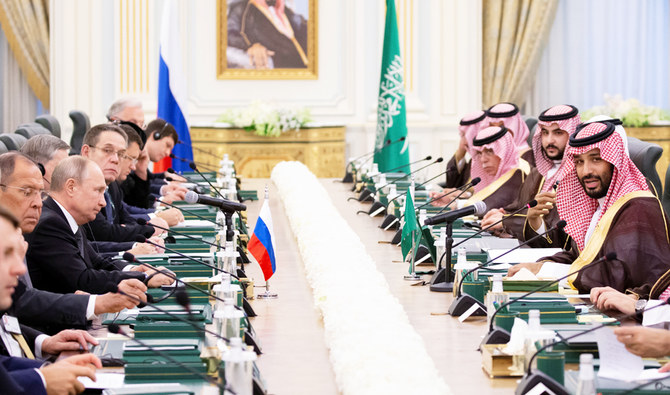
Putin, Saudi crown prince chair first meeting of Saudi-Russian Economic Committee
- The speeches dealt with areas of cooperation between the two countries and common opportunities to enhance bilateral cooperation


Latest updates


© 2026 SAUDI RESEARCH & PUBLISHING COMPANY, All Rights Reserved And subject to Terms of Use Agreement.