

Family renews search for missing Pakistani after Arab News photo

1 / 6
Sitting in the center, Sayed Arshad Ali Shah (son of the missing person) along with his brother, right, and his son, left, talks to Arab News on Tuesday, explaining the ordeal of his missing father. (AN photo)
2 / 6
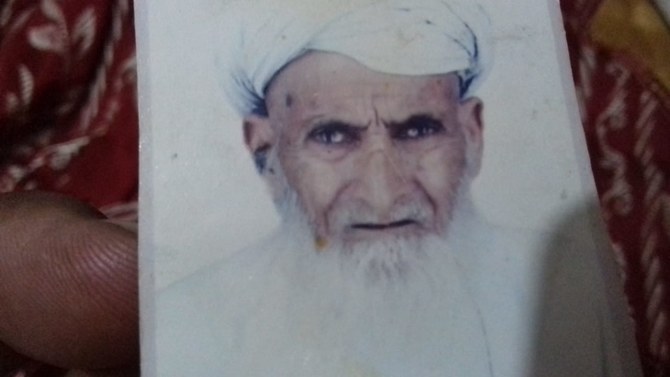
A passport size photo of Said Sarim Shah, the Pakistani who went missing in Saudi Arabia while performing Umrah back in 2006. (AN Photo)
3 / 6
A frail, elderly pilgrim found himself in the safe hands of a Saudi soldier after he spotted him in Mina struggling to complete Hajj rites. (Photo courtesy: Saud Almosihij/@O03oK)
4 / 6
A copy of an air ticket, depicting departure and arrival routes of Said Sarim Shah, the Pakistani who went missing in Saudi Arabia while performing Umrah back in 2006. (AN Photo)
5 / 6
A copy of Computerized National Identity Card (CNIC) of Said Sarim Shah, the Pakistani who went missing in Saudi Arabia while performing Umrah back in 2006. (AN Photo)
6 / 6
A passport copy of Said Sarim Shah, the Pakistani who went missing in Saudi Arabia while performing Umrah back in 2006. (AN Photo)
Updated 10 October 2019
Follow

Family renews search for missing Pakistani after Arab News photo

  • Said Sarim Shah traveled to Saudi Arabia to perform Umrah in 2006 and disappeared
  • Son says old man in an Arab News photo published this August is his lost father

WAD PAGAH/PESHAWAR: It was 2006 when Said Sarim Shah traveled to Saudi Arabia to perform the Umrah pilgrimage and disappeared.
His family hasn’t seen him since — that is, until August this year when Arab News published a photograph on its front page of a policeman carrying an old man during the annual Hajj pilgrimage.
Shah’s son, Said Arshad Ali Shah, says the man in the picture is his father.
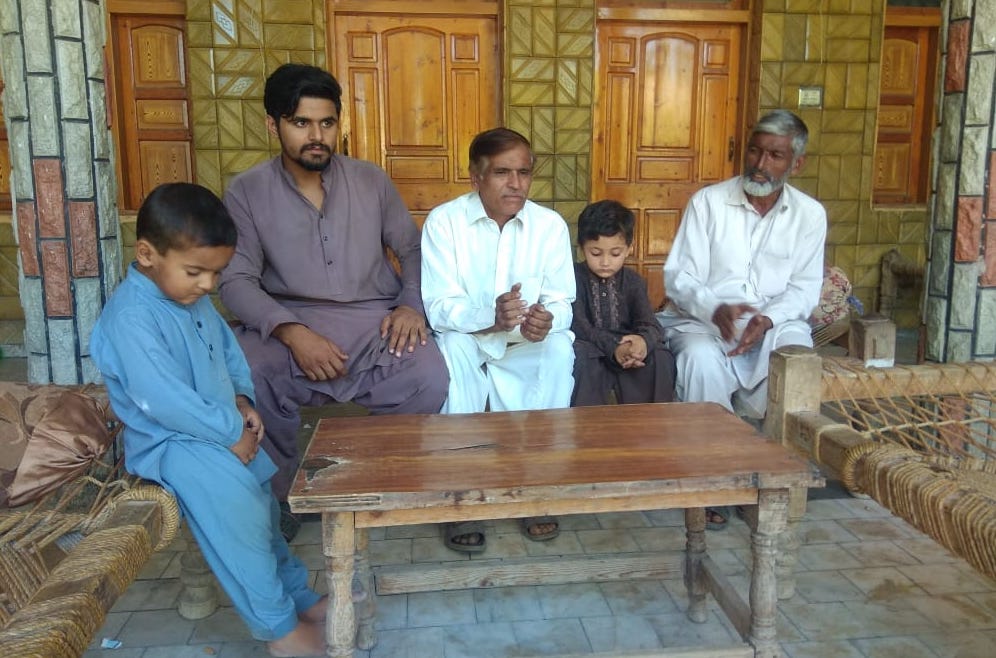


Sitting in the center, Sayed Arshad Ali Shah (son of the missing person) along with his brother, right, and his son, left, talks to Arab News on Tuesday, explaining the ordeal of his missing father. (AN photo)

“That photo went viral on social media and ultimately landed on my mobile, where I instantly recognized the man in the photo as my father,” Arshad told Arab News in the northwestern city of Peshawar, adding that the family was once more renewing its search for Shah thirteen years after his disappearance. Shah, who suffers from hearing loss and urinary problems, will turn 92 this year, his son said.
“After my father had been in the Kingdom for three months, my brother traveled to Saudi Arabia to search for him, but to no avail,” Arshad said. “We left no stone unturned to know his fate. Neither the Pakistani nor the Saudi Arabia embassies had any clue about his whereabouts.”
But Arshad added that after seeing the Arab News photo, he now planned to approach the Saudi Embassy in Islamabad once again to help track his father.
The Saudi embassy in Islamabad did not respond to requests for comment but Mudassir Cheema, a senior official at the Pakistan Embassy in Riyadh, told Arab News that Shah’s son had contacted the Pakistani Embassy in Saudi Arabia after seeing the newspaper photo.

Arab News front page on Monday the 12th of August 2019

The photograph was taken by Saudi photographer Saud Almusihij in August this year during an attempt to capture an image he could enter into the Best Hajj Photo competition.
In an interview with Arab News in August, Almusihij said he spotted a police officer approach an elderly man who was suffering in the heat and whose feet were hurting.
“The policeman spoke to the old man, poured water on his head to cool him down, then picked him up and carried him for almost three kilometers,” Almusihij said.
Almusihij knew he had his photo. And when Arshad saw the photo online, he knew his father was still alive.
“I keep the gate of my home ajar and my cell phone on round-the-clock in the hope of receiving good news about my father,” Arshad said.

SHAH'S DOCUMENTATION
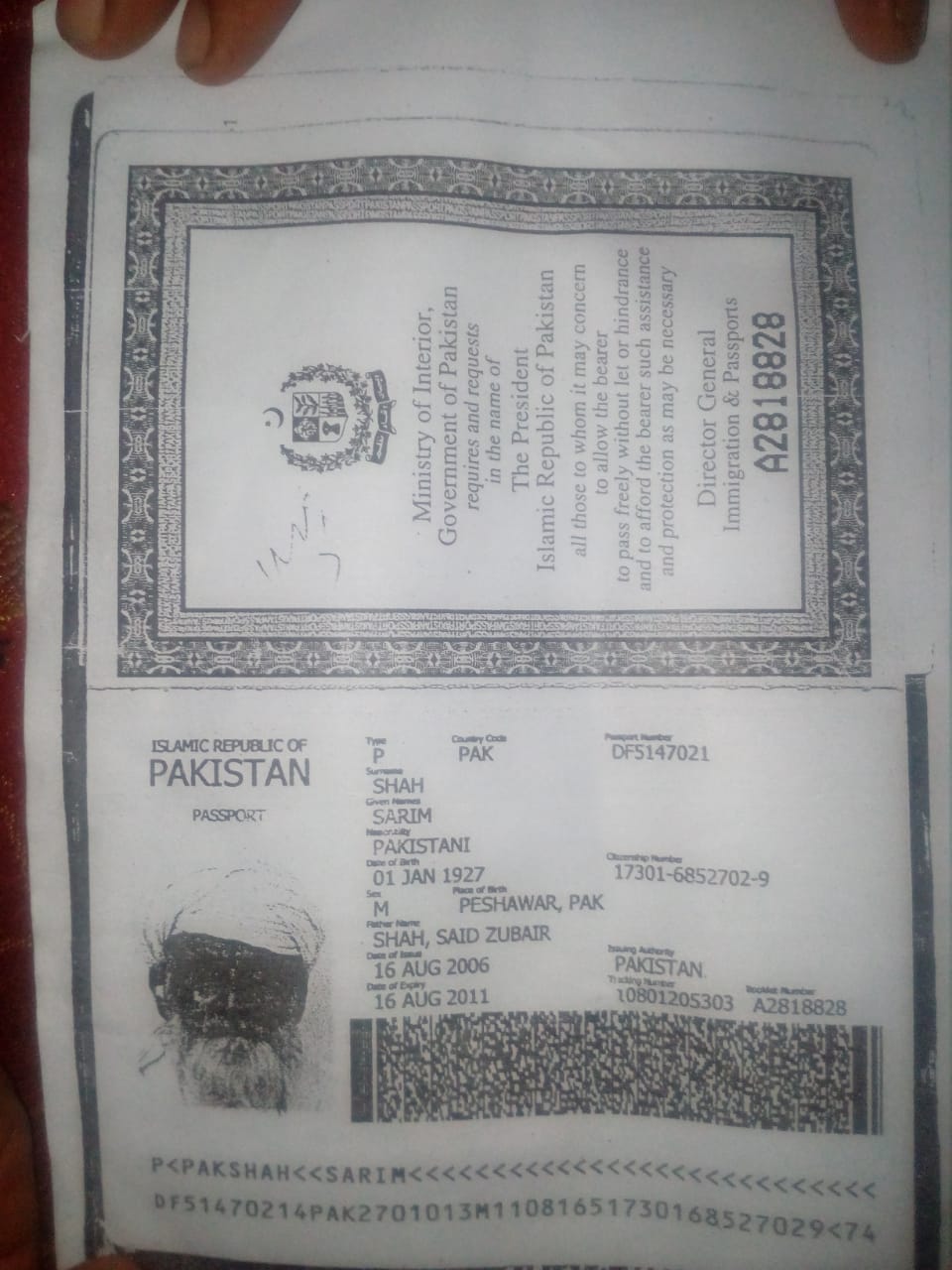


A passport copy of Said Sarim Shah, the Pakistani who went missing in Saudi Arabia while performing Umrah back in 2006. (AN Photo)
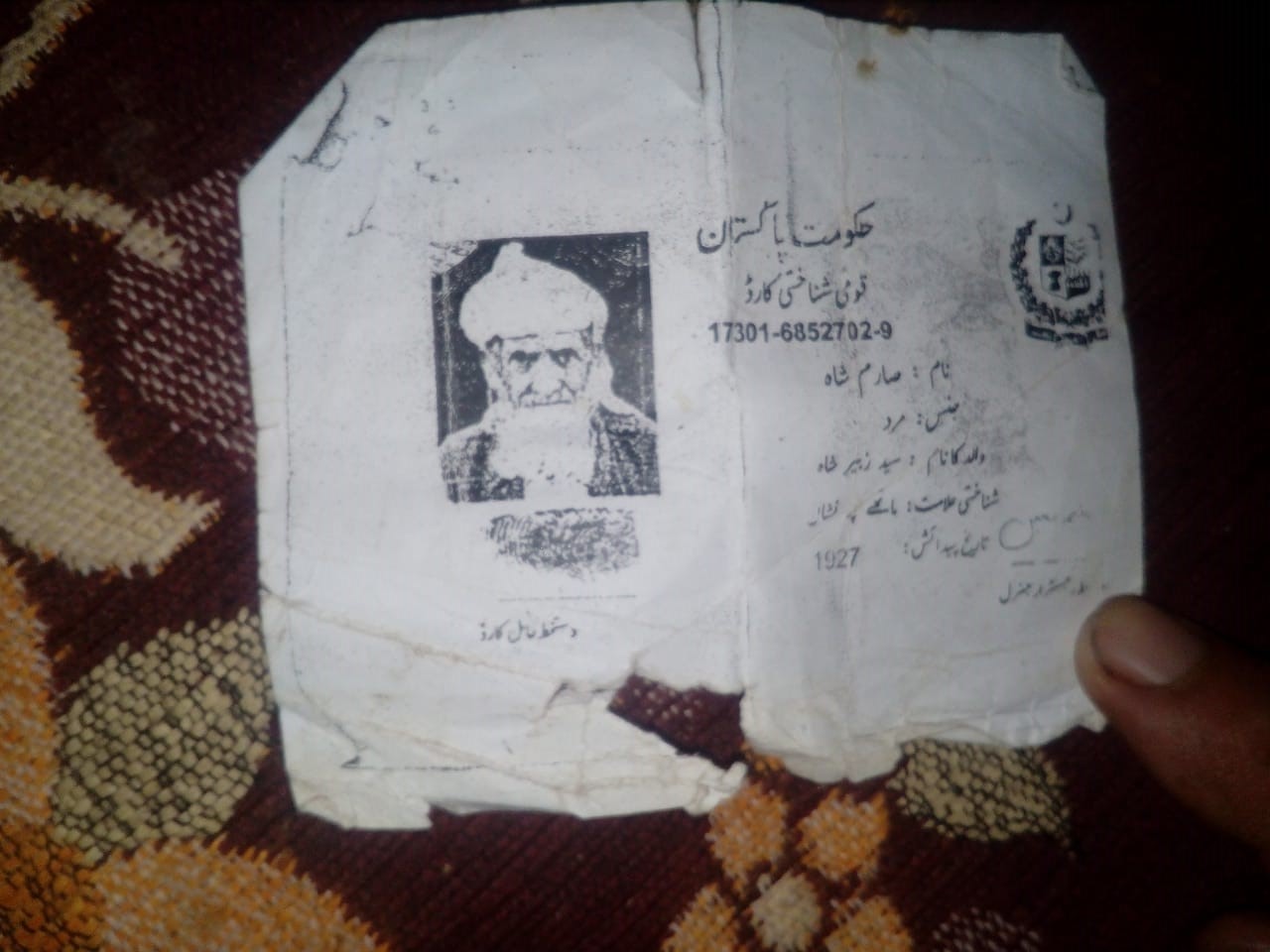


A copy of Computerized National Identity Card (CNIC) of Said Sarim Shah, the Pakistani who went missing in Saudi Arabia while performing Umrah back in 2006. (AN Photo)
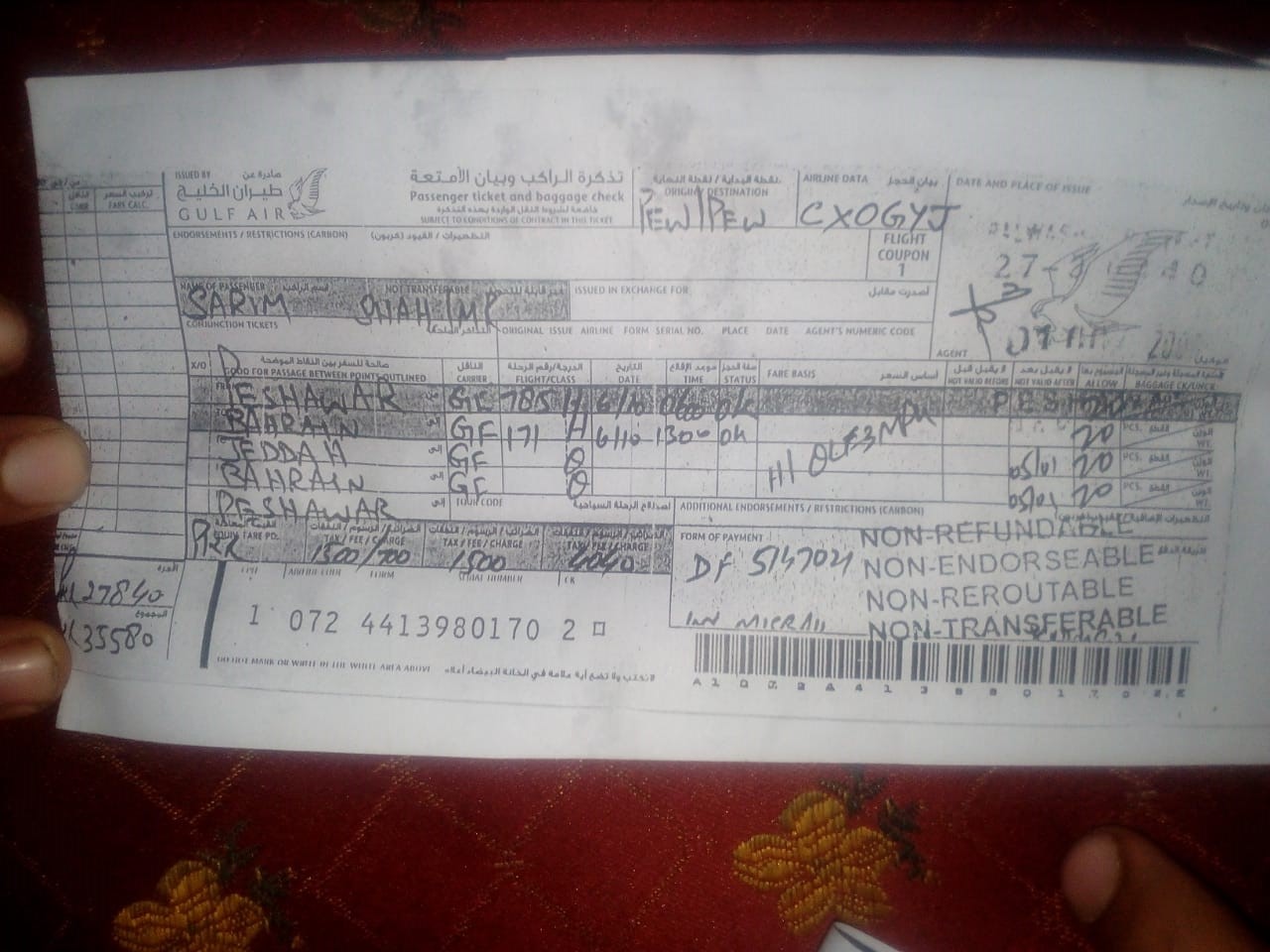


A copy of an air ticket, depicting departure and arrival routes of Said Sarim Shah, the Pakistani who went missing in Saudi Arabia while performing Umrah back in 2006. (AN Photo)


Pakistan to launch last 2025 anti-polio nationwide drive targeting 45 million children next week

Updated 3 sec ago
Follow

Pakistan to launch last 2025 anti-polio nationwide drive targeting 45 million children next week

  • Over 400,000 frontline health workers will participate in Dec. 15-21 nationwide polio vaccination campaign, say authorities
  • Pakistan is one of only two countries in the world, the other being Afghanistan, where wild poliovirus remains endemic

KARACHI: Pakistan will kick off the last nationwide anti-polio vaccination campaign of 2025 targeting 45 million children next week, the National Emergencies Operation Center (NEOC) said on Monday, urging parents to coordinate with health workers during the drive. 

The campaign takes place days after Pakistan launched a nationwide vaccination drive from Nov. 17-29 against measles, rubella and polio. Pakistan said it had targeted 22.9 million children across 89 high-risk districts in the country with oral polio vaccination drops during the drive. 

Over 400,000 health workers will perform their duties during the upcoming Dec. 15-21 nationwide polio vaccination campaign, the NEOC said in a statement. 

“Parents are urged to cooperate with polio workers and ensure their children are vaccinated,” the NEOC said. “Complete the routine immunization schedule for all children up to 15 months of age on time.”

Health authorities aim to vaccinate 23 million children in Punjab, 10.6 million in Sindh, over 7.2 million in Khyber Pakhtunkhwa, over 2.6 million in Balochistan, more than 460,000 in Islamabad, over 228,000 in Gilgit-Baltistan and more than 760,000 children in Pakistan-administered Kashmir during the seven-day campaign, it added. 

Pakistan is one of only two countries in the world where wild poliovirus remains endemic.

Polio is a highly infectious and incurable disease that can cause lifelong paralysis. The only effective protection is through repeated doses of the Oral Polio Vaccine for every child under five during each campaign, alongside timely completion of all routine immunizations.

Islamabad’s efforts to eliminate poliovirus have been hampered by parental refusals, widespread misinformation and repeated attacks on anti-polio workers by militant groups. In remote and volatile areas, vaccination teams often operate under police protection, though security personnel themselves have also been targeted and killed in attacks.