Turkey to restore British era mosque in Central Punjab

1 / 2
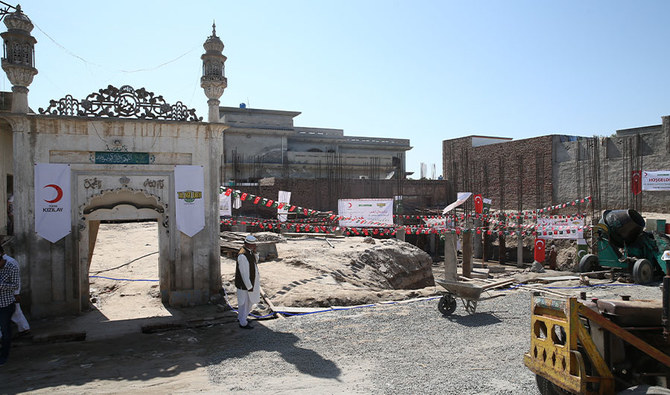
Turkish Red Crescent (TRC) officials lay the foundation stone to mark the beginning of the restoration work on Hazrat Ibrahim Mosque in Hokran village of Jhang district in Pakistan's Punjab province on October 7, 2019. TRC general secretary Huseyin Can addressed the ground breaking ceremony and distributed goods among the poor. (Photo Courtesy Anadolu Agency)
2 / 2
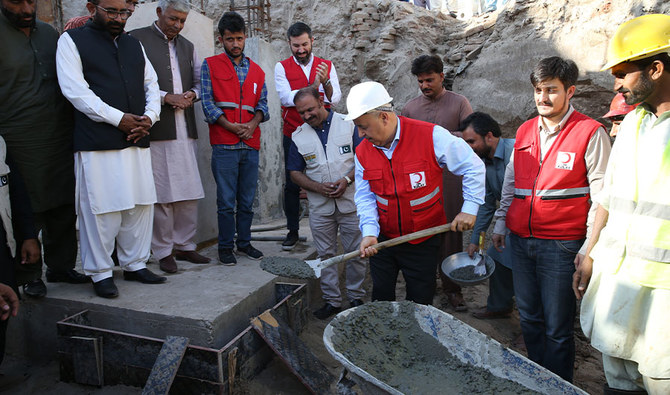
Turkish Red Crescent (TRC) officials lay the foundation stone to mark the beginning of the restoration work on Hazrat Ibrahim Mosque in Hokran village of Jhang district in Pakistan's Punjab province on October 7, 2019. TRC general secretary Huseyin Can addressed the ground breaking ceremony and distributed goods among the poor. (Photo Courtesy Anadolu Agency)
Updated 09 October 2019
Follow

Turkey to restore British era mosque in Central Punjab

  • Lack of maintenance resulted in deterioration of Hazrat Ibrahim Mosque in Jhang district
  • Completion of restoration work expected in about eight months

ISLAMABAD: Resident of Hokran village in Jhang district praised the Turkish Red Crescent (TRC) on Tuesday for responding to their pleas and initiating restoration work on a dilapidated mosque in their town that is more than hundred years old.
Speaking to Arab News via phone, Zafar Iqbal, who lives in the town, said that his fellow villagers were “delighted and thankful to Turkey for rebuilding their place of worship.”
Iqbal explained that Hokran’s local population had “sought TRC’s support about two or three years ago and requested its management to help fund the restoration of the mosque.”


Turkish Red Crescent (TRC) officials lay the foundation stone to mark the beginning of the restoration work on Hazrat Ibrahim Mosque in Hokran village of Jhang district in Pakistan's Punjab province on October 7, 2019. TRC general secretary Huseyin Can addressed the ground breaking ceremony and distributed goods among the poor. (Photo Courtesy Anadolu Agency)

Built in 1901, the condition of the mosque had declined, making people fear it could collapse and threaten the lives of the worshippers inside.
Endorsing Iqbal’s account, the head of TRC Pakistan Delegation, Ibrahim Carlos, told Arab News: “We received a request from the local community that described the condition of the mosque and requested us to build a new one” since the funds raised by them were insufficient for construction purposes.
Carlos said Turkey “tries not to turn down any requests from its Pakistani brothers or sisters to support any kind of project or program” in which the community has made effort to gather resources to meet their goal.
“They had collected nearly 10 percent of the amount and TRC will fund the remaining 90 percent,” the delegation head of TRC said, though he declined to disclose the total construction cost.
Carlos said that TRC expected to complete the construction “within eight months.” Once finished, he added, the building would accommodate up to 700 worshippers.


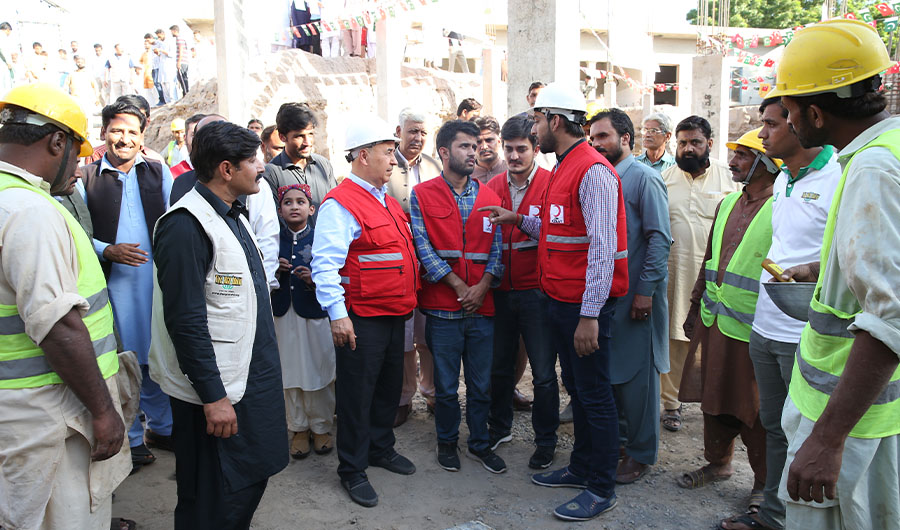
Turkish Red Crescent (TRC) officials lay the foundation stone to mark the beginning of the restoration work on Hazrat Ibrahim Mosque in Hokran village of Jhang district in Pakistan's Punjab province on October 7, 2019. TRC general secretary Huseyin Can addressed the groundbreaking ceremony and distributed goods among the poor. (Photo Courtesy Anadolu Agency)

According to the residents of the town, the mosque may be old but it has little historic significance.
On Monday, officials of the Turk humanitarian organization held a groundbreaking ceremony to restore the 118-year-old Hazrat Ibrahim Mosque in the village and distributed food among the underprivileged segment of the community.
The Turkish Red Crescent also gifted toys and stationery to over 100 schoolchildren.
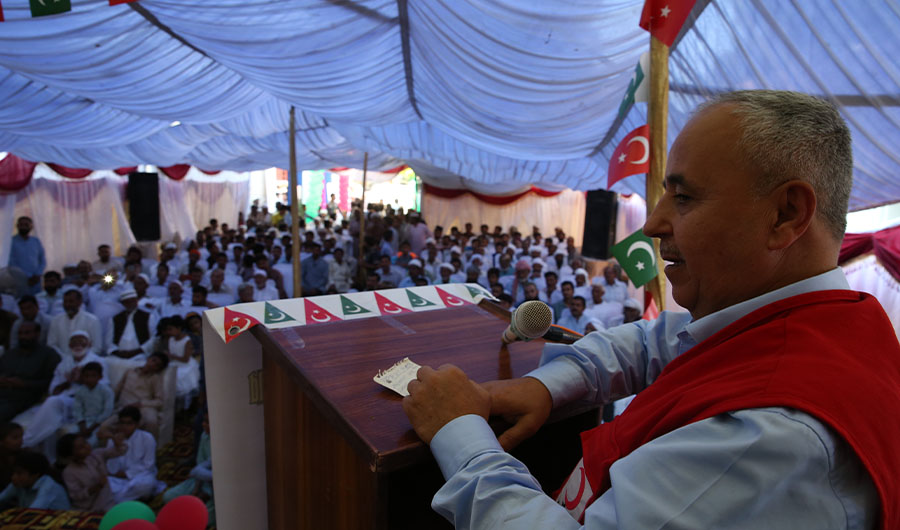
Addressing the locals, the organization’s general secretary, Huseyin Can, said it was a great honor to restore a mosque in a brotherly Muslim country, adding that his country remembered “the friendship of Muslims of Subcontinent” and their support during the Turkish War of Independence between 1919 and 1923.
He added that Turkey had always assisted Pakistan in difficult times of natural disasters.
Jhang is a district in central Punjab province situated on the east bank of river Chenab. Interestingly, the area was also ruled by Turks. Modern-day Pakistani counties of Bhera, Khushab, and Chiniot, which are now part of Jhang, stayed long under the rule of Timur Beg and his descendants ever since he invaded India in 1390, according to Pakistan government website.



Fuel surcharge, airspace disruptions push up airfares for Pakistani travelers

Updated 5 sec ago
Follow

Fuel surcharge, airspace disruptions push up airfares for Pakistani travelers

  • Airlines add $20–100 fuel surcharge per leg amid global oil supply disruptions due to the Middle East conflict
  • Travel agents say around 80 daily flights to Gulf countries are being canceled, increasing the demand further

ISLAMABAD: Airlines operating in Pakistan have imposed additional fuel surcharges on tickets as jet fuel prices rise and regional airspace disruptions reduce availability of flights, industry officials said on Wednesday.

Jet fuel this month surged in Pakistan from ₨188.93 to ₨342.32 per liter, according to local media reports. It followed global oil and airspace disruptions amid ongoing United States-Israeli strikes on Iran and Tehran’s counterattacks in the Gulf.

Aviation fuel typically accounts for 30–40 percent of an airline’s operating expenses, which means the recent price surge has significantly affected the cost for Pakistani carriers, according to industry experts.

Abdullah Hafeez, a spokesman for the Pakistan International Airlines (PIA), said air carriers have not formally increased base ticket prices but have introduced a fuel surcharge to offset the impact of higher aviation fuel costs.

“Airlines have imposed a fuel surcharge to the tune of $20 to $100 per leg on domestic and international flights to mitigate the effects of jet fuel price increase, which means a two-way ticket will be expensive by $40 to $200, depending on distance and route,” he said.

The decision was taken on Monday following a rise in jet fuel prices in Pakistan, according to Hafeez.

For flights to Saudi Arabia, including Riyadh, Dammam, Jeddah and Madinah, airlines have imposed a fuel surcharge of $50 per leg, meaning $100 for a return ticket, while $75 dollar per leg charges have been imposed on flights to London.

Travel agents say the impact is already being felt by passengers as ticket prices climb and flight options shrink.

Muhammad Sajjad Bashir, a representative of Aroma Travels in Karachi, said fares across airlines have risen since the Middle East crisis disrupted several regional air routes.

“The fuel price has gone up while the seats are also not available due to increased demands on some open routes,” he said.

Nearly 80 flights from Pakistan to Gulf countries, particularly the United Arab Emirates, Qatar and Bahrain, are being canceled daily due to airspace disruptions, Bashir said.

“This airspace issue has left passengers with fewer options and the increasing demand is hiking ticket prices,” he added.

Fares on some UK-bound flights have jumped from around Rs250,000 ($891) to as high as Rs1 million ($3565), while ticket prices between Pakistan and Saudi Arabia have increased from Rs125,000 ($445) to around Rs200,000 ($713), according to Bashir.

Airlines have raised fares by Rs10,000 ($35) to Rs28,000 ($99) per ticket depending on the destination, with flights to the Middle East and Central Asia seeing increases of about Rs15,000 ($53). Long-haul routes like Pakistan to Toronto and Manchester have recorded the highest hikes, with ticket prices rising by up to Rs28,000 per passenger.

A marketing official at a Saudi airline also said airlines have not officially raised base fares but are selling seats across different booking classes, meaning passengers booking late have to buy more expensive tickets once cheaper fare categories are sold out.

One-way fares from Pakistan to some Saudi destinations currently range between Rs87,000 and Rs88,000 ($310-313), while return tickets cost around Rs160,000 to Rs165,000 ($570-588), the official added.