CAIRO: The Egyptian capital's Giza zoo has announced the death of its last elephant, Naima, who spent around 36 of her 40 years in captivity.
The African elephant, a star of the neglected zoo, died Sunday after suddenly falling ill, a day after having been active and playing with visitors.
"Top veterinarians... gave her the required medications... but she did not respond," Mohammed Rajai, who heads the government's central authority for zoos, told AFP.
A forensics report showed she had suffered a severe clot in the heart.
Her fans were quick to react on social media. "I loved her a lot," one user said in a Facebook post, while another wrote: "God relieved you, Naima darling".
Rajai said on television that elephants in captivity generally have shorter lives than those living in the wild.
"Elephants especially are social animals who usually live among their community," he said.

Egypt's Giza zoo loses Naima, its last elephant
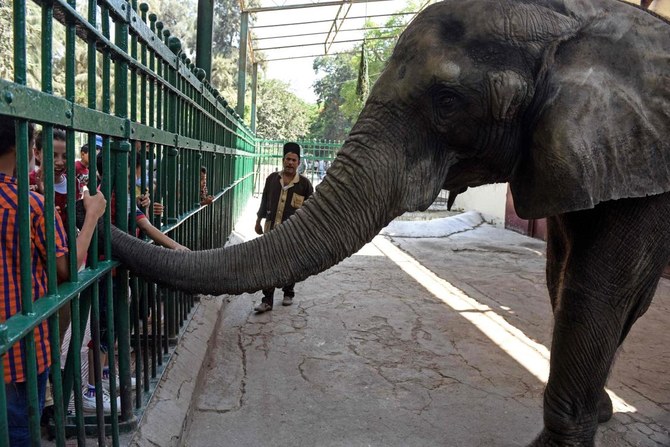
- The African elephant, died Sunday after suddenly falling ill
- A forensics report showed she had suffered a severe clot in the heart
Sudanese paramilitary forces kill at least 28 people in an attack in Darfur, medical group says
- At least 39 people, including 10 women, were wounded in the attack, the medical group said
- Emergency Lawyers said RSF fighters torched many houses in the town, forcing people to flee to nearby villages
CAIRO: An attack by Sudanese paramilitary forces on a stronghold of a Darfur tribal leader left at least 28 people dead, a doctors group said Tuesday, the latest in a devastating war with no resolution in sight.
The paramilitary Rapid Support Forces on Monday rampaged through the town of Misteriha in North Darfur province, according to the Sudan Doctors Network, which tracks the country’s ongoing war.
The town is a stronghold of Arab tribal leader Musa Hilal who also hails from the Rizeigat Arab tribe as the majority of the members of the paramilitary RSF.
At least 39 people, including 10 women, were wounded in the attack, the medical group said.
There was no immediate comment from the RSF and motives for the attack were not immediately known.
Sudan’s war erupted in 2023 after tensions between the Sudanese army and the rival RSF escalated into fighting that began in Khartoum, the country’s capital, and spread nationwide. The conflict has killed thousands and triggered mass displacement, disease outbreaks and severe food insecurity. Aid workers have been frequently targeted.
The medical group said RSF shelling hit the town’s health care center on Monday, after which the paramilitary fighters assaulted medical staff and detained at least one of them.
The RSF fighters had begun their offensive on the town over the weekend with drone strikes that hit Hilal’s guesthouse. On Monday, they launched a major ground offensive and took over the town.
Emergency Lawyers, an independent group documenting atrocities in Sudan, said RSF fighters torched many houses in the town, forcing people to flee to nearby villages.
The seizure of Misteriha would likely assert RSF control of Darfur. However, it risks escalating tribal tensions in an area long known for violence and war.
Monday’s attack came four months after the RSF overran el-Fasher, the provincial capital of North Darfur after 18 months of siege. The paramilitaries killed more than 6,000 people between Oct. 25 and Oct. 27 in the city. The attack was marked by atrocities that UN-backed experts said bore ” the hallmarks of genocide.”
The war has created the world’s largest humanitarian crisis, with over 14 million forced to flee their homes. It has fueled disease outbreaks and pushed parts of the country into famine that still spreads as fighting shows no sign of abating.
The latest report by the Integrated Food Security Phase Classification earlier this month warned that severe acute malnutrition, the most dangerous and deadly form of malnutrition, is expected to increase to 800,000 cases, up 4 percent from 2025.
Aid groups have long struggled to meet the growing needs of displaced people across the country and called for a ceasefire to secure aid delivery to remote areas in Darfur and Kordofan — another hotbed in the war.
“The main thing that needs to happen is, of course, a ceasefire,” said Zia Salik, interim UK director of Islamic Relief, an aid group working in Sudan. “Ultimately, that is what’s causing the pain and the difficulty for all of the civilians that are caught in the crosshairs.”


