AlUla mesmerises Paris as ‘Wonder of Arabia’ exhibition opens in French capital

1 / 8
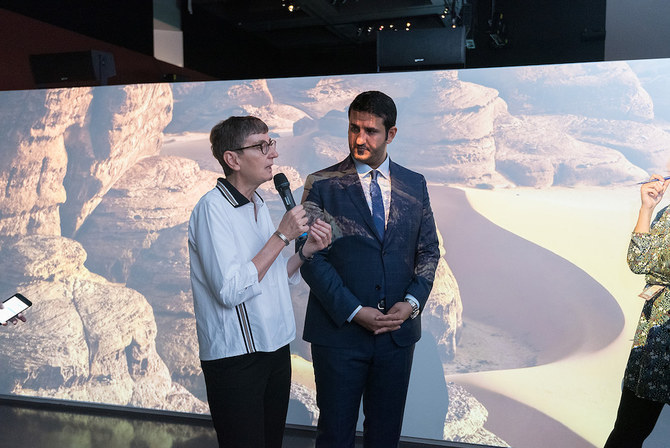
A unique exhibition - ‘Wonder of Arabia’ - opened its doors to art and history lovers on Monday evening on the banks of the river Seine in Paris. The event was attended by Saudi Culture Minister Prince Badr bin Abdullah. (Nicolas Kalogeropoulos)
2 / 8
A unique exhibition - ‘Wonder of Arabia’ - opened its doors to art and history lovers on Monday evening on the banks of the river Seine in Paris. (Nicolas Kalogeropoulos)
3 / 8
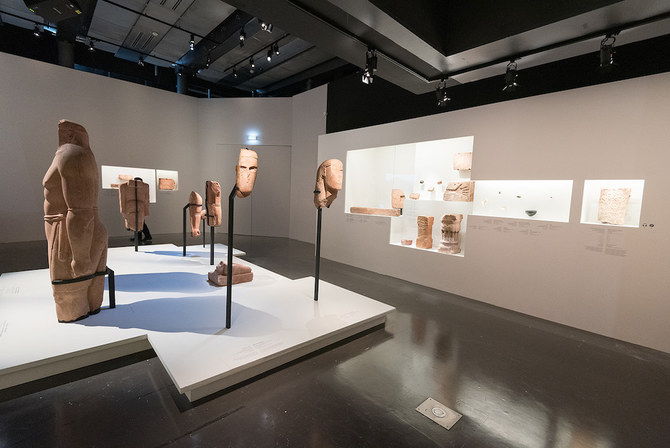
A unique exhibition - ‘Wonder of Arabia’ - opened its doors to art and history lovers on Monday evening on the banks of the river Seine in Paris. (Nicolas Kalogeropoulos)
4 / 8
A unique exhibition - ‘Wonder of Arabia’ - opened its doors to art and history lovers on Monday evening on the banks of the river Seine in Paris. (Nicolas Kalogeropoulos)
5 / 8
Jack Lang and Amr Al-Madani at the event. (Nicolas Kalogeropoulos)
6 / 8
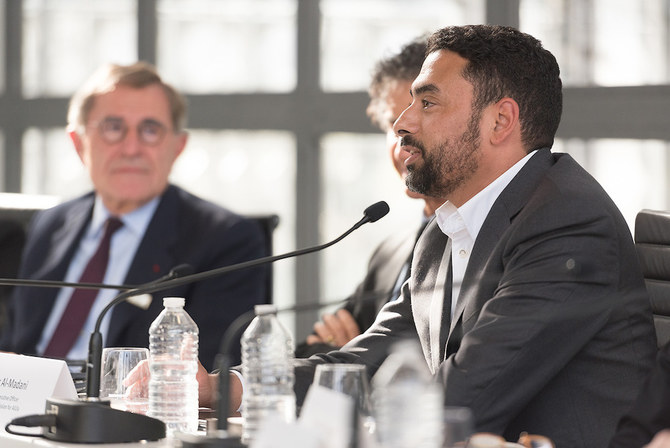
Amr Al-Madani at the event. (Nicolas Kalogeropoulos)
7 / 8
A unique exhibition - ‘Wonder of Arabia’ - opened its doors to art and history lovers on Monday evening on the banks of the river Seine in Paris. (Nicolas Kalogeropoulos)
8 / 8
A unique exhibition - ‘Wonder of Arabia’ - opened its doors to art and history lovers on Monday evening on the banks of the river Seine in Paris. (Nicolas Kalogeropoulos)
Updated 07 October 2019
Follow

AlUla mesmerises Paris as ‘Wonder of Arabia’ exhibition opens in French capital

  • Unique exhibition ‘Wonder of Arabia’ opens in Paris
  • The exhibition presents the treasures of the ancient cultural centre of the region

PARIS: A unique exhibition opened its doors to art and history lovers on Monday evening on the banks of the river Seine in Paris.

The ‘Wonder of Arabia’ exhibition will present the treasures of the ancient cultural centre of the Saudi Aarabian region of the AlUla valley.

It was opened at the Institut du Monde Arabe (Institute of the Arab World) by the Saudi Culture Minister Prince Badr bin Abdullah and his French counterpart, Franck Riester, in a lavish ceremony. 

Also present at the event were the director general of UNESCO Irina Bokova, IMA president Jack Lang and noted architect Jean Nouvel, as well as other guests hailing from the fields of archaeology, arts, history, culture, environmental and natural sciences.

The exhibition, occupying three floors in the Institute, takes the visitor through the valley — its nature, history, culture and the work being done by leading archaeologists from all over the world, but notably Saudis and the French.

Addressing a press conference about the exhibition and  the AlUla region, Amr Al-Madani, chief executive officer of the Royal Commission for AlUla, said the first phase of the project, covering dozens of sites and spread over a large area, would be completed by the end of 2023. 

‘’But from October 2020, visitors from all over the world will be able to see for themselves this cradle of civilization that has been at the historic crossroads connecting Europe, Africa, the Arabian Peninsula and Asia,’’ he added.

Talking about the importance of the site, Al-Madani said that AlUla represented an important piece of the history for the entire region and due to its strategic location and continuous inhabitation, saying it could unlock some of the mysteries that still surround the history of parts of the Middle East.

Lang, a former French Minister, said he was captivated when he discovered AlUla for himself the first time five years ago.

He said that it was then when he decided to enhance cooperation between French and Saudi researchers, historians and archaeologists to jointly present the jewel of AlUla to the rest of the world.

Visitors to the exhibition can also see impressive immersive photography shot by renowned photographer Yann Arthus-Bertrand.

The exhibition in Paris will formally open its doors to the public on Wednesday October 9 and will run until January 19 next year. It has been jointly curated by Laila Nehmé and Abdulrahman Alsuhaibani.


Makkah’s urban shift enhances city’s quality of life

Updated 18 min 25 sec ago
Follow

Makkah’s urban shift enhances city’s quality of life

  • By harmonizing religious heritage with modern urban development, Makkah proves that a city can honor its past while embracing the future

MAKKAH: Islam’s holiest city is at present witnessing a qualitative urban shift, one that seamlessly blends its spiritual sanctity with a modern, vibrant lifestyle.

By integrating cultural, educational, and entertainment initiatives, Makkah is redefining the visitor experience and significantly enhancing the quality of life for its residents, directly supporting the goals of Saudi Vision 2030.

The city’s transformation was recently highlighted by the success of the Makkah winter season. The event attracted approximately 400,000 visitors — more than 60 percent of whom were locals — demonstrating a strong domestic demand for high-quality public spaces. The season revitalized community interaction, driving a 35 per cent increase in visits to recreational sites and creating more than 1,200 temporary jobs for the local workforce.

Central to this urban renaissance is the Hira Cultural District. Since opening doors in January 2023 near the historic Mount Hira, the district has become a definitive landmark that bridges Islamic history with contemporary identity.

Far from being a static monument, the district has cultivated a thriving creative economy. Its craftsmanship program, which features over 100 artisans, has generated up to SR3 million ($800,269) in sales and attracted 130,000 visitors to live workshops. These interactive spaces allow visitors to engage directly with the region’s heritage, moving beyond passive observation to active participation.

Makkah’s Hira Cultural District has become a definitive landmark that bridges Islamic history with contemporary identity. (SPA photo)


A living legacy 

The shift extends to Makkah’s broader ecosystem of museums and cultural sites, which are now positioned as key pillars of cultural tourism. Facilities such as the Revelation Exhibition use cutting-edge technology and multilingual content to narrate the story of the Holy Quran’s revelation, offering an immersive experience that complements the spiritual journey of pilgrims.

These efforts align with the “Makkah: A Living Legacy” campaign, which seeks to document the city’s historical narrative and preserve its collective memory. Recent months have featured a surge in educational workshops for university students and tour guides, ensuring that the human element of Makkah’s history is conveyed with accuracy and depth.

City’s transformation recently highlighted by the success of the Makkah winter season. (SPA photo)
 

Economic and social impact 

The results of this integrated approach are tangible. Specialized museums and restored historic sites now attract up to 1.6 million visitors a year. This cultural enrichment is encouraging pilgrims to linger longer, increasing the average duration of stay by 18 percent.

By harmonizing its religious heritage with modern urban development, Makkah is proving that a city can honor its past while embracing the future, offering a holistic experience that nourishes the soul and the community.