



BAGHDAD: Six protesters were shot dead on Thursday in the southern Iraqi city of Nassiriyah, the deadliest incident yet in three days of nationwide demonstrations.
Another 56 people were wounded in the protest, regional health chief Abdulhussein Al-Jaberi told AFP.
A total of 27 people, including two police officers, have been killed since demonstrations against unemployment and corruption erupted in Iraq on Tuesday.
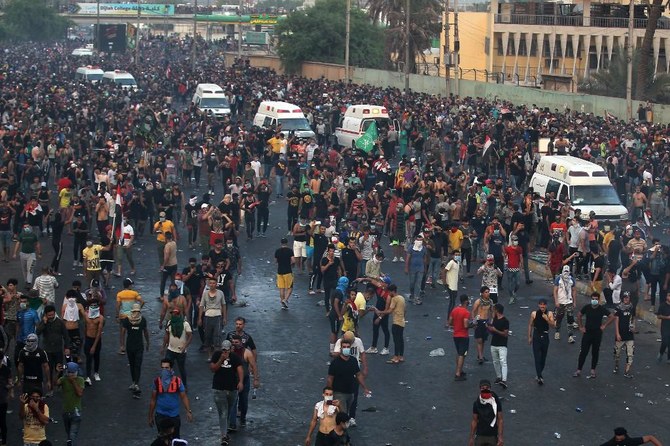
Several thousand protesters faced off against security forces in central Baghdad on Thursday.
Defying a curfew in place since dawn, they arrived by truckfuls at the capital’s oil and industry ministry to protest against corruption, unemployment and poor services.
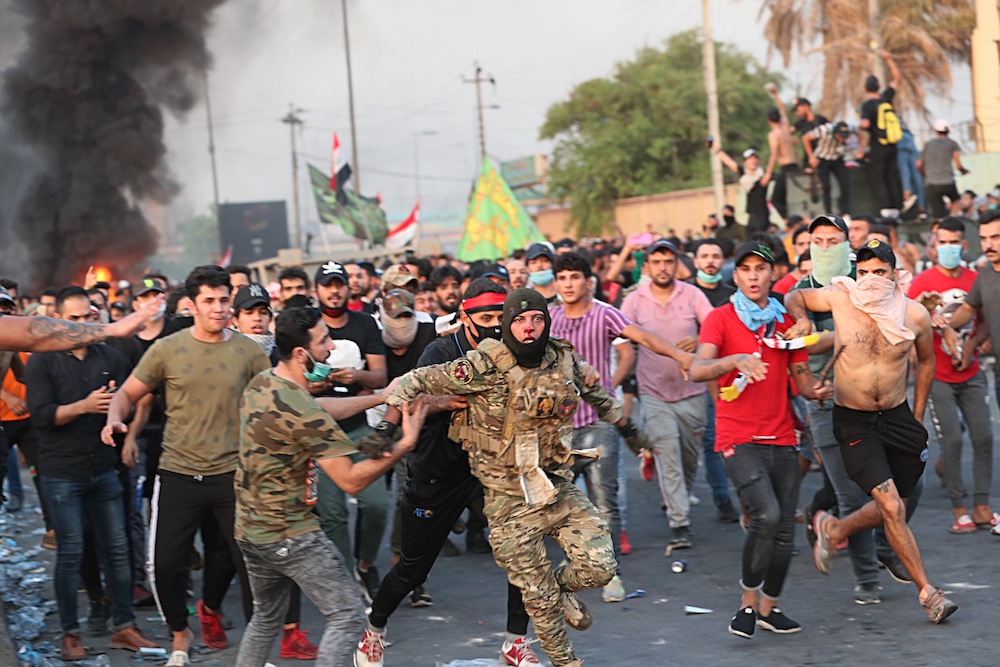
Anti-government protesters help a soldier from the Federal Police Rapid Response Forces to get out of the protest site area after other protesters beat him, in Baghdad. (AP)
The apparently leaderless movement has posed the biggest challenge yet to Prime Minister Adel Abdel Mahdi, who has been in power for less than a year.
The embattled premier ordered a ban on all movement in Baghdad starting at 5 a.m. Thursday, but it was almost immediately defied by small groups of protesters.
The crowds swelled in the afternoon and pledged to march to the capital’s emblematic Tahrir (Liberation) Square.
Riot police and army troops linked arms around ministries and other government buildings, firing tear gas and live rounds into the air in a bid to push the crowds back.
“We will sacrifice our souls and our blood for you, Iraq!” demonstators chanted.
The protests began Tuesday in Baghdad but have since spread across the mainly Shiite south, including the provinces of Dhi Qar, Missan, Najaf, Basra, Wasit and Babylon.

Demonstrators are seen as tires burn during a curfew, two days after the nationwide anti-government protests turned violent, in Baghdad. (Reuters)
Several cities have imposed curfews, but protesters flooded the streets regardless.
The Kurdish northern regions and Sunni western provinces, meanwhile, have remained relatively calm.
The grievances echo those of mass demonstrations in Iraq’s south a little over a year ago which were prompted by a severe water shortage that caused a widespread health crisis.
Since then, southern provinces have accused the central government of failing to address profound infrastructural gaps, chief among them youth unemployment.
Tensions have been exacerbated by the closure of government offices in Baghdad and calls by firebrand cleric Moqtada Al-Sadr for “a general strike.”
Sadr was behind the last round of major protests in Baghdad in 2016, when his supporters stormed the Green Zone — home to some ministries and embassies — but his involvement appears much more limited this time.
If his followers join the protests en masse, particularly as night falls, the rallies are expected to balloon even further.
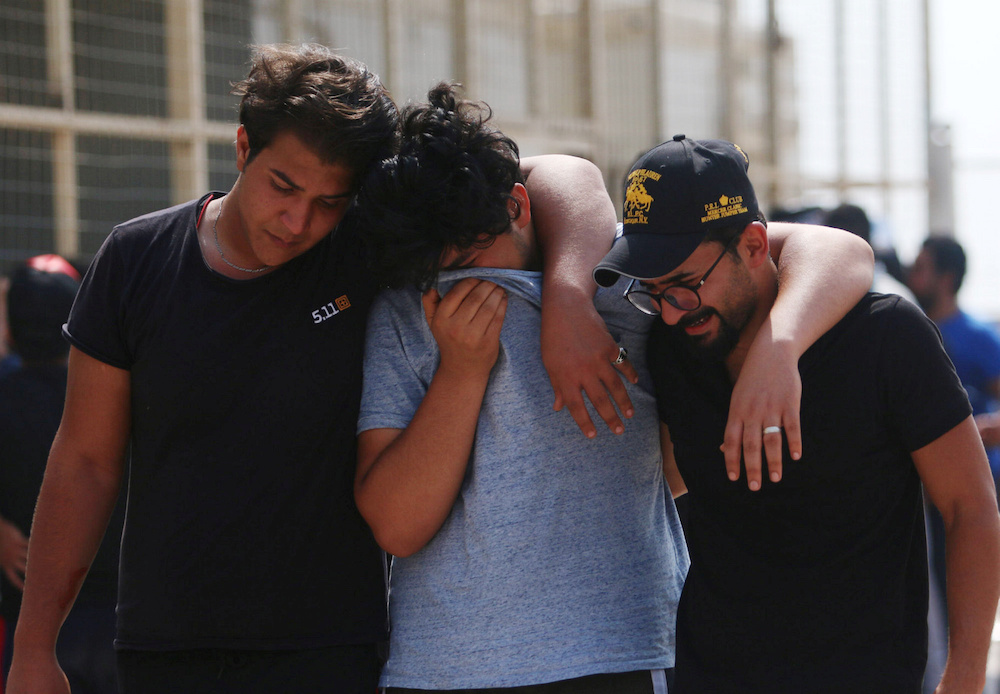
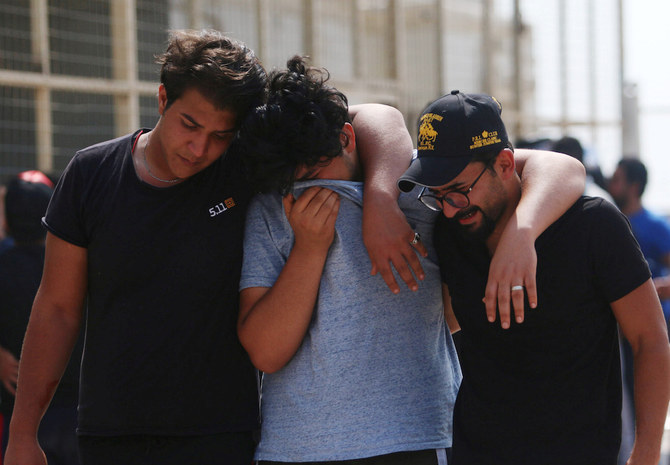
Friends of civilian activists, who were killed the previous night, mourn during their funeral in Basra on Thursday. (Reuters)
More than 1,000 protesters and security personnel have been wounded.
More than half of those killed in the last three days have been in Nasiriyah, about 350 kilometers (200 miles) southeast of Baghdad.
The southern city of Amarah has also seen significant bloodshed, with medics and security sources reporting four protesters shot dead on Thursday.
With Internet access virtually shut off, demonstrators on Thursday struggled to communicate with each other or post footage of the latest clashes.
Approximately 75 percent of Iraq is “offline” after major network operators “intentionally restricted” access, according to cybersecurity monitor NetBlocks.
The protests appear to be largely spontaneous and de-centralized, with virtually no party flags or slogans spotted.
Instead, they brandished Iraqi flags, posters demanding a “real country,” and even pictures of an Iraqi general who was recently decommissioned after reported pressure by pro-Iran factions.
“The ability to preserve the right to protest is a sign of political and democratic maturity,” the top United Nations official in Iraq, Jeanine Hennis-Plasschaert, said after meeting protesters.
“De-escalation is urgently needed.”
The rallies appear to have split Iraqi officials.
President Barham Saleh insisted peaceful protest was a “constitutional right” and parliament demanded an investigation into the deaths.
But in an unpopular move, Abdel Mahdi blamed the violence on “aggressors who... deliberately created casualties.”
On Thursday, the premier and the ministers of defense and interior met with the joint operations command but have not made any media appearances, despite swelling pressure.
Abdel Mahdi came to power in October 2018 as a consensus candidate, after last year’s popular demonstrations effectively ended his predecessor Haider Al-Abadi’s chances at a second term.
He pledged to reform inefficient institutions, eradicate corruption and fight unemployment — unfulfilled promises that appear to have pushed protesters over the edge this week.
In particular, anger has boiled over at the staggering level of youth unemployment, which stands at around 25 percent or double the overall rate, says the World Bank.
“We want jobs and better public services. We’ve been demanding them for years and the government has never responded,” said Abdallah Walid, a 27-year-old protester.


