


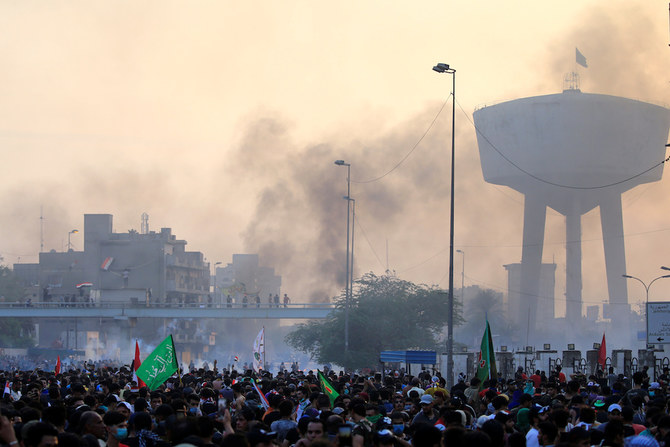

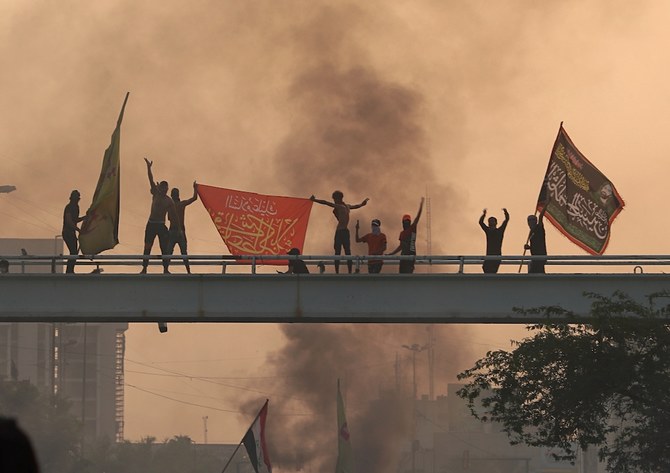

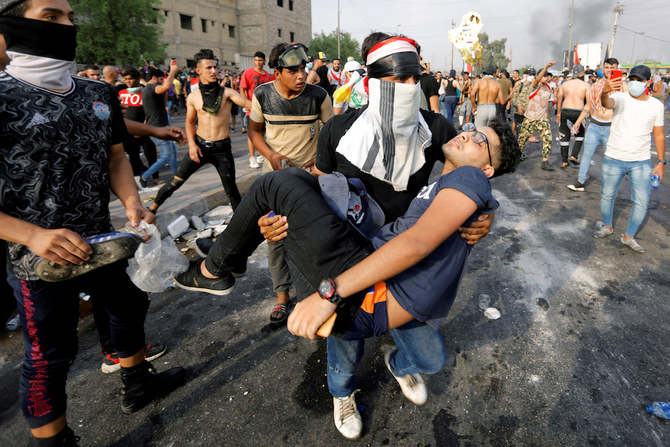

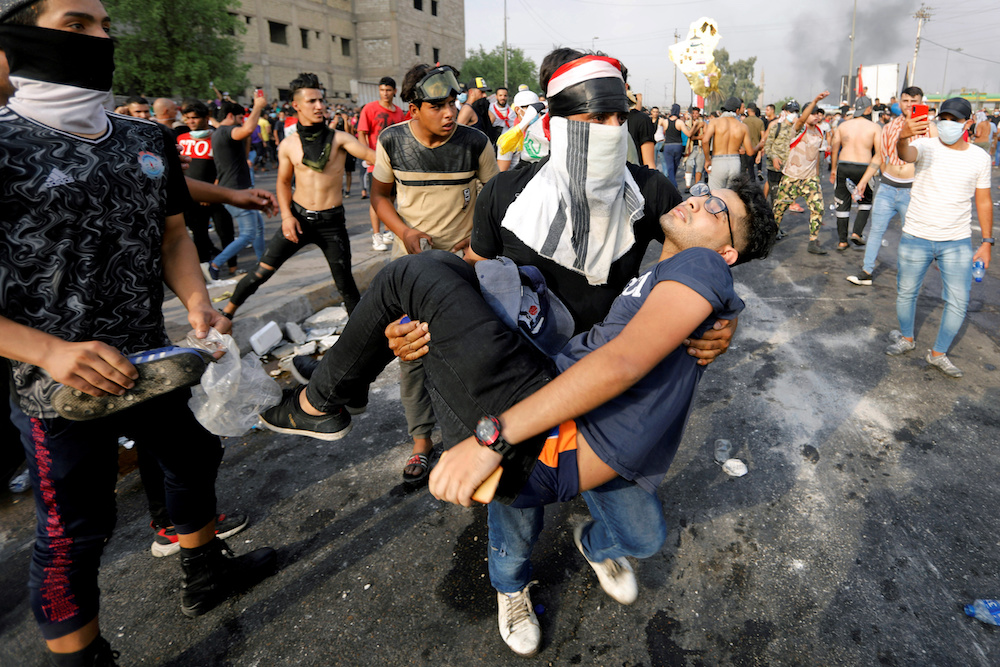
BAGHDAD: At least five people died, including a police officer, and dozens were injured on Wednesday in a second day of protests in Iraq.
Thousands demonstrated in Baghdad and Shiite-dominated southern provinces against corruption, unemployment and the failure of public services such as water and electricity.
Protesters torched government and political party headquarters, and cut off main roads linking Baghdad with the north and south. Riot squads and rapid-intervention forces responded with water cannon, tear gas and live bullets.
“We want jobs and better public services. We’ve been demanding them for years and the government has never responded,” said protester Abdallah Walid, 27. Unemployed graduate Mohammad Jubury said: “No state would attack its own people like this. We’re being peaceful, but they fired.”
Among the victims of the violence was a child burned to death in his mother’s car as it passed over a tire set on fire by protesters to block the road in Al-Zaafaraniya in southeast Baghdad.
In Nassiriya, the capital of Dhi Qar province 400km south of Baghdad, protesters broke into the provincial council building and set fire to part of it. Three protesters were killed and dozens of people were injured, including security forces. Authorities imposed a curfew from 8pm.
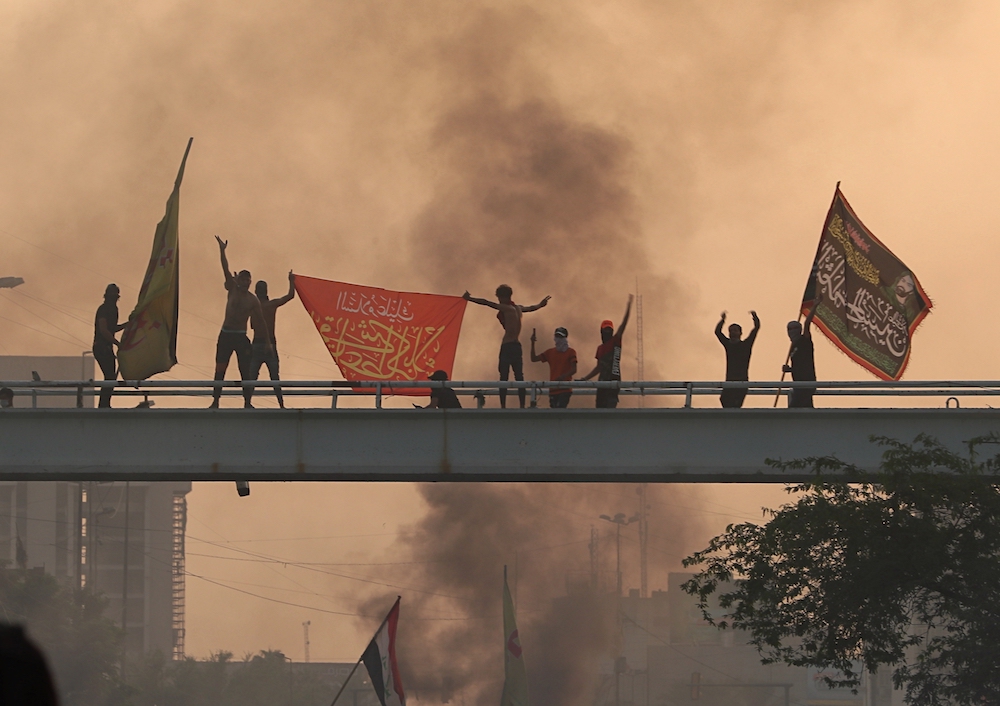
In Babil and Missan governorates, demonstrators stormed the provincial council buildings and set fire to them. In Najaf, Samawah and Basra, they were halted by security cordons.
In Baghdad, thousands took to the streets from early morning, and cut off the main road to Baghdad airport. They tried several times to cross Al-Jumhuriya Bridge toward the government buildings and embassies in the heavily fortified Green Zone, but were repelled by tear gas and gunfire.
Prime Minister Adel Abdul Mahdi held an emergency session of the National Security Council, and called for calm. After the meeting he contacted prominent tribal sheikhs to ask for their help in halting the protests, but they refused, a senior official in the National Security Agency told Arab News.
In an attempt to thwart the protests, internet access across much of Iraq was blocked and Facebook, Twitter, Instagram and WhatsApp were disabled. Security sources said there was no evidence that the protests were spontaneous. “Whoever says the demonstrations are unorganized, and not backed by some sides, is naive,” a senior federal police officer in Baghdad told Arab News.
“They have paralyzed traffic in all areas of Baghdad by burning tires, and moving toward the airport seems deliberate. These do not seem random or spontaneous actions. We do not believe these demonstrations will end soon, and they may end with the overthrow of the government.”
The US embassy in Baghdad said it was closely monitoring the situation, and called on all parties to exercise restraint and not to use excessive force.
The powerful Shiite cleric Muqtada Al-Sadr said he did not want to politicize the protests, but he nevertheless called on his followers to support the demonstrators.
This was seen by many observers as a message to Abdul Mahdi that he must understand the limits of his authority. “Abdul Mahdi came to the post with the support of Sadr and his political bloc, but recently he has moved away from all that Sadr wanted,” Saad Ahmad, an activist, told Arab News. “So I think Sadr will leave Abdul Mahdi to fall now.”


