

Ancient city of Bhanbhore: A South Asia gateway for Arab conquerors 

1 / 4
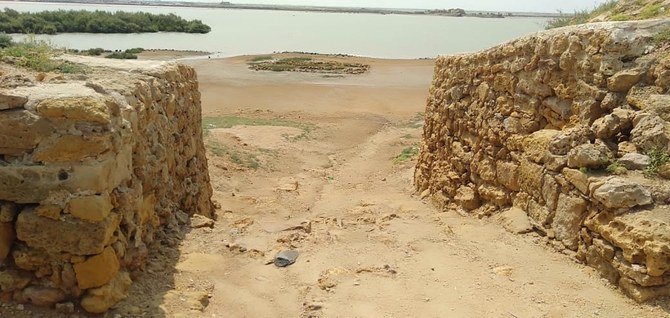
This image shows the southern gate of Bhanbhore Fort which was used by Muhammad bin Qasim to enter the citadel in 711 CE. Photograph taken on Sept 25, 2019 (AN Photo by SA Babar)
2 / 4
This image shows the southern gate of Bhanbhore Fort which was used by Muhammad bin Qasim to enter the citadel in 711 CE. Photograph taken on Sept 25, 2019 (AN Photo by SA Babar)
3 / 4
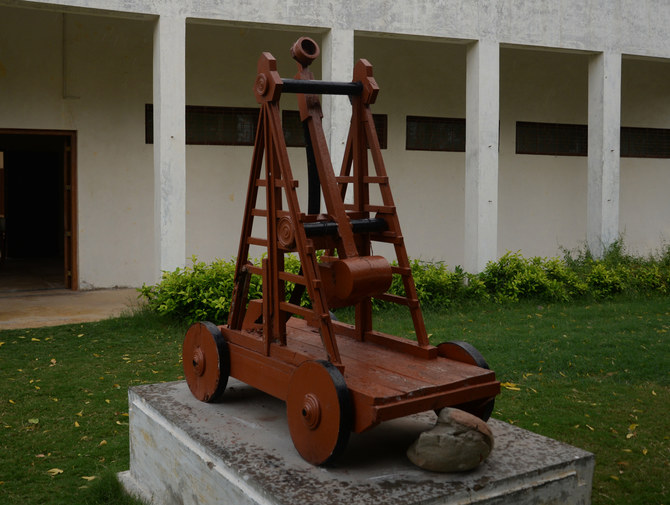
A model of the trebuchet used by Muhammad Bin Qasim’s army while attacking the fort in the ancient Bhanbhore port city. Photograph taken on Sept 25, 2019 (AN Photo by SA Babar)
4 / 4
A model of the fort displayed in Bhanbhore museum shows the gate from which Muhammad bin Qasim entered into the citadel in 711 CE. The model also depicts a boat carrying soldiers and a catapult that was used to attack the fort. Photograph taken on Sept 25, 2019 (AN Photo by SA Babar)
Updated 03 October 2019
Follow

Ancient city of Bhanbhore: A South Asia gateway for Arab conquerors 

  • The town was immortalized by an Umayyad general whose invasion of the settlement changed the course of history
  • Archaeologists say there are strong imprints of Arab Muslims in the area

BHANBORE, Sindh: Bhanbhore, an ancient city located about 65 kilometers east of Karachi, is said to have witnessed several political upheavals since its emergence in the first century BCE. Yet, the place was immortalized by an Arab general who changed the course of history by invading this town.
Long before the mighty Indus river meandered away from the settlement, forcing the residents of Bhanbhore to abandon their dwellings, Muhammad bin Qasim, an Umayyad warrior, defeated Sindh’s Brahmin ruler, Raja Dahar, in 711 CE and conquered large swathes of land. Today, Pakistan’s second busiest harbor, Port Qasim, is named after the Arab general.
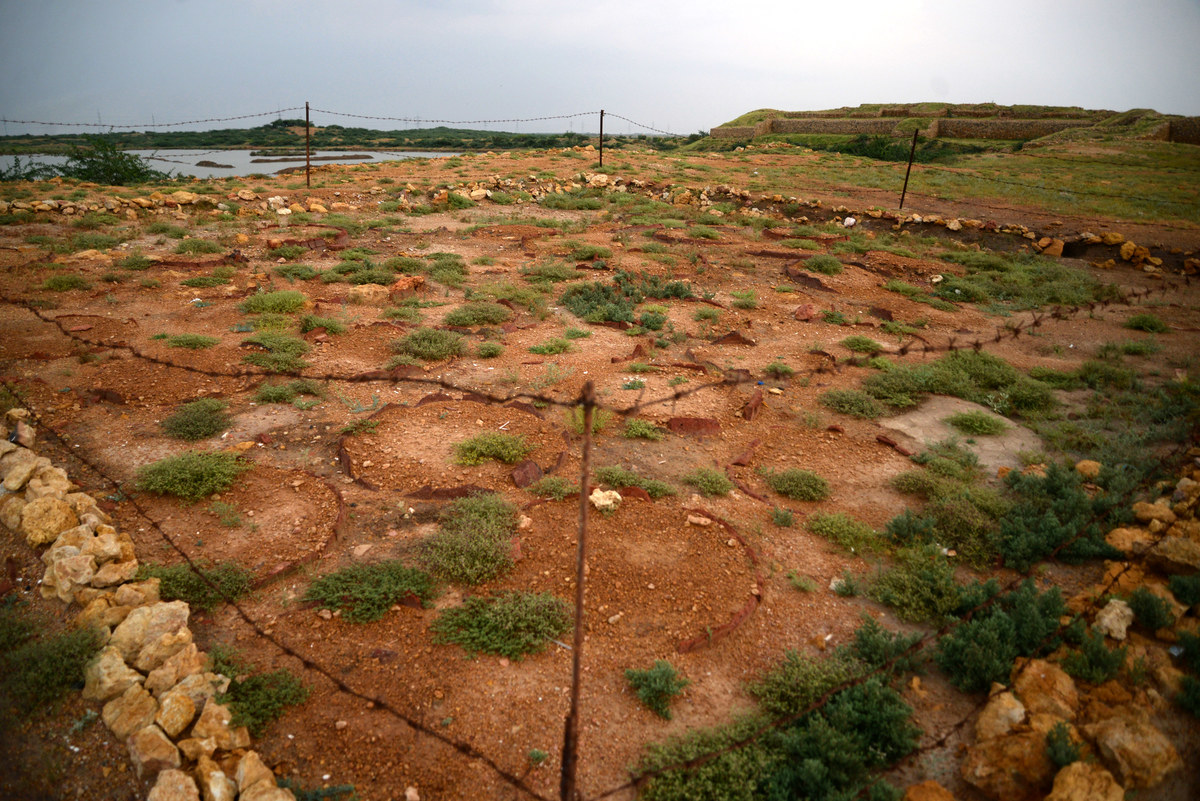


This image shows the industrial unit where clothes were dyed. “This existence of industrial area, which still needs to be fully excavated, proves that Bhanbhore was an important industrial city in south Asia,” Saleem Palejo, a caretaker of the ancient fort, told Arab News on Sept 25, 2019. (AN Photo by SA Babar)

“The south gate of Bhanbhore Fort from which Muhammad bin Qasim entered the citadel was later called the ‘gateway of Islam’ in South Asia,” Qazi Asif, a researcher, told Arab News.
The first excavation survey of Bhanbhore was carried out by Sindh’s Department of Archaeology and Museums in 1965. More recently, the government launched another round of exploration in 2012 in collaboration with Italian and French missions in Pakistan.
The report detailing the latest findings is yet to be made public. However, a description of the site at the United Nations Educational, Scientific and Cultural Organization’s website says: “The site has a sequence from the first century BC to the thirteenth century AD. Whilst its earlier phases are waterlogged, the site’s surface remains to represent the best-preserved early Islamic urban form in South Asia and the region’s best-preserved medieval port.”
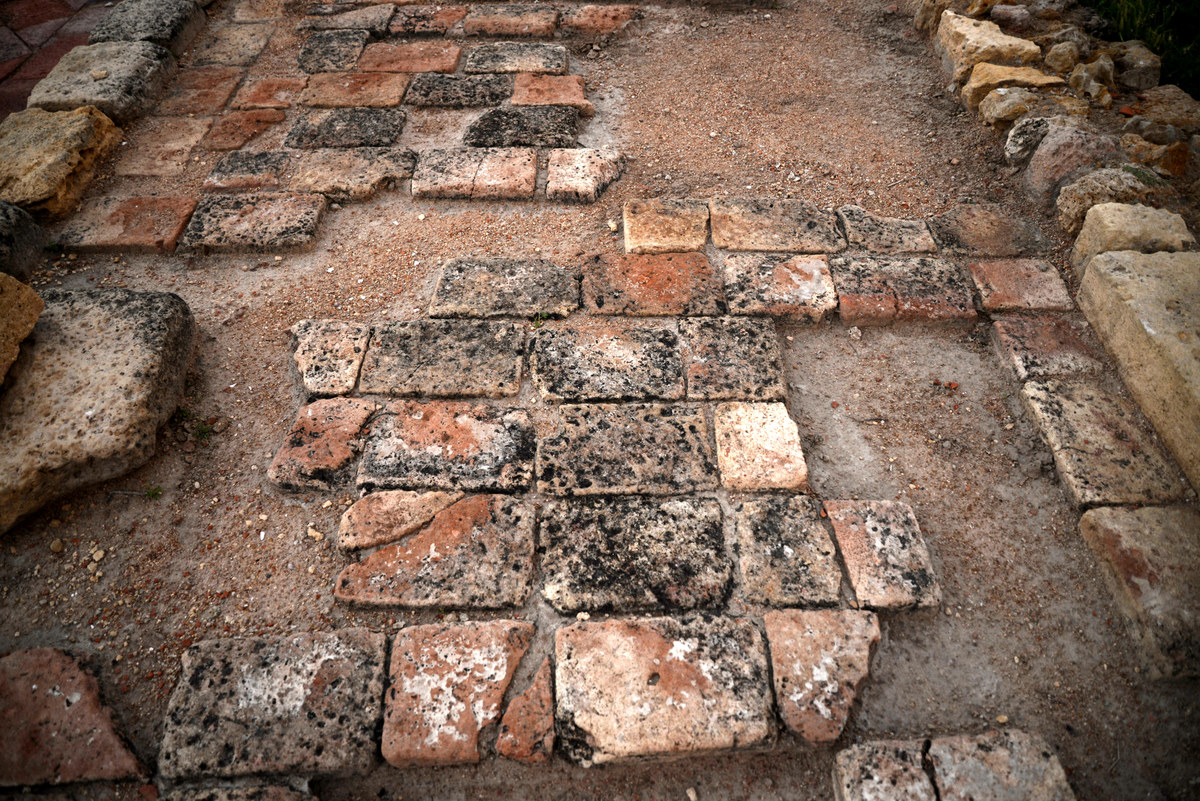


Original brick tiles used in Bhanbhore’s Jamia Masjid. Photograph taken on Sept 25, 2019 (AN Photo by SA Babar)

There was no trace of a mehrab – a semicircular niche in a mosque wall indicating the direction of Kabah – but an inscription on a structure, dating to 727 CE, claims that it is the best-preserved example of an early mosque in the region, others having been rebuilt.
“The presence of the industrial sector and the port’s wealth of imported ceramic and metal goods, in combination with its strategic siting at the mouth of the Indus, reinforces the pivotal role of Bhanbhore linking the international Indian Ocean traders with the resources of the interior,” it adds.
Although a French archaeologist, Monique Kervran, says her findings of Bhanbhore confirm that Debal – ruled by Raja Dahar – and Bhanbhore are names of the same place, Dr. Asma Ibrahim, a Pakistani archaeologist, says her research unearthed an underwater city nearby that was most likely Debal.
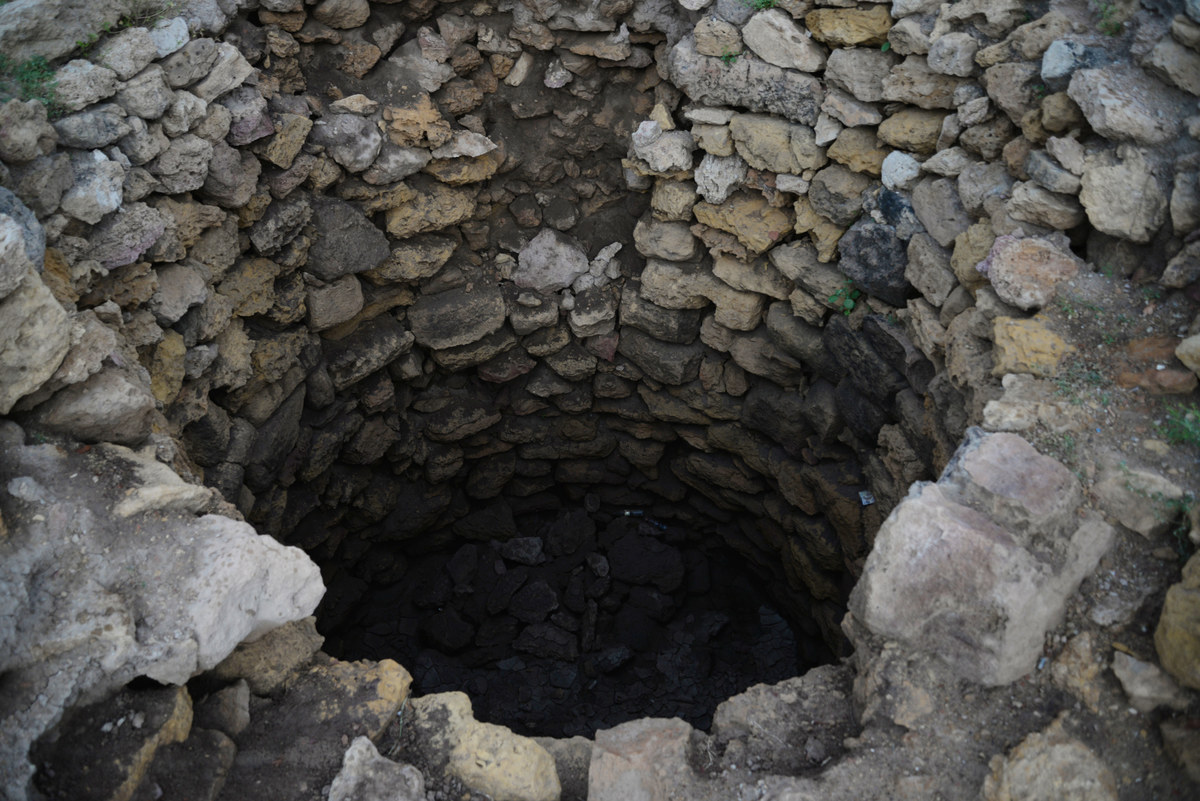


An old well in Bhanbhore Fort. Photograph taken on Sept 25, 2019 (AN Photo by SA Babar)

“The excavation work is still to be carried at the [underwater] city some 12 kilometers from Bhanbhore in the sea where a panel of Kufic inscription – along with one big and one small mosque – has been found,” she told Arab News.
The outline of the underwater city, she added, could be observed between 6 am and 8 pm on the 20th and 21st of a lunar month.
Ibrahim, whose research is yet to be published, informed that the excavated material of glass from Bhanbhore confirmed that it was imported from the Middle Eastern since there was no kiln in this region in olden days.
“It was one of the major industrial and trade centers of the world,” she said, adding: “While the archaeological sites in Bhanbhore await more excavation, there are strong imprints of Arab Muslims.”


Pakistan’s PIA to resume London flights from Mar. 29 after six-year gap

Updated 30 December 2025
Follow

Pakistan’s PIA to resume London flights from Mar. 29 after six-year gap

  • Newly privatized airline says will operate four weekly flights from Islamabad to London
  • PIA is already operating three fllights per week to British city Manchester, says airline

ISLAMABAD: The newly privatized Pakistan International Airlines (PIA) will operate direct flights to London starting Mar. 29, 2026, after six years, its spokesperson confirmed on Tuesday. 

The PIA resumed its flight operations to the UK in October this year with its inaugural flight to Manchester. The airline is currently operating three weekly flights to the British city. 

Britain lifted restrictions on Pakistani carriers in July, nearly half a decade after grounding them following a 2020 PIA Airbus A320 crash in Karachi that killed 97 people. The disaster was followed by claims of irregularities in pilot licensing, which led to bans in the US, UK and the European Union. 

“Pakistan International Airlines has announced the expansion of its operations in the United Kingdom with the resumption of flights to London,” the airline’s spokesperson said in a statement. 

“Starting Mar. 29, PIA will operate four weekly flights from Islamabad to London.”

The airline said that the London flights will be operated from Heathrow Airport’s Terminal 4, which it said is recognized as one of its most modern terminals. 

“London was PIA’s very first international destination and remains one of its most important and attractive routes,” the spokesperson said. 

Pakistan’s government succeeded in its frequent efforts to privatize the airline this month after a consortium, led by Arif Habib Group, on Dec. 23 secured a 75 percent stake in PIA for Rs135 billion ($482 million) after several rounds of bidding, valuing the airline at Rs180 billion ($643 million).

The sale marked Pakistan’s most aggressive attempt in decades to reform the debt-ridden national airline, which had accumulated more than $2.8 billion in financial losses. The government said it would end decades of state-funded bailouts and help revive the airline.

In an exclusive interview with Arab News this week, the airline’s new owner Arif Habib said he plans to renovate PIA planes, improve maintenance and flight schedule, and bring in new aircraft to revive the carrier.

Habib said he sees the region comprising the UK, the US and Canada as a “lucrative market” for the airline’s business. 

“There we can increase the frequency of the flight,” he said. “We will also try to run flights to Canada from Karachi, Lahore, and I think it’s already in Islamabad.”